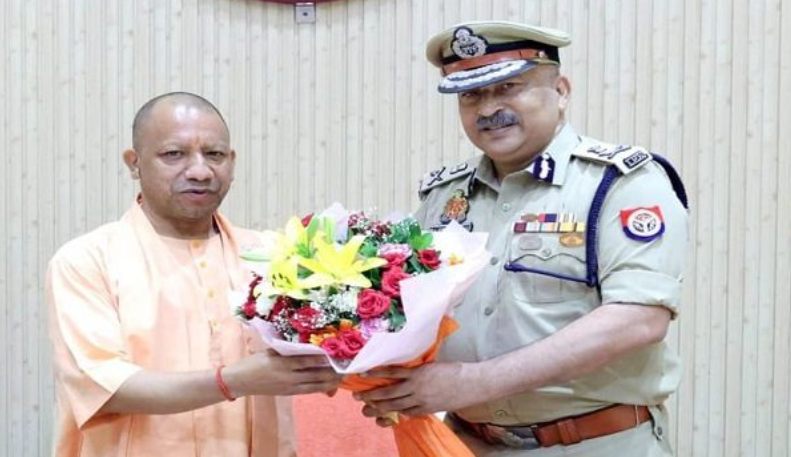
The Uttar Pradesh Police Department has undergone a major top-level reshuffle with the appointment of Rajeev Krishna as the new Director General of Police (DGP). The administrative overhaul, seen as a strategic move by the Yogi Adityanath-led government, also includes the transfer and reassignment of three senior IPS officers to key leadership roles.
Key IPS Transfers and Appointments
The reshuffle aims to streamline leadership across critical sectors of policing, including infrastructure, economic offenses, and telecom:
-
P.C. Meena (IPS, 1991 batch) has been assigned additional charge as DGP / CMD, Police Housing Corporation, along with the role of Director General, Prison Administration and Correctional Services, Uttar Pradesh.
-
Ashutosh Pandey (IPS, 1992 batch), recently elevated to the rank of Director General, has been appointed as Director General of Police, Telecom.
-
Neera Rawat (IPS, 1992 batch) will now serve as Director General, Economic Offenses Wing (EOW) and will also hold additional charge of UP-112, the state’s integrated emergency response and dispatch system.
These strategic appointments reflect the government’s intent to strengthen oversight in crucial operational areas—law enforcement technology, prison reforms, economic crimes, and emergency response.
Rajeev Krishna: New DGP, Uttar Pradesh
On May 31, Rajeev Krishna officially took charge as DGP Uttar Pradesh, replacing Prashant Kumar. A 1991-batch IPS officer, Krishna brings with him an impeccable service record and is known for his sharp administrative capabilities. He previously served as Director General, Vigilance and Chairman of the Uttar Pradesh Police Recruitment and Promotion Board.
He earned praise for overseeing the recent police recruitment exam, which was conducted smoothly and free of irregularities—a significant feat given past controversies in the state.
With four years left until retirement, Krishna’s appointment is expected to provide stable and long-term leadership at the helm of Uttar Pradesh’s police force, a crucial factor in the state’s law and order machinery.