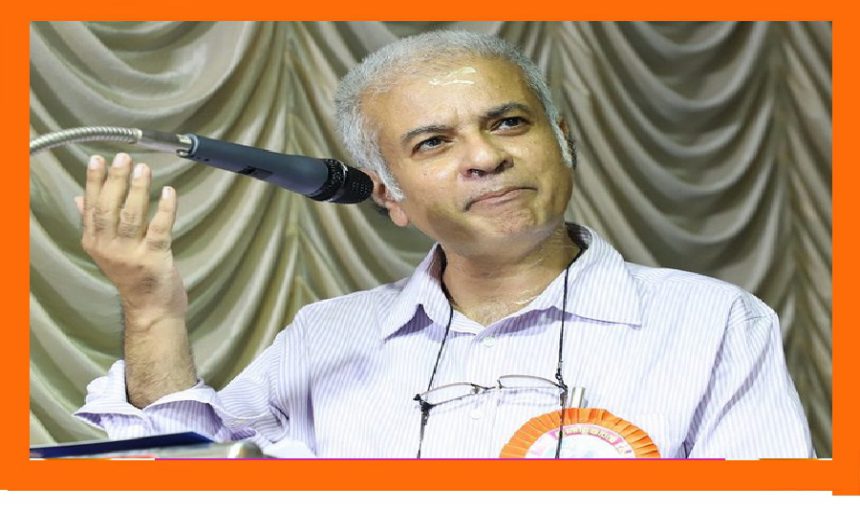
IAS Officer Raju Narayana Swamy Highlights Synergy Between Intellectual Property and Competition Laws in Driving Innovation, Market Fairness, and Consumer Welfare
Kerala’s Anti-Corruption Crusader Addresses Law Students on Economic Synergies
Dr. Raju Narayana Swamy, a 1991 Kerala-cadre IAS officer and currently Principal Secretary to the Government of Kerala, widely recognized for his relentless anti-corruption campaigns, delivered an insightful lecture at Christ University, Lavasa, emphasizing the critical interplay between Intellectual Property (IP) laws and competition laws in shaping India’s economic and technological landscape.
Understanding Intellectual Property and Competition Laws
Dr. Swamy explained that Intellectual Property Rights (IPR) safeguard the commercially valuable outcomes of human creativity, including copyrights, patents, trademarks, industrial designs, and trade secrets. These rights incentivize innovation by granting creators exclusive control over their work. However, he cautioned that misuse of IPRs can sometimes lead to anti-competitive practices, restricting market access and consumer choice.
In contrast, competition law ensures fair market practices, prevents monopolistic behavior, and promotes an efficient business environment. By regulating resource allocation and market dynamics, competition law complements IPRs, creating a balanced framework that fosters economic growth, technological advancement, and consumer protection.
Balancing Innovation and Market Fairness
Highlighting the delicate balance between innovation and market fairness, Dr. Swamy cited instances where IPRs could potentially lead to market abuse. He referenced the FICCI Multiplex case, where collective bargaining was treated as cartelization, illustrating how commercial licensing can sometimes cross into anti-competitive territory.
He further noted that the intelligent use of compulsory licensing can serve as a corrective mechanism, preventing excessive pricing of patented or copyrighted products—including software—while ensuring that innovation incentives remain intact and consumer welfare is protected.
Event and Distinguished Guests
The session was attended by Dr. Anto, Head of the Department of Law, along with several distinguished legal scholars and practitioners. Dr. Swamy, known for his fearless exposure of corruption during his administrative career, urged aspiring lawyers to appreciate the interconnectedness of IPR and competition law, stressing the importance of maintaining a balance between innovation, market fairness, and consumer rights.
Significance of the Address
Dr. Swamy’s lecture underscored:
The economic synergy between IP and competition laws. The need for legal frameworks that encourage innovation while curbing monopolistic practices.
The importance of consumer welfare as a guiding principle in both IPR and competition law. The role of future legal professionals in ensuring that law remains a tool for equitable growth and technological progress.