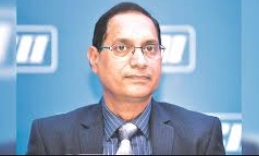
SEBI Chief Tuhin Kanta Pandey Warns Independent Directors Against Vague Statements After HDFC Bank Chairman’s Exit
Securities and Exchange Board of India (SEBI) Chairman Tuhin Kanta Pandey, a 1987-batch IAS officer of the Odisha cadre, has cautioned independent directors against making vague or ambiguous public statements when raising governance concerns. His remarks follow the sudden resignation of HDFC Bank non-executive chairman Atanu Chakraborty, which unsettled investors and triggered a sharp fall in the bank’s shares.
SEBI Chief’s Key Message
Pandey emphasized that independent directors play a critical institutional role in safeguarding minority shareholder interests. He outlined the proper governance procedure:
Concerns must be formally raised before the board.
Issues should be examined through internal governance channels.
If unresolved, objections must be entered into official board minutes.
He warned that vague public insinuations without formal backing can create unnecessary uncertainty in financial markets.
“Concerns Must Be Explicitly Disclosed and Substantiated”
Pandey stated that serious reservations should be expressed clearly and factually, not left to suggestion. Independent directors must:
Identify specific issues.
Follow proper governance procedure.
Ensure accountability in statements.
Atanu Chakraborty’s Exit and Market Reaction
Chakraborty resigned with immediate effect, citing “certain happenings and practices” not aligned with his values.
The lack of detail in his resignation letter raised speculation about internal boardroom differences.
Investors interpreted the statement as a possible governance red flag, leading to a sharp decline in HDFC Bank’s stock price.
SEBI’s Regulatory Scrutiny
Pandey confirmed that SEBI will examine the matter, reviewing:
Adequacy of disclosure norms.
Compliance with governance protocols.
Standards of investor communication.
Broader Implications for Corporate India
The episode highlights SEBI’s stance that:
Boardroom dissent is legitimate, but must follow documented institutional processes.
Public disclosures must avoid ambiguity that can unsettle markets.
Independent directors are expected to act as active guardians of governance integrity, not symbolic members.
Why It Matters
HDFC Bank, one of India’s most closely watched financial institutions, is under heightened scrutiny. The resignation of its chairman citing ethical concerns has amplified investor focus on board accountability and transparency.
Pandey’s remarks are being read as a broader governance signal to corporate India: dissent must be clear, substantiated, and procedurally recorded, not left to vague public hints.