

West Bengal Chief Secretary Summoned by Election Commission Over Voter Roll Revision Dispute; Special Observer Appointed for SIR Process
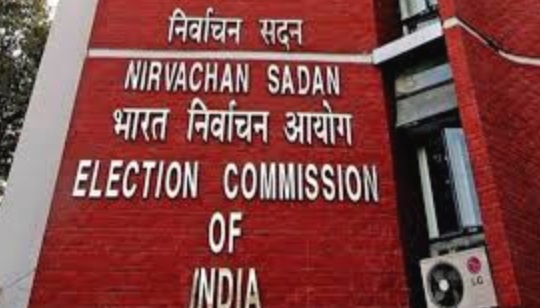
West Bengal Chief Secretary Nandini Chakraborty, a 1994-batch IAS officer from the West Bengal cadre, appeared before the full bench of the Election Commission of India (ECI) at Nirvachan Sadan in New Delhi on Friday after being summoned over alleged non-compliance with directives issued by the poll panel.
According to sources, the Chief Secretary faced sharp questioning during the hour-long meeting regarding delays and failures in implementing the Commission’s orders. She was cautioned against further lapses and instructed to ensure immediate compliance with the directives.
This development marks a fresh escalation in the ongoing confrontation between the Bengal government and the Election Commission, despite recent Supreme Court interventions aimed at streamlining the Special Intensive Revision (SIR) of electoral rolls in the state.
FIRs, Suspensions, and Transfers at the Core of Dispute
The ECI raised multiple issues of non-compliance, including:
Failure to lodge FIRs against four former Electoral Registration Officers (EROs) and Assistant Electoral Registration Officers (AEROs) in Baruipur Purba and Moyna Assembly segments for allegedly enrolling fictitious voters.
Direction to initiate departmental proceedings and file an FIR against the Block Development Officer (BDO) of Basirhat II for appointing 11 additional AEROs without Commission approval.
Suspension of the Basirhat II AERO for conducting an unauthorized hearing.
Cancellation of departmental transfers of three officers.
Revocation of transfer orders for IAS officers Smita Pandey, Randhir Kumar, and Ashwini Kumar Yadav, who were appointed as district electoral roll observers.
In a letter issued earlier this week, the ECI specifically instructed the Chief Secretary to cancel transfers related to electoral rolls and obtain prior concurrence of the Commission before issuing such orders in the future.
Scrutiny of Documents and Alleged Political Interference
The Commission also expressed concern over anomalies in voter document verification during the SIR drive. District Magistrates (DMs), serving as District Election Officers (DEOs), were questioned for verifying dubious documents such as newspaper cuttings, blank pages, unclear images, and non-specified testimonials.
The ECI directed all DMs to remove fictitious or invalid documents from the system by 5 pm on February 16. It further warned DEOs, EROs, and AEROs that political interference with Booth Level Officers would not be tolerated.
Officials emphasized that documents verified for voter enrollment remain in the system for years, and anomalies detected even five years later could lead to prosecution of the responsible officers.
Appointment of Special Observer
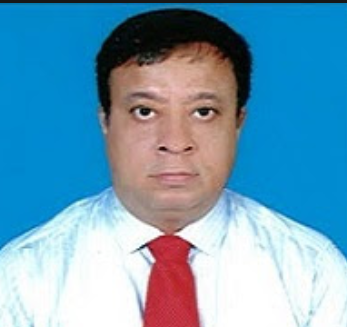
In a significant move, the Commission appointed retired IPS officer N.K. Mishra as Special Observer for the SIR process to oversee the revision exercise and ensure strict compliance with guidelines.
Previous Summons and Continuing Friction
This is not the first time a Bengal Chief Secretary has been summoned. In August last year, then Chief Secretary Manoj Pant was called to New Delhi over the state government’s reluctance to implement ECI orders suspending EROs and AEROs in Baruipur East and Moyna.
Despite judicial interventions, friction between the state administration and the poll panel remains unresolved.
Larger Implications Ahead of 2026 Assembly Elections
The confrontation carries significant implications ahead of the 2026 West Bengal Assembly elections. The Election Commission’s insistence on strict compliance, coupled with the state government’s objections to aspects of the SIR drive, has created a tense administrative and political environment.
With warnings issued, deadlines set, and a special observer appointed, the coming weeks will determine whether the state government and the Election Commission can bridge their differences or whether the dispute escalates further.