
Who Is IPS Niharika Bhatt? 2015-Batch Officer Who Left US FDA Research Career to Join the Police
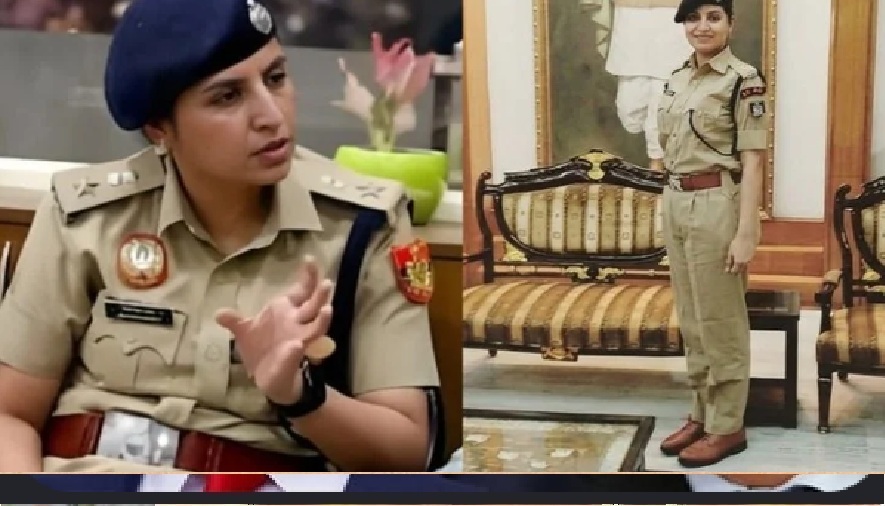
From conducting specialised research on nanoparticle toxicity at the United States Food and Drug Administration (FDA) to serving as a senior police officer in India’s national capital, IPS officer Niharika Bhatt has followed an unconventional professional journey.
A 2015-batch Indian Police Service officer of the AGMUT cadre, Bhatt left her research career in the United States, returned to India and cleared the Union Public Service Commission (UPSC) Civil Services Examination in her very first attempt.
She secured All India Rank (AIR) 146 in the 2015 examination and is currently serving as Deputy Commissioner of Police (DCP), North District, Delhi. In a recent interview with NDTV, Bhatt spoke about her decision to return to India, her journey into the civil services, her UPSC preparation strategy and the responsibilities of leading a district police force.
Who Is IPS Niharika Bhatt?
Niharika Bhatt is a 2015-batch regular-recruit IPS officer of the AGMUT cadre, with Uttar Pradesh recorded as her home state.She secured AIR 146 in the Civil Services Examination and joined the IPS after clearing the examination on her first attempt. Her professional journey stands out because she entered the civil services after gaining experience in specialised biomedical research in the United States.
Education: From Engineering in Lucknow to Higher Studies in Michigan
Bhatt completed her BTech in Electronics and Instrumentation Engineering from the Institute of Engineering and Technology (IET), Lucknow, affiliated with Uttar Pradesh Technical University.
She subsequently moved to the United States, where she pursued a master’s degree at the University of Michigan. Her academic interests included biomedical research, tissue engineering and the development of specialised models for scientific safety testing. During her undergraduate years, she was also actively involved in student activities. She served as chairperson of the IEEE Students’ Chapter at IET Lucknow.
Research Career at the US Food and Drug Administration
Before joining the Indian Police Service, Bhatt worked in the United States in the field of biomedical research.Her research involved developing three-dimensional engineered tissue models for in-vitro safety testing of nanoparticles.
She later worked as an ORISE Fellow at the FDA’s Center for Devices and Radiological Health, focusing on a three-dimensional toxicology testing model to assess nanoparticle toxicity.
She also completed an internship at Medtronic in 2012, where she was associated with assignments related to cardiac surgery and perfusion technology.Despite having established a professional research career in the United States, Bhatt decided to return to India in 2014.
In her media interaction, she explained that she wanted to work more directly with people and contribute to society through the Civil Services. This decision eventually led her to the UPSC examination and a career in policing.
IPS Career: From Dehradun and Chandigarh to Delhi
After joining the IPS in 2015, Bhatt underwent professional training before beginning her field assignments in Uttarakhand.During her probation, she served in Dehradun and also worked as Station House Officer (SHO) of Rishikesh Kotwali.
Her subsequent assignments included:
Dehradun: Assistant Superintendent of Police (ASP).
Chandigarh: Served as ASP and subsequently as SP City.
Puducherry: Appointed SSP Traffic and Commandant, India Reserve Battalion (IRBn), in August 2019.
Karaikal: Served as Senior Superintendent of Police from August 2020 to February 2022.
Puducherry Police: Handled responsibilities involving the Anti-Corruption Unit, Armed Police, Police Radio, recruitment and Commandant IRBn from 2022 to February 2024.
South Andaman: Served as SP South Andaman from February to December 2024.
Andaman and Nicobar Islands: Took on responsibilities as SP, Police Marine Force and Fire and Emergency Service, and Commandant IRBn, from December 2024. In August 2026, Bhatt was appointed DCP of Delhi’s North District following a reshuffle in the Delhi Police. She succeeded Raja Banthia in the position.
IPS Niharika Bhatt’s Advice for UPSC Aspirants
Bhatt has also shared practical lessons from her own Civil Services preparation, particularly for candidates who are preparing without formal coaching. She cleared the UPSC examination without joining a coaching institute and selected Sociology as her optional subject despite having an engineering background.
Some of the key suggestions she shared include:
1. Revise Rather Than Collect Too Many Books
Bhatt recommends choosing one reliable book for each subject and revising it multiple times instead of continuously collecting new study material. According to this approach, repeated revision helps build conceptual clarity and improves retention.
2. Read Newspapers and Follow Current Affairs
Regular newspaper reading and awareness of current developments are important components of Civil Services preparation. Aspirants should develop the habit of understanding issues rather than merely memorising news events.
3. Give Importance to Answer Writing
Bhatt highlighted the difference between understanding a subject and presenting that knowledge effectively in an examination. Candidates from engineering and science backgrounds may need additional practice to adapt to the descriptive answer-writing requirements of humanities subjects.
4. Use Digital Resources Effectively
She also pointed to the growing importance of digital learning resources. Online educational platforms and internet access have expanded opportunities for aspirants, including those living in smaller towns and remote areas.
What Does a DCP’s Role Involve?
Speaking about her current responsibilities, Bhatt explained that the work of a district police chief goes well beyond crime prevention and maintaining law and order.It also involves regular interaction with citizens, listening to complaints, understanding local problems and ensuring effective grievance redressal. Policing, she indicated, is a profession in which priorities can change from one day to another, depending on the circumstances and challenges facing a district.
From specialised scientific research in the United States to field policing and leadership assignments across different parts of India, Niharika Bhatt’s career reflects a distinctive transition between two very different professional worlds.
Her journey also offers an example for UPSC aspirants that an academic or professional background outside the traditional humanities stream need not be a barrier to entering the Civil Services.