

Who Is IAS Arvind Kumar Shah? 2021-Batch MP Officer Leads Ayushman Bharat Crackdown on 83 Hospitals
Madhya Pradesh has stepped up its scrutiny of hospitals empanelled under the Ayushman Bharat scheme, with 2021-batch IAS officer Arvind Kumar Shah at the centre of a growing enforcement exercise. In roughly two months after taking charge, the state administration has carried out more than 30 raids and issued notices as part of efforts to detect irregularities and tighten compliance among participating healthcare institutions.
The action has extended across the state during 2026, with as many as 83 hospitals facing some form of enforcement action so far. Of these, 18 hospitals have reportedly been de-empanelled and blacklisted, while 50 hospitals have been subjected to financial penalties amounting to more than Rs 3.13 crore, underlining the administration’s increasingly strict approach towards violations within the health insurance programme.
83 Hospitals Face Action Under Ayushman Bharat
The scale of the action has made the latest enforcement drive particularly significant. Rather than relying only on routine inspections, the authorities are combining physical raids, notices, financial penalties and de-empanelment to examine whether hospitals are complying with the conditions attached to their participation in Ayushman Bharat.
The action reported in 2026 includes 83 hospitals facing proceedings, 18 institutions being de-empanelled and blacklisted, and 50 hospitals being fined. The cumulative value of the fines imposed on these hospitals has crossed Rs 3.13 crore, while more than 30 raids and notices have reportedly been undertaken in about two months.
For beneficiaries, such monitoring matters because empanelled hospitals play a direct role in delivering treatment under the government-backed health coverage programme. Any irregularity in the implementation of the scheme can affect not only public funds but also the quality and accessibility of healthcare available to eligible patients.
Technology and AI Become Part of Hospital Monitoring
One of the more interesting aspects of the current exercise is the use of technology and artificial intelligence to supplement traditional inspections. The department is examining digital data relating to doctors and hospitals in an attempt to identify unusual patterns and associations that may warrant closer investigation.
Officials are reportedly mapping doctors against the hospitals with which they are associated and analysing the resulting data. This exercise has brought attention to cases where individual doctors were found to be linked with a surprisingly high number of hospitals, with some reportedly associated with as many as 40 institutions.
The department is also examining the geographical distance between hospitals linked to the same doctors. Such analysis can provide officials with another layer of information when assessing whether a particular hospital-doctor arrangement appears unusual and deserves physical verification or further scrutiny.
Who Is IAS Arvind Kumar Shah?
Arvind Kumar Shah is a 2021-batch Indian Administrative Service officer belonging to the Madhya Pradesh cadre. He entered the IAS through direct recruitment after qualifying the Union Public Service Commission’s Civil Services Examination and has since held several administrative responsibilities in the state.
According to the service information provided, Shah was born on August 6, 1992, and is from Madhya Pradesh. He holds a B.Tech. degree in Electronics and Communication from Bhopal University, giving him a technical and engineering background that stands out in the context of his present data-driven administrative assignment.
His service profile places him at Pay Level 11 in the IAS Pay Matrix. The details are based on information from the Department of Personnel and Training’s IAS Civil List and Executive Record Sheet available on the public portal.
Engineering Background Adds a Technology Angle
Shah’s academic background in Electronics and Communication Engineering is particularly relevant when viewed alongside the growing role of technology in the Ayushman Bharat monitoring system. Healthcare administration today increasingly depends on digital records, data analysis and technology-enabled verification rather than relying entirely on conventional field inspections.
The use of AI and data analytics can allow authorities to examine large volumes of information and spot connections that might otherwise remain hidden. In the case of doctor-hospital mapping, for instance, the technology can help identify multiple associations, geographic patterns and other indicators that officials can subsequently verify on the ground.
That does not replace physical inspections or administrative scrutiny. Instead, data can help authorities decide where closer attention may be required, potentially making enforcement more targeted and efficient.
From SDO to Important Administrative Assignments
Shah’s IAS career has included field-level administrative responsibilities as well as higher departmental roles. His service record reflects postings including positions such as Additional Commissioner and Sub-Divisional Officer, giving him exposure to both grassroots administration and wider institutional functioning.
The available service details indicate four documented postings across two locations and around five years of service. He is now handling an assignment connected with one of the state’s most important public healthcare programmes, putting him in a position where administrative decisions can have a direct impact on hospitals, beneficiaries and government expenditure.
His relatively young age and comparatively recent entry into the IAS also make the scale of his current responsibilities noteworthy. The Ayushman Bharat assignment combines administration, regulatory oversight, technology and public service delivery in a particularly demanding environment.
Shah Takes Charge in Ayushman Bharat Department
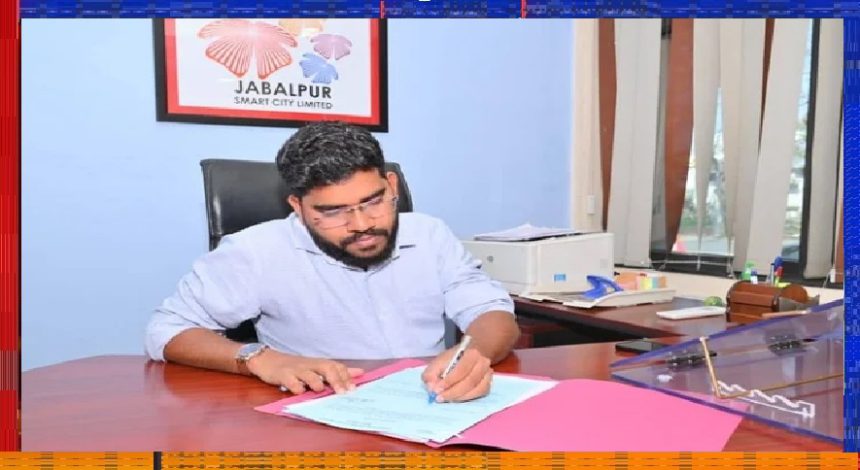
According to the information provided, Shah took charge as Chief Executive Officer at Bhopal in the Ayushman Bharat department on June 17, 2026. His service record also lists him as Commissioner, Municipal Corporation, Jabalpur, with that posting taking effect from May 4, 2026.
The combination of these assignments reflects the range of responsibilities that officers in the state cadre can handle during the early stages of their careers. His present role has now placed him directly in the middle of the state’s efforts to strengthen monitoring of hospitals participating in Ayushman Bharat.
The crackdown has given this posting added visibility because the department is not merely reviewing paperwork. It is also using inspections, notices, financial penalties and digital analysis to examine possible violations and improve compliance.
Why De-empanelment and Blacklisting Matter
De-empanelment is among the strongest administrative measures available when a hospital is found to have failed to meet the required standards or conditions for participation. Blacklisting can have an even wider consequence for an institution because it effectively signals that the hospital is no longer eligible to participate under the relevant arrangement.
The penalties being imposed add another layer to the enforcement mechanism. With fines crossing Rs 3.13 crore across 50 hospitals, the financial consequences of non-compliance have become a visible component of the state’s approach.
The objective is not simply to penalise hospitals after irregularities are detected. A strong monitoring system can also act as a deterrent, encouraging empanelled institutions to follow prescribed procedures and maintain the standards expected under the scheme.
A More Data-Driven Approach to Healthcare Oversight
The use of AI and technology in the current exercise points towards a broader change in the way public healthcare programmes are monitored. Instead of depending exclusively on complaints or periodic inspections, authorities can use available data to identify unusual patterns and then deploy field teams where intervention appears necessary.
The doctor-hospital mapping exercise is one example of this approach. Looking at the number of institutions associated with individual doctors, and then examining the geographical relationship between those institutions, gives officials another tool to assess whether a particular network requires detailed verification.
The combination of data analysis and physical enforcement could make monitoring more systematic. It also reflects the growing importance of technology in public administration, particularly in programmes involving large numbers of hospitals, beneficiaries and financial transactions.
Accountability Remains the Central Focus
The action against 83 hospitals is ultimately part of a larger effort to strengthen accountability under Ayushman Bharat in Madhya Pradesh. The government is using a mix of raids, notices, fines, de-empanelment and blacklisting to address suspected irregularities and ensure that hospitals participating in the scheme adhere to its requirements.
For IAS officer Arvind Kumar Shah, the assignment offers an important administrative challenge at a relatively early stage of his career. His engineering background, combined with the department’s growing reliance on data, AI and technology, adds an interesting dimension to the enforcement campaign.
As scrutiny continues, the focus is likely to remain on identifying questionable hospital practices, examining unusual doctor-hospital associations and ensuring that public resources are used for their intended purpose. The larger aim is straightforward: stronger oversight should translate into greater accountability for healthcare institutions and more reliable delivery of benefits to the people covered under Ayushman Bharat.