

Madhya Pradesh’s Wildlife Push: CM Performs Ritual in Khandwa Before Reintroducing Crocodiles, Symbolising Narmada’s Divine Guardian
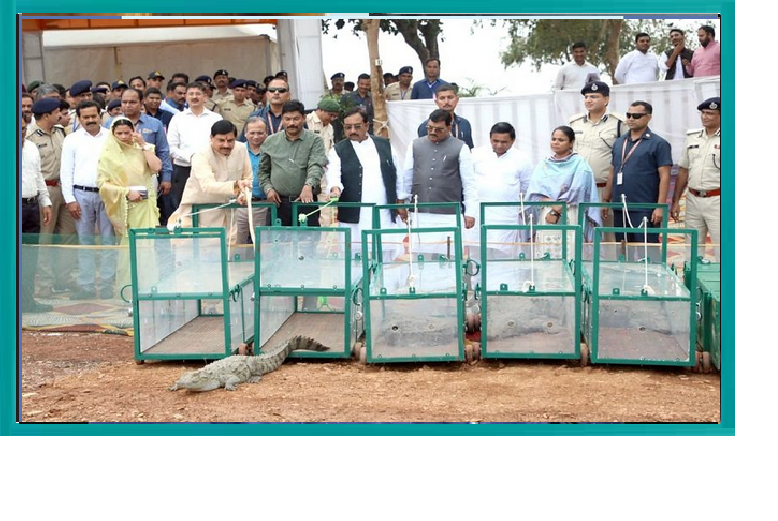
Madhya Pradesh Chief Minister Dr. Mohan Yadav has launched a distinctive initiative aimed at restoring the ecological vitality of the Narmada River, releasing several crocodiles into its waters near Khandwa. The action marks the fulfilment of his public commitment to rejuvenate the sacred river’s wildlife and preserve its natural biodiversity.
Before releasing the reptiles, the Chief Minister performed a traditional puja on the riverbank, reaffirming the deep spiritual and cultural reverence that the people of Madhya Pradesh hold for Maa Narmada. Forest officials confirmed that the crocodiles were introduced in ecologically secure zones, far from populated areas, ensuring both public safety and species protection.
Ideal Habitat for Aquatic Life
Environmental experts have described the Narmada’s hydrology and ecosystem as particularly conducive for crocodile survival and breeding. The introduction of these reptiles, they say, will help restore the river’s ecological balance and reinforce its natural food web.
“The Narmada’s flow and temperature patterns make it an excellent habitat for crocodiles,” said a senior official from the Forest Department. “This step will not only stabilise their population but also help sustain the river’s biological diversity.”
Crocodile as the Sacred Symbol of Maa Narmada
Reflecting on the initiative’s spiritual significance, Dr. Yadav remarked:
“In our tradition, the crocodile is regarded as the divine vehicle of Maa Narmada. By reintroducing her sacred companion into her waters, we are honouring both faith and nature. This is a moment of cultural reverence and ecological renewal.”
He further noted that Madhya Pradesh’s continuous conservation programs have led to a consistent rise in crocodile and gharial numbers, demonstrating the state’s long-term commitment to wildlife preservation and sustainable water ecosystems.
Restoring Nature’s Balance
Experts highlight that the presence of crocodiles supports the river’s self-purification process and promotes a stable aquatic environment. Similar restocking efforts in the Chambal River last year yielded encouraging outcomes, reinforcing the effectiveness of this approach.
Dr. Yadav reiterated that the state’s environmental strategy rests on the principle of coexistence between humans and wildlife.
“A thriving river sustains civilizations,” he said. “Our responsibility is to protect these natural lifelines so that both people and nature prosper together.”