

Union Home Minister Amit Shah on Thursday unveiled an ambitious new national security initiative titled the “Smart Border Project,” announcing that India will build a fully technology-driven and highly integrated border security grid within the next one year.
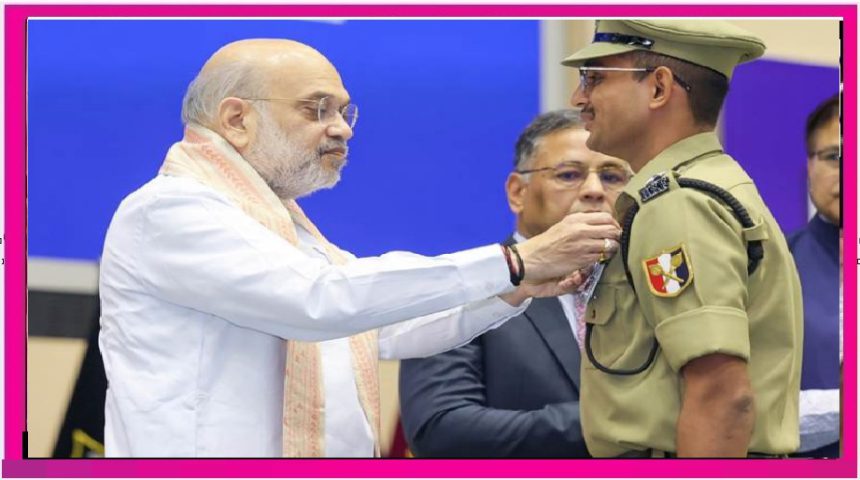
Addressing the Border Security Force (BSF) Investiture Ceremony and the Rustamji Memorial Lecture in New Delhi on May 22, Shah said the project would significantly modernise India’s border management infrastructure and transform the operational capabilities of the Border Security Force through advanced surveillance technologies, artificial intelligence and real-time intelligence coordination systems.
The Home Minister described the proposed security framework as an “impregnable” and technology-enabled border architecture aimed at strengthening India’s defence against infiltration, smuggling, drone threats and cross-border criminal activities.
Smart Border Project to Modernise Border Security
According to Amit Shah, the Smart Border Project will introduce a comprehensive technology-based surveillance and response network across India’s borders, particularly along the Pakistan and Bangladesh frontiers.
The initiative will include:
Drone-based surveillance systems
Advanced radar and sensor integration
AI-enabled monitoring and threat detection
Smart surveillance cameras
Real-time intelligence sharing systems
Upgraded command-and-control infrastructure
Shah stated that the objective is to make India’s border management system more coordinated, technology-driven and capable of responding rapidly to emerging threats.
He said the government intends to complete the rollout of the new smart security grid within the next year.
Call for Integrated Security Coordination
During his address, the Home Minister stressed that modern border security cannot function in isolation and requires seamless coordination among multiple agencies.
He called for closer integration between:
The Border Security Force (BSF)
State police forces
Central Armed Police Forces (CAPFs)
Intelligence agencies
District administrations
Village-level administrative networks
Amit Shah described border protection as a “territorial responsibility” involving all layers of governance and security institutions rather than being the responsibility of a single force alone.
Focus on Drone Threats, Smuggling and Hybrid Warfare
The Home Minister highlighted several emerging national security challenges that the government intends to address under the Smart Border Project.
These include:
Illegal infiltration across borders
Narcotics and arms smuggling
Fake currency operations
Drone-based cross-border trafficking
Cyber and hybrid warfare threats
He said India’s security strategy is increasingly moving toward eliminating threats at their origin instead of merely containing them after infiltration or penetration occurs.
According to Shah, the growing use of drones by cross-border criminal and terror networks has created new operational challenges for security forces, making technological upgrades essential for border management.
‘Zero Tolerance’ Against Infiltration
Referring to illegal infiltration and demographic concerns in border regions, Amit Shah reiterated the government’s “zero tolerance” policy against unlawful entry into the country.
He announced that the Centre would intensify efforts to identify and remove illegal infiltrators and strengthen enforcement mechanisms in coordination with state governments, particularly in border states such as Assam, Tripura and West Bengal.
The Home Minister also referred to a proposed High-Powered Demography Mission intended to study and address demographic changes allegedly linked to illegal cross-border infiltration.
He stated that the government would not permit what he described as “unnatural demographic change” in border regions.
Expanded Role for BSF Under New Security Doctrine
Amit Shah said that under the leadership of Prime Minister Narendra Modi, India’s national security doctrine has undergone major transformation since 2014.
He indicated that the Border Security Force would now play a larger and more strategic role in:
Counter-infiltration operations
Anti-narcotics campaigns
Border intelligence gathering
Coordination with civil administration
Counter-drone operations
The Home Minister also announced that the government is working on additional welfare measures for personnel of the Central Armed Police Forces and their families.
Officials described the Smart Border Project as one of the most significant upgrades to India’s border security architecture in recent years, with a strong emphasis on technological integration, multi-agency coordination and real-time monitoring capabilities aimed at strengthening national security preparedness.