


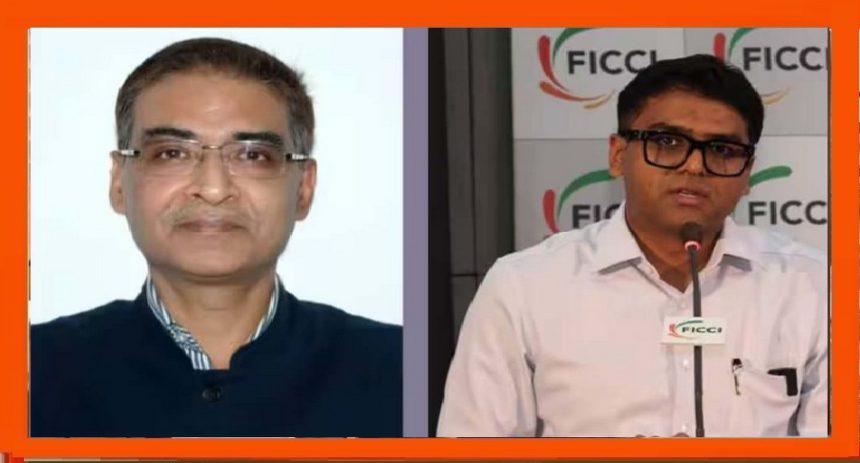
CBSE OSM Controversy Deepens: Chairman Rahul Singh and Secretary Himanshu Gupta Transferred as Centre Launches Probe Into Digital Evaluation System
The Centre has transferred CBSE Chairman Rahul Singh and Secretary Himanshu Gupta amid the ongoing On-Screen Marking controversy. A one-member committee led by S Radha Chauhan will investigate procurement and implementation issues linked to the digital evaluation system.
The controversy surrounding the Central Board of Secondary Education’s ambitious On-Screen Marking (OSM) initiative has taken a significant turn. In a move that has drawn nationwide attention, the Union Government has transferred CBSE Chairman Rahul Singh and CBSE Secretary Himanshu Gupta while simultaneously ordering an inquiry into the procurement process behind the digital evaluation platform used in the 2026 Class 12 board examinations.
The decision comes at a time when the newly introduced digital assessment mechanism is facing intense scrutiny from students, parents, educators, and political leaders. Questions have been raised not only about technical performance but also about the manner in which the system was procured and implemented.
To examine these concerns, the Centre has constituted a one-member inquiry committee headed by S Radha Chauhan, Chairperson of the Capacity Building Commission. The committee has been tasked with reviewing the procurement of services related to the On-Screen Marking platform and assessing whether established procedures were properly followed.
Government Orders Detailed Examination
According to official directives issued on Tuesday, the inquiry will specifically focus on the procurement process adopted for introducing the digital evaluation system for CBSE board examinations.
While the government has not publicly commented on the reasons behind the transfers of the two senior officers, the timing of the move has generated considerable discussion. The simultaneous transfer of the Board’s top leadership and the launch of a formal inquiry suggest that authorities are treating the matter with considerable seriousness.
The committee headed by S Radha Chauhan is expected to review records, examine procedural compliance, and evaluate whether procurement norms were adhered to during the awarding of contracts related to the digital marking platform.
What Exactly Is the On-Screen Marking System?
The On-Screen Marking system was introduced by CBSE this year as part of a broader effort to modernize the examination and evaluation process.
Under the new model, answer sheets are digitized and uploaded onto a digital platform where examiners evaluate responses electronically rather than handling physical copies.
The initiative was projected as a major technological upgrade that would improve transparency, speed up evaluation, and reduce logistical challenges associated with transporting millions of answer scripts across the country.
Yet what was intended to be a landmark reform soon became a source of controversy.
Complaints Began Pouring In
Soon after examination results and answer-sheet access procedures began, students started reporting a range of technical problems.
Several candidates claimed that scanned copies of their answer books appeared blurry and difficult to read. Others alleged that certain pages were missing from uploaded scripts.
Some students reported an even more alarming issue — being able to access answer sheets belonging to other candidates instead of their own.
The problems did not end there.
Students seeking copies of evaluated answer books also complained about difficulties in completing online transactions. Payment failures, interrupted downloads, and system access errors became recurring grievances on social media and student forums.
As complaints multiplied, concerns grew about whether the new digital ecosystem was adequately prepared to handle an examination process that impacts millions of students every year.
IIT and IIM Experts Reportedly Brought In
Faced with mounting criticism and technical challenges, CBSE reportedly sought assistance from experts associated with premier institutions including IITs and IIMs.
The involvement of specialists was aimed at diagnosing technical issues and ensuring that students could access their answer scripts without further disruption.
Sources familiar with the matter indicated that the volume of complaints was substantial enough to warrant external technical intervention.
The move highlighted the scale of the challenges encountered during the first large-scale deployment of the digital evaluation platform.
Political Debate Intensifies
What initially appeared to be an administrative and technological issue quickly evolved into a political flashpoint.
Leader of Opposition Rahul Gandhi publicly questioned the government’s decision-making process regarding the selection of the company entrusted with the digital evaluation project.
In a post on social media platform X, Gandhi alleged that the company involved in the CBSE evaluation process had links to a firm associated with controversies during Telangana’s Intermediate Board examinations in 2019.
His remarks reignited discussions about that earlier examination episode and raised broader questions about vendor selection and accountability.
The allegations quickly became a focal point of public debate, with opposition leaders demanding greater transparency regarding the procurement process and contractual arrangements.
CBSE Pushes Back Against Allegations
CBSE strongly rejected the accusations and issued a detailed clarification defending both the procurement process and the implementation of the digital system.
According to the Board, the allegations circulating in public discourse were inaccurate and lacked factual basis.
Officials maintained that all procedures prescribed under government financial and procurement regulations were followed meticulously.
The Board stated that the Request for Proposal (RFP) for digital evaluation services had been uploaded on the Central Public Procurement Portal on August 28, 2025. Following the completion of the bidding process and evaluation of proposals, the contract was awarded to Hyderabad-based Coempt Edu Teck in accordance with applicable rules.
CBSE emphasized that the procurement process adhered to General Financial Rules and other prescribed government norms.
Telangana 2019 Episode Returns to Spotlight
The current controversy has also revived memories of the Telangana Intermediate Examination crisis of 2019.
At the time, reports suggested that a remarkably high number of students had initially been declared unsuccessful after the publication of examination results. The developments triggered widespread protests and demands for investigations.
Subsequent reviews pointed to issues related to evaluation pressure, result processing, and technical shortcomings.
As discussions around CBSE’s digital evaluation system intensified, references to those earlier events began resurfacing in political debates and media coverage, adding another layer to the ongoing controversy.
Who Is Rahul Singh?
Rahul Singh is a senior Indian Administrative Service officer belonging to the 1996 Bihar cadre.
Born on August 15, 1971, Singh possesses a strong academic background in technology and public administration. He earned a B.Tech degree in Computer Science before pursuing advanced studies in Public Policy and Management at IIM Ahmedabad.
Over nearly three decades in public service, he has held numerous influential positions across state and central governments.
His administrative journey has included assignments as Sub-Divisional Officer, District Magistrate, Collector, Transport Commissioner, Managing Director of government organizations, Departmental Secretary, Joint Secretary in the Government of India, and Additional Secretary in the Department of Personnel and Training.
Singh assumed charge as CBSE Chairman on March 26, 2024. During his tenure, one of the Board’s most notable initiatives was the rollout of the digital On-Screen Marking system for Class 12 board examinations.
His transfer now comes amid the government’s ongoing scrutiny of the project’s procurement and implementation processes.
Who Is Himanshu Gupta?
Himanshu Gupta’s story has often been cited as one of determination and perseverance.
An IAS officer of the 2020 AGMUT cadre, Gupta grew up in challenging financial circumstances. Born in Uttarakhand and raised in Bareilly district of Uttar Pradesh, he spent much of his childhood helping his father, who worked as a labourer before running a roadside tea stall.
Despite economic hardships, Gupta remained focused on education. Reports suggest he travelled long distances daily to attend school while balancing family responsibilities.
His academic journey eventually took him to Delhi University’s Hindu College, where he graduated before completing a Master’s degree in Environmental Science. He reportedly topped his class and later chose to forgo opportunities abroad in order to prepare for the Civil Services Examination.
His UPSC journey became particularly notable because he cleared the examination three times through self-study. He first entered government service through the Indian Railway Traffic Service in 2018, qualified for the Indian Police Service in 2019, and finally secured All India Rank 139 in 2020 to join the IAS.
After serving in various administrative roles, Gupta was appointed CBSE Secretary in late 2023. His tenure at the Board has now come to an end amid the unfolding developments surrounding the OSM project.
Why the Developments Matter
The transfer of CBSE’s two senior-most officials, coupled with the launch of an inquiry into the procurement of the digital evaluation platform, marks one of the most significant developments in India’s education administration landscape this year.
The investigation is expected to focus on procurement-related aspects. Yet the broader conversation extends beyond contracts and procedures. The episode has triggered larger questions about how large-scale digital reforms should be implemented in critical public systems that affect millions of students.
As the inquiry proceeds, students, parents, education experts, and policymakers will be closely watching its findings. The outcome could influence not only the future of CBSE’s On-Screen Marking initiative but also the direction of digital examination reforms across India’s education sector.