

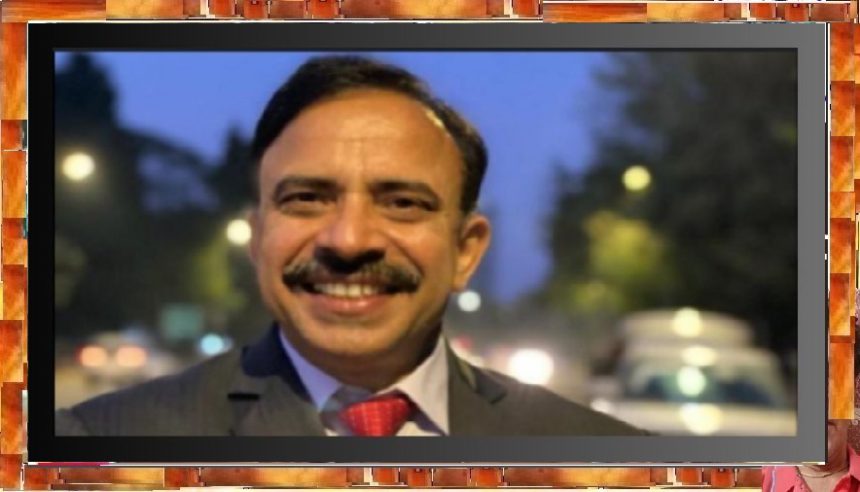
Meet Sajjan Singh Yadav: The Harvard-Educated IAS Officer Now Running Delhi’s Water Board – and Why His Appointment Turned Heads
When the Appointments Committee of the Cabinet approved the premature repatriation of a senior IAS officer from a freshly given central posting barely two months after he’d received it, bureaucratic circles in Delhi took notice. That kind of move doesn’t happen without a reason — and now, the reason is clear.
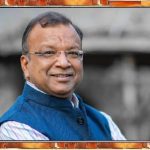
Dr. Sajjan Singh Yadav, a 1995-batch AGMUT cadre IAS officer, has been appointed as the new Chief Executive Officer of the Delhi Jal Board, one of the most consequential public institutions in the national capital. On top of that, he’s also been handed the additional charge of Additional Chief Secretary for Industries and the chairpersonship of the Delhi State Industrial and Infrastructure Development Corporation. That’s a significant portfolio by any measure — water supply for an entire metropolis, industrial policy, and infrastructure development, all landing on the same desk.
The Repatriation That Raised Eyebrows
Here’s what made this appointment unusual — and why it generated so much speculation before the picture became clear.
On March 31, 2026, Dr. Yadav was elevated to the rank of Special Secretary in the Department of Expenditure under the Union Ministry of Finance. That’s a major milestone in any IAS officer’s career -Secretary-equivalent empanelment is among the highest rungs in the civil services hierarchy. Officers who reach that level typically stay on central assignment for years, leveraging the seniority and prestige of the position.
So when the ACC approved his premature repatriation to the AGMUT cadre just two months later, it was puzzling. What would pull someone away from a Secretary-level central posting so quickly?
His appointment as CEO of the Delhi Jal Board answers that question. The government evidently had a specific role in mind for him — one that required someone with his particular combination of finance expertise, public policy depth, and crucially, prior experience with the Delhi Jal Board itself. Yes, he’s actually been associated with the institution before, which means he’s not walking into unfamiliar territory. He knows the organisation’s structure, its chronic challenges, and its pressure points — an advantage that likely factored into the decision.
A Resume That’s Hard to Match
Dr. Yadav has the kind of academic and professional profile that makes people do a double-take.
Start with the education. He holds a Master of Public Administration in Economics from Harvard University, another MPA in Public Policy from the Hubert H. Humphrey School of Public Affairs, and an MBA in Finance from the University of Delhi. That combination — Harvard, Humphrey, and Delhi — puts him in a very small category of IAS officers who’ve pursued advanced training across public policy, economics, and corporate finance simultaneously.
It also means that when he walks into a room to discuss municipal water infrastructure financing, sewerage network expansion, or industrial policy, he’s doing so with a level of technical grounding that goes well beyond what most administrators bring.
His career on the ground matches that academic pedigree. He started in Mizoram — field-level administrative work, the kind that puts you face to face with the actual machinery of governance — before moving into increasingly senior central government roles. Over the years at the Ministry of Finance, he worked his way through Joint Secretary, Additional Secretary, and finally Special Secretary in the Department of Expenditure, where public finance, fiscal policy, and expenditure management were his bread and butter.
He’s also served as Advisor to the Administrators of Daman and Diu and Dadra and Nagar Haveli, worked as Commissioner, Secretary, Director, Deputy Secretary, and as CEO of various government bodies. Nearly three decades of service, and the portfolio has ranged from remote Union Territories to the uppermost levels of central finance administration.
What He’s Walking Into at Delhi Jal Board
The Delhi Jal Board is not an easy posting. Delhi’s water supply challenges are well-documented — massive demand, aging infrastructure, distribution inequities, and perennial concerns about water loss in transmission. The city’s sewerage and wastewater systems require constant upgrading. And all of this happens under intense public and political scrutiny, because water is one of those utilities where any disruption becomes an immediate headline.
As CEO, Dr. Yadav will be responsible for managing the city’s water supply operations, overseeing sewerage and wastewater infrastructure, pushing forward conservation initiatives, and modernising the network. His previous exposure to the institution gives him a head start — he doesn’t need the onboarding period that a completely new appointment would require.
His finance background is also specifically useful here. Large infrastructure projects require complex funding arrangements — bonds, government allocations, central scheme convergence — and someone who has spent years inside the Department of Expenditure at the Finance Ministry understands that machinery from the inside out.
Beyond Bureaucracy — The Author and Policy Thinker
There’s another dimension to Dr. Yadav that’s easy to miss if you only look at the service record.
He’s a published author. His book on India’s vaccine ecosystem — tracing the country’s journey from early immunisation efforts all the way through to its contemporary vaccine manufacturing prowess — drew attention during the COVID-19 period for its research-driven, historically grounded analysis. It’s the kind of work that requires both scholarly discipline and the ability to synthesise complex information for a general audience. Not every IAS officer has that in them.
He’s also written a book specifically aimed at UPSC aspirants, chronicling the journeys of seven IAS officers who navigated the examination’s demands and came through. It’s become something of a popular read in the civil services preparation community — practical, personal, and less abstract than most exam-oriented writing.
Both books, taken together, say something about how Dr. Yadav thinks: analytically, with an eye on the long arc of institutions, and with some genuine interest in how systems evolve over time.
Three Big Roles, One Officer
What’s worth stepping back to appreciate is the sheer scope of what’s been handed to him. CEO of the Delhi Jal Board, Additional Chief Secretary for Industries, and Chairperson of DSIIDC — these aren’t peripheral assignments. They put him at the centre of Delhi’s water management, industrial development, and infrastructure planning in one go.
He replaces D. Vaidya, who had been holding the additional charge of Principal Secretary for Industries and Chairperson of DSIIDC. The transition now consolidates these responsibilities under a single officer with a broader mandate and, evidently, the government’s explicit confidence.
Whether that confidence pays off will depend on what happens on the ground — water reaching more homes reliably, infrastructure projects moving forward, industrial policy gaining traction. That’s the actual test. But if credentials and experience are any guide, Delhi’s new man at the Jal Board arrives with more of both than most.