

‘Civil Servants Are Agents of Change’: Lok Sabha Speaker Om Birla Urges IAS Trainees to Stay Rooted, Ethical and Citizen-Focused
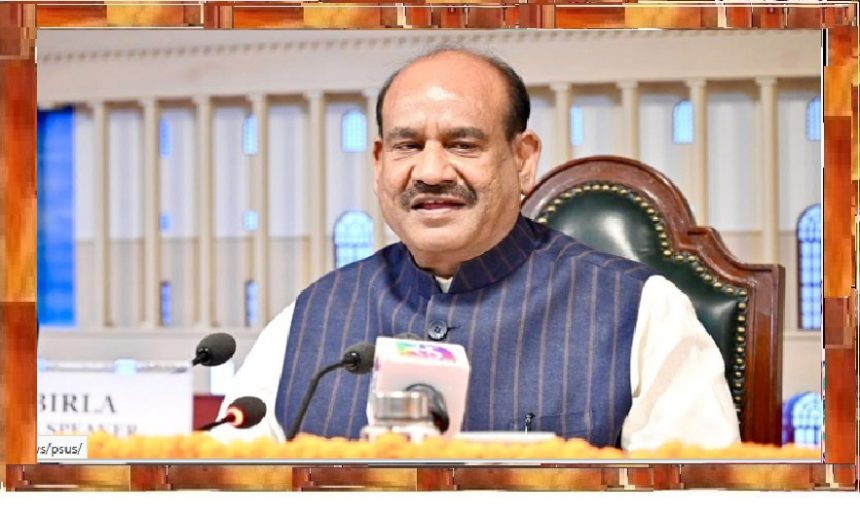
New Delhi: Delivering a powerful message to India’s future administrative leaders, Lok Sabha Speaker Om Birla called upon newly recruited Indian Administrative Service (IAS) officers to embrace public service as a lifelong mission rather than viewing it merely as a prestigious career. Addressing the 2024 batch of IAS officer trainees at Parliament House, Birla emphasized that civil servants occupy a unique position in India’s democratic framework and play a transformative role in converting public aspirations into meaningful outcomes.
The interaction took place under the Assistant Secretaries Programme, a key component of the training process for newly inducted IAS officers. Organized by the Parliamentary Research and Training Institute for Democracies (PRIDE), the training arm of the Lok Sabha Secretariat, the session offered young officers an opportunity to gain deeper insight into democratic governance, parliamentary functioning, policymaking, and the responsibilities that accompany public office.
Throughout his address, Birla repeatedly stressed that civil servants are not merely administrators executing government orders. Instead, he described them as vital nation-builders whose decisions, actions, and leadership directly influence the lives of millions of citizens.
Civil Servants Are the Bridge Between Policy and People
At the heart of Birla’s address was the idea that effective governance depends on a strong partnership between elected representatives and the administrative machinery.
He observed that while Members of Parliament and legislators represent public aspirations, debate issues of national importance, and enact laws, the ultimate success of those policies depends largely on the officers responsible for implementing them.
According to Birla, civil servants serve as the crucial bridge connecting government policy with public welfare.
A law may be well-intentioned, a policy may be visionary, and a welfare programme may be ambitious. Yet none of these can deliver results unless they are implemented efficiently and sensitively at the grassroots level.
He reminded the trainees that citizens often judge governments not by the policies announced in capitals but by the quality of services and outcomes they experience in their daily lives. In this context, the role of civil servants becomes indispensable.
“Public trust in governance is built not only through legislation but through effective execution,” Birla indicated, highlighting the immense responsibility resting on the shoulders of future administrators.
IAS Is Not Just a Job, It Is a Lifelong Commitment
One of the most striking messages from the Speaker’s address was his appeal to the officer trainees to look beyond the prestige associated with the IAS.
He urged them not to treat the service as merely a government position or a career milestone. Instead, he encouraged them to view it as a lifelong commitment to the Constitution, the nation, and the people they serve.
The IAS, he said, offers extraordinary opportunities to create positive change. At the same time, it demands unwavering dedication to public welfare, ethical conduct, and constitutional values.
Birla reminded the young officers that the authority and influence attached to their positions must always be balanced by responsibility and accountability.
Over the course of their careers, they will make decisions affecting education, healthcare, infrastructure, social welfare, law and order, economic development, and countless other aspects of public life. Such responsibilities require a service-oriented mindset rather than a position-oriented approach.
Administrative authority, he suggested, derives its legitimacy from public trust and should always be exercised in the larger interest of society.
Stay Connected to Ground Realities
A recurring theme throughout Birla’s interaction was the importance of remaining closely connected with ordinary citizens and understanding realities on the ground.
He cautioned future administrators against becoming isolated within offices and bureaucratic systems.
According to him, governance cannot be fully understood through files, reports, presentations, or official briefings alone. Real understanding emerges from direct interaction with people, communities, and local institutions.
Birla advised the trainees to regularly visit villages, urban neighborhoods, schools, hospitals, welfare centers, and public service facilities. Such interactions, he said, help administrators gain first-hand knowledge of the challenges citizens face every day.
He emphasized that effective governance requires empathy as much as administrative competence.
A successful officer, in his view, is not only someone who understands rules and procedures but also someone who understands human concerns, aspirations, and struggles.
By remaining grounded and accessible, administrators can design better solutions, identify implementation gaps, and respond more effectively to public needs.
Listening to Citizens Is Essential for Good Governance
Birla stressed that one of the most valuable qualities for any civil servant is the ability to listen.
Citizens often possess practical insights into local issues that may not be reflected in official reports. Listening carefully to people can help administrators identify challenges early and devise solutions that are both realistic and sustainable.
He encouraged officers to maintain regular contact with community groups, local representatives, and ordinary citizens.
Such engagement not only improves governance outcomes but also strengthens public confidence in government institutions.
According to Birla, people are more likely to trust an administration that listens to them, understands their concerns, and responds with sensitivity.
In a democracy, he noted, governance must remain citizen-centric rather than procedure-centric.
Importance of Communicating in Local Languages
Another important aspect highlighted during the interaction was the role of communication in administration.
Birla observed that officers who engage with citizens in local languages often establish deeper and more meaningful connections with communities.
Language, he said, is not merely a tool of communication. It is also a bridge of trust and understanding.
When administrators speak in a language that people are comfortable with, barriers are reduced, interactions become more open, and public grievances can be addressed more effectively.
He encouraged the officer trainees to learn and use local languages wherever possible, particularly during field postings.
Such efforts, he noted, can significantly improve citizen engagement and make governance more inclusive.
Welcoming the Rising Participation of Women in Civil Services
The Lok Sabha Speaker also expressed satisfaction at the growing representation of women in India’s civil services.
He described the increasing participation of women as a positive indicator of social progress and institutional maturity.
According to Birla, women officers have made remarkable contributions across sectors ranging from district administration and education to infrastructure, law enforcement, healthcare, and policymaking.
Their growing presence, he observed, is enriching governance systems by bringing diverse perspectives, improving inclusiveness, and strengthening decision-making processes.
He noted that the changing composition of the civil services reflects broader transformations taking place within Indian society and offers encouragement to future generations of women aspiring to leadership roles.
Integrity and Transparency Must Remain Non-Negotiable
As he neared the conclusion of his address, Birla placed special emphasis on integrity, transparency, and accountability.
He urged the trainees to uphold the highest ethical standards throughout their careers, regardless of the challenges they may encounter.
Public service, he said, demands honesty not only in financial matters but also in decision-making, conduct, and commitment to fairness.
Trust is one of the most valuable assets available to a civil servant. Once compromised, it is difficult to restore.
Birla encouraged officers to make integrity the foundation of their professional identity and to remain guided by constitutional principles in every decision they take.
He stressed that transparent governance strengthens democratic institutions and enhances public confidence in government systems.
Focus on the Most Vulnerable Sections of Society
The Speaker also reminded the trainees that the ultimate objective of governance is to improve the lives of citizens, particularly those who are marginalized, disadvantaged, or vulnerable.
He urged them to ensure that welfare programmes reach intended beneficiaries and that public resources are used effectively to create meaningful social impact.
Whether working in rural development, healthcare, education, agriculture, infrastructure, or social welfare, officers must keep citizens at the center of their decision-making process.
According to Birla, the true measure of administrative success lies not in titles or positions but in the positive difference an officer creates in people’s lives.
Preparing Future Administrators for Leadership
The interaction formed part of the Assistant Secretaries Programme, which provides newly recruited IAS officers with exposure to key institutions involved in governance and policymaking.
The programme is designed to help officers understand the functioning of Parliament, democratic processes, legislative institutions, and policy implementation mechanisms before they take up field assignments.
Such exposure enables future administrators to appreciate the broader context in which governance decisions are made and implemented.
As India moves toward increasingly ambitious developmental goals, the importance of capable, ethical, and citizen-focused civil servants continues to grow.
Through his address, Om Birla delivered a clear message to the next generation of administrators: remain rooted in constitutional values, stay connected with people, uphold integrity without compromise, and never lose sight of the larger purpose of public service.
For the young officers preparing to embark on their administrative careers, the interaction served as both an inspiration and a reminder that civil service is ultimately about serving people, strengthening democracy, and contributing to the nation’s progress.