


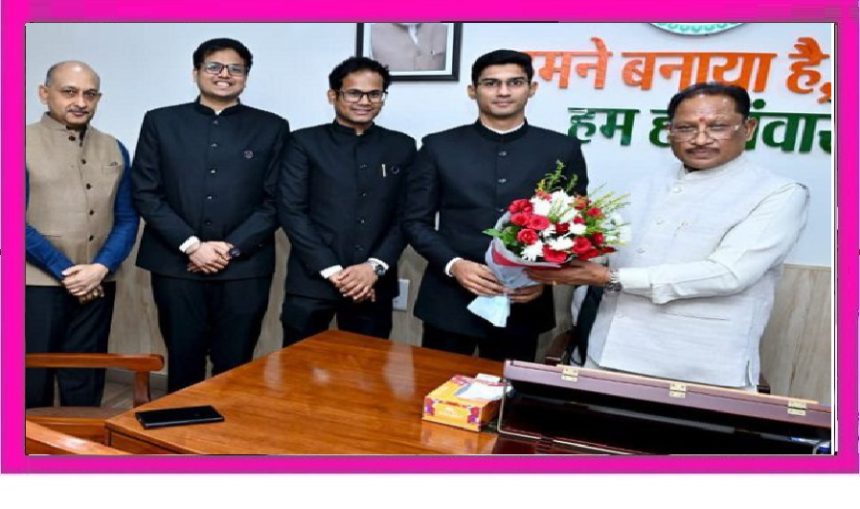
Chhattisgarh CM Vishnu Deo Sai Inspires IAS Probationers, Emphasises Grassroots Governance, Public Service and Citizen-Centric Administration
Chhattisgarh Chief Minister Vishnu Deo Sai met IAS probationers in Raipur and stressed the importance of public service, grassroots governance, empathy, and citizen-centric administration. The trainee officers shared their field experiences from Bastar and Surguja divisions.
Raipur: Reinforcing the importance of people-centric governance and compassionate administration, Chhattisgarh Chief Minister Vishnu Deo Sai on Monday interacted with three Indian Administrative Service (IAS) probationary officers currently undergoing training in the state. The meeting, held at the Chief Minister’s residence office in Raipur, provided an opportunity for the young officers to gain insights from the state’s top elected leader while sharing their own experiences from field training assignments across various districts of Chhattisgarh.
The interaction focused on the fundamental values of public administration, including integrity, sensitivity, fairness, accountability, and direct engagement with citizens. Chief Minister Sai used the occasion to remind the future administrators that civil services are not merely about implementing policies but about transforming lives and ensuring that governance reaches every section of society.
The probationary officers, who are presently undergoing training at the Chhattisgarh Administrative Academy in Nimora, also discussed their field experiences from several districts, particularly in the Bastar and Surguja regions, where they had the opportunity to observe governance mechanisms and developmental initiatives firsthand.
Chief Minister Congratulates Young Officers
At the outset of the interaction, Chief Minister Vishnu Deo Sai congratulated the probationary officers for successfully clearing one of the country’s most competitive examinations and securing a place in the Indian Administrative Service.
He described the achievement as a significant milestone and reminded the officers that their success carries with it immense responsibility.
According to the Chief Minister, becoming an IAS officer is not merely a personal accomplishment but also a commitment to public welfare and national development. He encouraged the trainees to approach their careers with humility, dedication, and a sincere desire to serve the people.
The meeting reflected the state government’s effort to expose young officers to practical governance perspectives and leadership experiences early in their careers.
Administration Is One of the Strongest Instruments of Public Service
During the discussion, Chief Minister Sai underlined the transformative role played by civil servants in society.
He observed that administrative service remains one of the most effective instruments for public welfare because decisions taken by government officers directly influence the lives of thousands, and often millions, of citizens.
The Chief Minister stressed that every administrative decision must be guided by public interest.
He urged the officers to ensure that welfare considerations remain at the heart of their work and advised them to cultivate three essential qualities throughout their careers:
Sensitivity toward citizens
Fairness in decision-making
Dedication to public service
According to him, officers who remain committed to these principles are better equipped to build trust between citizens and the government.
Understanding People’s Problems Requires Direct Interaction
A key message delivered by the Chief Minister was the importance of staying connected with ordinary people.
He noted that effective governance cannot be achieved from office chambers alone. Officers must regularly visit villages, towns, and communities to understand local realities and identify challenges faced by citizens.
Sai encouraged the probationers to develop the habit of interacting directly with people from different social and economic backgrounds.
Such engagement, he said, helps administrators gain a clearer understanding of public expectations and allows them to design solutions that are practical and effective.
He emphasized that governance becomes meaningful only when policies translate into tangible benefits for people on the ground.
Education and Training Must Lead to Social Transformation
The Chief Minister also spoke about the broader purpose of education and professional training.
He remarked that the true value of knowledge lies not in academic achievement alone but in its ability to bring positive change to society.
According to him, civil servants have a unique opportunity to use their education, skills, and administrative authority to improve lives and create lasting developmental impact.
He encouraged the officers to view their training period as a foundation for lifelong learning and public service.
By combining professional expertise with empathy and commitment, he said, administrators can contribute significantly to social transformation and inclusive development.
Chhattisgarh Offers Immense Opportunities for Young Administrators
During the interaction, Chief Minister Sai also highlighted the evolving developmental landscape of Chhattisgarh.
He described the state as a land of immense opportunities, rich cultural traditions, and enormous growth potential.
According to him, Chhattisgarh has witnessed notable progress across several sectors in recent years, creating a dynamic environment for young administrators.
He pointed to multiple areas where the state is undergoing transformation, including:
Expanding road and transport connectivity
Strengthening digital infrastructure
Growing tourism opportunities
Accelerating rural development initiatives
Enhancing social welfare programmes
Advancing tribal empowerment efforts
Improving education and healthcare services
The Chief Minister also highlighted the government’s continued efforts toward eliminating Left-Wing Extremism and promoting peace, stability, and development in affected regions.
Focus on Tribal Heritage and Inclusive Growth
A significant portion of the discussion centered on Chhattisgarh’s rich tribal heritage and cultural diversity.
The Chief Minister spoke about the state’s vibrant traditions, indigenous communities, and unique social fabric.
He stressed the importance of preserving tribal culture while simultaneously ensuring socio-economic advancement and inclusive development.
Young officers, he said, must understand the aspirations of tribal communities and work towards ensuring that development reaches even the most remote areas.
This balanced approach, according to him, is essential for sustainable growth and equitable governance.
IAS Probationers Share Experiences from Field Training
The three probationary officers – Gokul R. K., V. Yashwant Nayak, and Ishant Jaiswal – shared details of their field training experiences across various districts of Chhattisgarh.
During the course of their training, they visited several important districts spread across Bastar and Surguja divisions.
Their field assignments included visits to:
Sukma
Bijapur
Jashpur
Surguja
Korea
The officers explained that these visits gave them an opportunity to closely observe local governance systems, development projects, public welfare programmes, and district-level administrative functioning.
They also interacted with local communities and gained valuable exposure to the practical challenges faced by administrators in diverse geographical and social settings.
Exposure to Bastar’s Developmental Landscape
The probationers described their visits to Bastar division as particularly enlightening.
Bastar has long occupied a special place in India’s administrative and developmental discourse because of its unique tribal heritage, natural resources, and historical security challenges.
The officers said their field exposure helped them better understand how governance, infrastructure development, welfare delivery, and security measures work together to improve living conditions in the region.
They observed various initiatives aimed at strengthening education, healthcare, livelihoods, connectivity, and citizen services.
The experience, they noted, offered important lessons about adaptive governance and responsive administration.
Visit to Maa Danteshwari Temple Leaves Lasting Impression
Among the highlights of their field training was a visit to the revered Maa Danteshwari Temple, one of Chhattisgarh’s most important spiritual and cultural landmarks.
The officers shared their experiences of visiting the temple and learning about its historical, cultural, and religious significance.
They noted that understanding local traditions and cultural heritage is an important aspect of public administration because it helps officers connect more effectively with communities.
The visit provided them with deeper insight into the region’s cultural identity and social values.
Officers Praise Chhattisgarh’s Diversity and Hospitality
The probationers expressed admiration for Chhattisgarh’s cultural richness, social diversity, and welcoming atmosphere.
They described the state as a place where traditional values coexist with rapid development and modernization.
The officers said they were particularly impressed by the warmth and hospitality extended by local communities during their field visits.
They also praised the strong tribal traditions and cultural vibrancy that distinguish the state from many other regions of the country.
According to them, the experience reinforced their understanding that public administration must always remain sensitive to local cultures and community aspirations.
Lessons from Governance and Public Life
Drawing from his own extensive public life and governance experience, Chief Minister Sai offered practical advice to the young officers.
He encouraged them to remain lifelong learners and to treat every field posting as an opportunity for growth and understanding.
The Chief Minister emphasized that the most effective administrators are those who continuously learn from their experiences and adapt to changing circumstances.
He advised them to stay grounded, remain accessible to citizens, and never lose touch with grassroots realities.
Empathy as the Foundation of Good Governance
One of the central themes of the interaction was the role of empathy in administration.
The Chief Minister stressed that administrative success cannot be measured solely through statistics, reports, or project completion figures.
True success, he said, lies in the ability of officers to understand people’s concerns and respond with compassion and fairness.
He encouraged the probationers to cultivate a humane approach in their professional lives and to remember that governance ultimately revolves around improving the quality of life of citizens.
Preparing the Next Generation of Administrators
The interaction reflected the Chhattisgarh government’s commitment to nurturing capable, ethical, and people-oriented civil servants.
By facilitating direct engagement between senior political leadership and young administrators, the state aims to strengthen governance capacity and encourage a citizen-first approach among future leaders of the bureaucracy.
For the probationary officers, the meeting offered valuable guidance at an important stage of their careers. For the government, it served as an opportunity to reinforce the values of integrity, accountability, compassion, and grassroots engagement that remain central to effective public administration.
As Chhattisgarh continues its journey of development and transformation, such interactions are expected to play a meaningful role in shaping a new generation of administrators committed to public welfare, inclusive growth, and responsive governance.