2015 Faridkot Sacrilege Probe Intensifies: SIT Summons Former Union Minister Vijay Sampla and Two Retired IAS Officers for Questioning
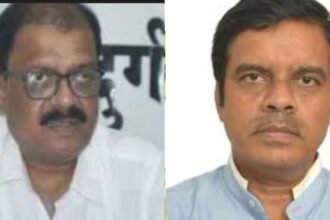
The SIT probing the 2015 Faridkot sacrilege and police firing cases has summoned former Union Minister Vijay Sampla and retired IAS officers Malwinder Singh Jaggi and Gagandeep Singh Brar. The move marks a significant development in one of Punjab’s most sensitive and long-running investigations.
The Special Investigation Team (SIT) examining the controversial 2015 Faridkot sacrilege-related cases has taken a significant step forward by summoning former Union Minister of State and senior BJP leader Vijay Kumar Sampla, along with two retired Indian Administrative Service officers, for questioning as part of its ongoing investigation.
The development has once again brought one of Punjab’s most politically sensitive and emotionally charged cases into the spotlight. More than a decade after the incidents shook the state and triggered widespread protests, the investigation continues to examine various aspects of the sacrilege episodes and the subsequent police actions that followed.
According to official sources, Vijay Sampla, retired IAS officer Malwinder Singh Jaggi, and retired IAS officer Gagandeep Singh Brar have all been directed to appear before the SIT in Jalandhar on June 22. The summons indicate that investigators believe the three individuals may possess information relevant to the ongoing inquiry.
SIT Issues Summons Under BNSS Provisions
The notices have been issued under Section 179 of the Bharatiya Nagarik Suraksha Sanhita (BNSS), which empowers investigating agencies to summon individuals believed to have knowledge of facts and circumstances connected to a case under investigation.
As per the notice, Vijay Sampla has been instructed to appear before the SIT at 11 a.m. at the Gos Mess located within the Punjab Armed Police Complex in Jalandhar. Officials stated that his statement is required as part of efforts to gather additional information regarding events linked to the Faridkot sacrilege cases.
Investigators have not publicly disclosed the precise areas on which Sampla will be questioned. However, the notice specifically mentions that the SIT considers him acquainted with facts and circumstances relevant to the investigation.
The issuance of the summons suggests that the SIT is continuing to widen the scope of its inquiry and revisit various leads connected to the incidents that occurred in 2015.
Background of the Faridkot Sacrilege Controversy
The Faridkot sacrilege incidents remain among the most significant and controversial events in Punjab’s recent history.
The controversy erupted in 2015 after reports emerged regarding alleged desecration incidents involving religious texts, leading to widespread anger and protests across several parts of the state.
Public outrage intensified as demonstrations grew larger, eventually resulting in confrontations between protesters and law enforcement authorities. The incidents generated intense political debate, legal battles, and repeated demands for accountability from various sections of society.
Over the years, multiple investigations, commissions, and inquiries have attempted to establish responsibility and determine the circumstances that led to both the sacrilege incidents and the subsequent violence.
Two Major FIRs Continue to Be Investigated
The current summons are linked to two important First Information Reports that were registered during the aftermath of the 2015 incidents.
The first case, FIR No. 129, was registered at Bajakhana Police Station on October 14, 2015. The case includes several serious allegations, including attempt to murder, rioting, unlawful assembly, damage to public property, and violations of provisions under the Arms Act.
The second case, FIR No. 130, was registered on October 21, 2015. This FIR involves charges under Sections 302, 307, and 34 of the Indian Penal Code, in addition to offences under the Arms Act.
Both FIRs have remained at the centre of legal and political discussions in Punjab for years. They are considered among the most closely scrutinized criminal cases arising out of the Faridkot sacrilege controversy and the police firing incidents that followed.
Retired IAS Officers Also Under SIT Lens
Apart from Vijay Sampla, the SIT has also called retired IAS officers Malwinder Singh Jaggi and Gagandeep Singh Brar for questioning.
Authorities have not revealed the specific aspects of the case regarding which the two former bureaucrats are expected to provide information. Officials have only indicated that their statements are considered necessary for the progress of the investigation.
The decision to summon retired senior civil servants highlights the broad scope of the inquiry and suggests that investigators are examining administrative decisions, official communications, and events surrounding the handling of the situation during that period.
Observers note that senior bureaucrats often play key roles in crisis management and administrative decision-making during sensitive law-and-order situations, making their testimonies potentially valuable for investigators attempting to reconstruct events.
Vijay Sampla Confirms Receipt of Notice
Speaking after receiving the summons, Vijay Sampla confirmed that he had been officially informed by the SIT and would comply with the direction.
The senior BJP leader stated that although he was not fully aware of the specific details connected to the summons, he respected the legal process and intended to cooperate with investigators.
His statement is being viewed as an indication that he is willing to participate in the inquiry and provide any information sought by the investigation team.
Legal experts note that cooperation from individuals summoned by investigative agencies often assists in expediting inquiries and helps authorities establish a clearer understanding of the circumstances under examination.
Renewed Momentum in a Decade-Old Investigation
The latest summons have reignited public attention on a case that has remained under scrutiny for more than ten years.
The SIT is understood to be reviewing several aspects of the sacrilege incidents, the protests that followed, administrative actions taken during the period, and subsequent developments linked to the police firing cases.
Officials involved in the investigation have indicated that the inquiry remains active and that additional witnesses may be called if required.
The investigation team is reportedly examining documents, official records, witness testimonies, and previous findings to build a comprehensive understanding of the events.
Political and Public Significance
The Faridkot sacrilege cases continue to carry immense political significance in Punjab. The incidents have repeatedly surfaced in election campaigns, legislative debates, and public discussions, with various political parties taking strong positions on the matter over the years.
Families affected by the incidents, religious organizations, and civil society groups have consistently demanded a thorough and transparent investigation. As a result, every major development in the case attracts considerable public attention.
The SIT’s decision to summon a former Union Minister and two retired IAS officers is therefore being seen as an important step in a probe that remains highly sensitive and closely watched.
What Happens Next?
With Vijay Sampla, Malwinder Singh Jaggi, and Gagandeep Singh Brar scheduled to appear before investigators, attention will now shift to the statements they provide and how those testimonies influence the direction of the investigation.
Officials have clarified that individuals summoned by the SIT are expected to cooperate fully and that non-compliance may invite legal consequences under applicable provisions.
As the inquiry progresses, the latest development signals that authorities remain committed to examining all relevant aspects of the Faridkot sacrilege and police firing cases, regardless of the passage of time.
For many observers, the summons represent renewed momentum in one of Punjab’s most consequential investigations, an inquiry whose eventual findings are expected to have lasting implications for accountability, governance, and public trust in the justice process.