

The Ultimate Plot Twist in Odisha Politics: Former Top Bureaucrat Sujata Karthikeyan Steps into the BJD Arena Amid Intense Succession Buzz
Former IAS officer Sujata Rout Karthikeyan, wife of VK Pandian, joins BJD. Discover what her political entry means for Naveen Patnaik’s party, succession rumors, and Odisha’s future.
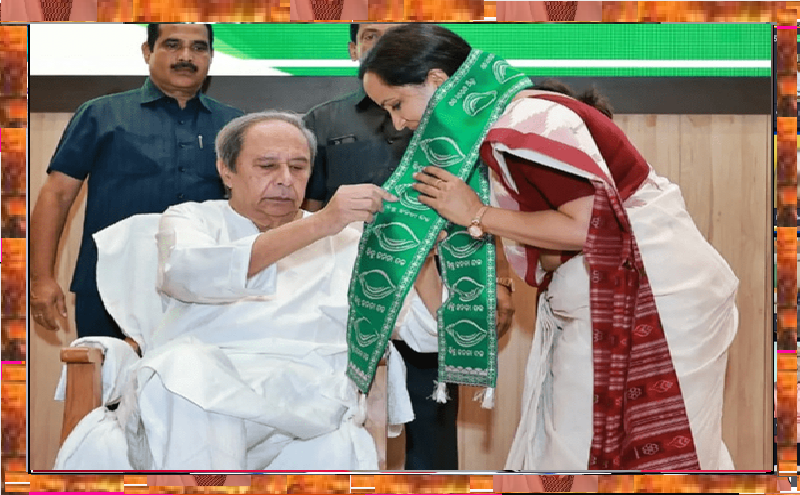
Odisha’s political theater just got a massive dose of adrenaline. In a move that has sent shockwaves through regional power corridors, Sujata Rout Karthikeyan – a formidable former IAS officer and the wife of the highly debated bureaucrat-turned-politician V.K. Pandian – has officially traded her administrative pens for a political career. Stepping right into the heart of the Biju Janata Dal (BJD), her formal induction took place under the direct supervision of party patriarch Naveen Patnaik himself.
This isn’t just another routine party joining. Coming more than a year after the BJD suffered a bruising defeat in the 2024 Assembly and Lok Sabha elections, losing its decades-long grip on power to the BJP, this development feels like the opening chapter of a major organizational reboot. The whispers regarding who will eventually inherit Patnaik’s political legacy have instantly grown into a loud roar.
A Red-Carpet Welcome at Sankha Bhawan
The atmosphere at Sankha Bhawan, the sleek BJD headquarters in Bhubaneswar, was electric. Senior party leaders, grassroots workers, and an overwhelming contingent from the party’s women’s wing gathered to give Sujata a roaring reception. Flowers, slogans, and intense media scrutiny set the stage.
Naveen Patnaik kept his public statements characteristically measured, attempting to position her entry as a grassroots-level induction rather than a top-tier coronation. Welcoming her to the fold, Patnaik noted that she would be joining as a simple member of the party. He highlighted her extensive background as an IAS officer who held numerous critical positions, particularly emphasizing her final administrative stint dedicated to the welfare of women in Odisha. He expressed confidence that as she transitions into this new role, she will learn to help people on the ground, especially women.
Sujata, standing alongside the veteran leader, was quick to frame her move as a continuation of her lifelong public service. She noted that she had been granted the opportunity to serve the people of Odisha for 24 years under Naveen Patnaik’s administrative leadership. By joining the BJD, she viewed it as a chance to continue that exact mission. She invoked the blessings of Lord Jagannath, promising to work with absolute sincerity and dedication alongside the party cadre.
Strategy, Succession, and the Shadow of the Past
Behind the smiles and the sweet public statements lies a complex web of political calculus. Why now? Why Sujata?
Political analysts view this as a deeply deliberate calculations-based play aimed at reviving a party that is still licking its wounds from the 2024 electoral upset. The BJD leadership pulled out all the stops for this event, inviting senior leaders, MPs, MLAs, and district representatives from all 30 districts of Odisha to the headquarters. This massive gathering was a clear attempt to project absolute internal consensus over her arrival.
Yet, the reaction within the party ranks is far from uniform. It is a mixed bag of optimism and deep anxiety.
To understand the anxiety, you have to look back at the 2024 elections. A major weapon used by the opposition was the immense, near-absolute influence wielded by Sujata’s husband, V.K. Pandian, during the twilight years of the BJD government. Critics labeled it a “bureaucratic hijack” of democratic governance, a narrative that severely damaged the party at the polls.
A senior BJD insider, speaking off the record, admitted there is a lingering fear that Sujata’s entry might be viewed by the public as a backdoor maneuver to revive Pandian’s influence within the party framework. On the flip side, heavyweights like former Odisha minister Tukuni Sahu have loudly championed her entry. They argue that her unparalleled track record with women’s self-help groups is exactly the shot in the arm the BJD needs to win back its core voter base.
From JNU to the Corridors of Power: Who is Sujata Karthikeyan?
To predict where she is going, you have to look at where she came from. Born on May 9, 1975, in Baluria village within the Kendrapara district of Odisha, Sujata Rout is a daughter of the soil. Her academic pedigree is top-tier. She moved to Delhi to pursue a Bachelor’s degree in Political Science from the prestigious Lady Shri Ram College, followed by a Master’s degree in International Politics from Jawaharlal Nehru University (JNU).
Her life changed course at the Lal Bahadur Shastri National Academy of Administration (LBSNAA) in Mussoorie, where she cracked the elite civil services and met a fellow officer trainee from the 2000 batch – V.K. Pandian. After they tied the knot, Pandian legally shifted his cadre from Punjab to Odisha, setting the stage for the creation of the state’s most powerful bureaucratic power couple. Together, they have two children.
Before opting for voluntary retirement from service (VRS) in March 2025, Sujata spent nearly a quarter of a century operating the levers of the Odisha government. She wasn’t just a desk-bound bureaucrat; she was a hands-on policy architect.
The Legacy of the “Football Collector” and the Bicycle Pioneer
Long before she was a household name across the state, Sujata made waves during her early posting as the District Collector of Sundargarh. In an area heavily impacted by Maoist insurgency, she realized that conventional administration wasn’t enough to steer youth away from radicalization. She turned to sports.
Earning the affectionate nickname of the “Football Collector,” she aggressively promoted football and hockey among tribal and rural youth. She set up sports hostels, personally distributed athletic gear, and used the playing field as a mechanism for social engineering and community development.
In 2005, she looked at the alarming dropout rates among young tribal girls who had to walk miles to reach schools. Her solution was a simple, transformative initiative called “Mobility is Empowerment,” which distributed bicycles to school-going girls. The policy was an instant hit, radically dropping school dropout rates and eventually serving as a blueprint for statewide educational reforms.
Transforming Plates and Empowering Millions
Her knack for practical governance continued in 2006 when she noticed rampant child malnutrition in rural schools. Defying bureaucratic inertia, she introduced protein-rich eggs into the Mid-Day Meal scheme in Sundargarh. It sounds normal today, but back then, navigating the administrative hurdles to alter school menus was a massive task. The nutritional metrics spiked so positively that the state government eventually rolled out the egg-inclusive menu across all of Odisha.
Later, as the Director of Social Welfare, she became the prime architect behind the “Mamata Scheme” – a conditional cash transfer program that deposited money directly into the bank accounts of pregnant and lactating women. The scheme received national accolades for drastically reducing infant and maternal mortality rates.
However, her crowning administrative achievement is undoubtedly her time leading “Mission Shakti.” Under her watchful eye, Mission Shakti transformed from a modest welfare initiative into a sprawling, hyper-powerful economic engine.
The Mission Shakti Impact Matrix
Massive Scale: Mobilized and empowered over 70 lakh women across rural and urban Odisha.
Financial Muscle: Skyrocketed Self-Help Group (SHG) credit linkages from a modest ₹500 crore to a staggering ₹15,000 crore.
Economic Shift: Transformed rural homemakers into micro-entrepreneurs, small-business owners, and active participants in local banking ecosystems.
The Culture Portfolio and the Road Ahead
Sujata wasn’t just about rural economics; she also held sway over Odisha’s cultural branding. As the Secretary of the Culture Department, she was the administrative force behind the first-ever World Odia Language Conference, a high-decibel global event designed to celebrate and preserve Odia heritage, literature, and linguistics. She also shattered glass ceilings by becoming the first-ever woman District Collector of Cuttack.
Now that she has shed her bureaucratic armor, the political arena offers a entirely different beast to tame. Becoming an ordinary party worker is clearly a strategic starting point, but nobody expects a woman of her administrative stature to remain in the back row for long.
Will she succeed in rebranding the BJD and winning back the trust of the electorate? Can she step out from the controversial shadow of her husband’s past political missteps and carve out her own independent identity as Naveen Patnaik’s potential successor? The coming months will reveal whether the “Football Collector” can successfully score the ultimate goal in the unpredictable stadium of Indian politics.