


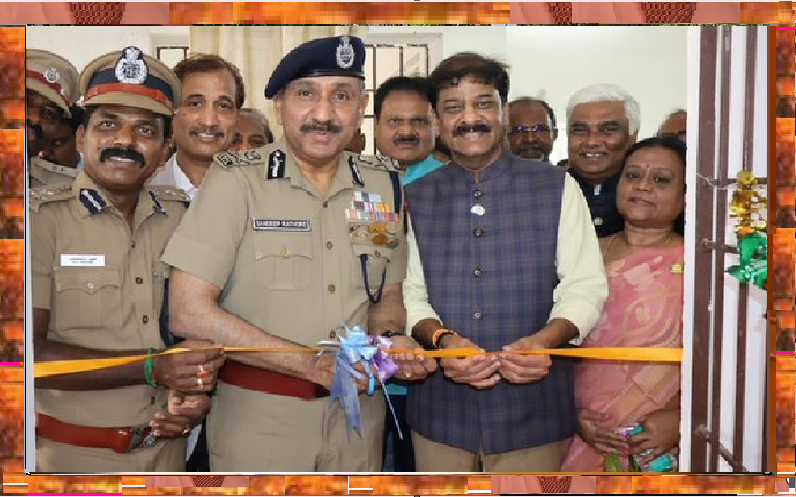
DG Prisons Sandeep Rai Rathore Inaugurates T-Shirt Manufacturing Unit at Puzhal Prison to Empower Inmate Rehabilitation and Employment
In a significant move aimed at strengthening prison reforms and creating better rehabilitation opportunities for inmates, Tamil Nadu Director General of Prisons and Correctional Services Sandeep Rai Rathore, a 1992-batch IPS officer, inaugurated a modern T-shirt manufacturing unit at Central Prison-I, Puzhal, on Wednesday.
The new facility has been established as part of the Tamil Nadu Prisons Department’s broader effort to transform correctional institutions into centres of learning, skill development and rehabilitation. By providing inmates with practical vocational training in garment manufacturing, the initiative seeks to equip them with market-ready skills that can help them secure meaningful employment and rebuild their lives after completing their prison sentences.
Officials believe that vocational education remains one of the most effective tools for reducing repeat offences and supporting the successful reintegration of former inmates into society.
Initiative Launched in Partnership with Rotary International
The T-shirt manufacturing unit has been set up in collaboration with Rotary International District 3234, reflecting the growing role of public-private partnerships in strengthening correctional reforms.
Through this collaboration, inmates will receive structured, hands-on training in garment production, one of India’s largest employment-generating industries. The programme has been designed to provide practical exposure to every stage of the manufacturing process, enabling participants to develop valuable technical skills while serving their sentences.
Prison officials said the training is intended to prepare inmates for employment opportunities in the textile and apparel sector after their release, helping them transition towards stable livelihoods and lawful occupations.
The partnership also demonstrates how social organisations can contribute to rehabilitation efforts by supporting skill development programmes inside correctional institutions.
Skill Development at the Heart of Prison Reforms
Speaking during the inauguration ceremony, DG Prisons Sandeep Rai Rathore highlighted the growing importance of vocational education in modern correctional administration.
He noted that Tamil Nadu’s prison system currently houses more than 22,000 inmates across 125 prisons. Managing such a large prison population requires more than ensuring security, he said. It also demands sustained efforts to prepare inmates for productive lives after they leave prison.
According to Rathore, rehabilitation and skill development have become central pillars of prison administration in the state. Providing inmates with practical training not only improves their employability but also enhances their confidence, self-esteem and ability to become financially independent once they return to society.
He emphasised that correctional institutions should focus on reforming lives rather than merely confining offenders.
Real-World Experience in Garment Manufacturing
The newly inaugurated manufacturing unit has been designed to offer inmates practical experience in commercial garment production instead of limiting training to classroom instruction alone.
Participants will learn various aspects of T-shirt manufacturing, including handling industrial sewing machines, stitching, garment finishing, quality control and production management. Working in a real manufacturing environment will allow them to understand industrial processes and workplace discipline while developing skills that are directly relevant to the apparel industry.
Officials said this combination of technical training and practical work experience is expected to significantly improve employment prospects for inmates after their release.
The programme also aims to familiarise participants with professional production standards, helping them become job-ready before they complete their prison terms.
Creating Better Opportunities After Release
One of the primary objectives of the initiative is to improve post-release rehabilitation by ensuring that inmates possess employable skills before returning to society.
Many former prisoners struggle to find stable employment because of limited educational qualifications, lack of vocational training or social stigma. By introducing industry-oriented skill development programmes inside prisons, the Tamil Nadu Prisons Department hopes to reduce these barriers.
Officials believe that inmates who leave prison with practical work experience are more likely to secure legitimate employment, achieve financial stability and avoid returning to criminal activities.
Vocational training has increasingly become an important component of correctional policies across India, with several states introducing programmes in tailoring, carpentry, food processing, handicrafts, agriculture and other trades. The T-shirt manufacturing unit at Puzhal represents another step in this direction.
Transforming Prisons into Centres of Reform
Rathore observed that prisons should not be viewed solely as places where offenders serve their sentences. Instead, they should function as institutions that help individuals rebuild their lives through education, skill development and behavioural transformation.
The new garment manufacturing unit reflects this philosophy by creating an environment where inmates can spend their time productively while preparing themselves for future employment.
Officials said meaningful engagement in vocational activities also contributes to discipline inside prisons by encouraging inmates to focus on learning and self-improvement.
Such initiatives are expected to play an important role in changing public perceptions about correctional institutions and reinforcing the idea that rehabilitation remains one of the primary goals of the criminal justice system.
Reducing Repeat Offences Through Employment
Correctional experts have consistently highlighted the link between stable employment and lower rates of repeat offending.
By equipping inmates with market-relevant vocational skills, the Tamil Nadu Prisons Department hopes to reduce recidivism while encouraging self-reliance and social reintegration.
Officials said employment provides former inmates with financial independence, dignity and a renewed sense of purpose, making it easier for them to rebuild relationships with their families and communities.
The department believes that initiatives such as the T-shirt manufacturing unit can contribute meaningfully to long-term rehabilitation by helping inmates establish lawful and sustainable careers after release.
A Step Towards Stronger Correctional Administration
The establishment of the garment manufacturing facility at Central Prison-I, Puzhal, underlines the Tamil Nadu government’s continued commitment to rehabilitation-focused prison reforms.
By combining vocational education, practical industry exposure and institutional partnerships, the programme seeks to prepare inmates for successful reintegration into society while supporting broader correctional objectives.
As the prison department continues expanding skill development initiatives across correctional institutions, officials hope similar programmes will empower more inmates with employable skills, strengthen rehabilitation efforts and reinforce the vision of prisons as centres of learning, reform and positive social transformation rather than merely places of incarceration.