Madras High Court Rejects Savukku Shankar’s PIL Seeking CBI Probe Against IPS Officer A. Arun, Says Public Interest Litigation Cannot Be Used for Personal Grievances
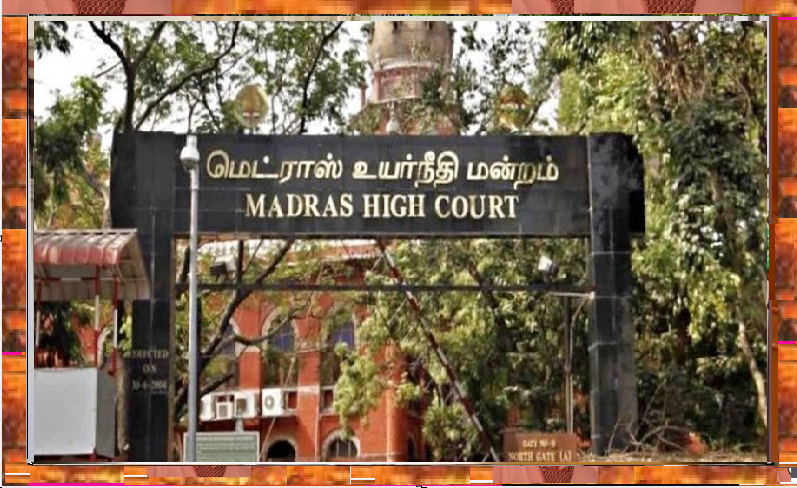
In a significant ruling reiterating the true purpose of Public Interest Litigation (PIL), the Madras High Court has dismissed a petition filed by YouTuber and social commentator ‘Savukku’ Shankar, who had sought a Central Bureau of Investigation (CBI) probe against senior IPS officer A. Arun, Director of Vigilance and Anti-Corruption (DVAC).
A Division Bench comprising Chief Justice Sushrut Arvind Dharmadhikari and Justice G. Arul Murugan held that the petition was not maintainable, observing that it lacked the bona fides required for invoking the court’s extraordinary PIL jurisdiction. The Bench concluded that the litigation appeared to be motivated by personal hostility rather than any genuine concern for public interest.
The judgment serves as another reminder that PILs are meant to safeguard public rights and provide access to justice for disadvantaged sections of society, not to become a platform for pursuing personal disputes or vendettas.
Court Reiterates the Constitutional Purpose of PIL
While delivering its judgment on Wednesday, the Division Bench devoted considerable attention to explaining the constitutional philosophy behind Public Interest Litigation.
The judges observed that PIL is one of the judiciary’s most important constitutional tools, created to ensure that justice reaches people who are unable to approach the courts because of poverty, social disadvantages or other structural barriers.
The Bench stressed that this extraordinary legal remedy must always be exercised with caution and sincerity.
Highlighting the objective behind PILs, the court observed:
“PIL is a sacred tool intended to bring justice within the reach of the marginalised and vulnerable segments of society who are unable to approach the courts due to structural or economic socio-disabilities. It cannot be reduced to a forum for vindicating personal animosity.”
According to the court, allowing personal disputes to be projected as public causes would undermine the very purpose for which the PIL mechanism was developed.
Personal Grievances Cannot Be Disguised as Public Interest
The High Court made it clear that while Public Interest Litigation remains a powerful instrument for protecting constitutional rights and promoting public welfare, it cannot be misused to settle individual scores.
The judges observed that litigants cannot invoke the court’s PIL jurisdiction merely by giving a personal dispute the appearance of a public cause.
According to the Bench, the extraordinary jurisdiction exercised in PIL matters is reserved for cases that genuinely affect public interest and require judicial intervention for the larger benefit of society.
The court cautioned that any attempt to convert personal hostility into public litigation weakens the credibility of the PIL system and burdens the judicial process.
Petition Found to Lack Bona Fides
Examining the facts of the case, the Bench concluded that the petitioner had failed to establish the good faith necessary for maintaining a Public Interest Litigation.
The petition sought a CBI investigation against IPS officer A. Arun by relying upon certain observations made by another Division Bench of the High Court while deciding a habeas corpus petition.
However, after examining the available records, the judges observed that there already existed a well-documented history of personal hostility between the petitioner and the officer concerned.
The Bench noted that such circumstances seriously undermined the claim that the petition had been filed solely in public interest.
The court observed:
“The ultimate test of substance and public interest cannot be used as a shield to validate an action that is fundamentally rooted in personal animosity.”
According to the judges, once personal hostility became evident, the petition could no longer be regarded as a genuine Public Interest Litigation.
Earlier Judicial Record Also Noted Personal Hostility
The High Court also referred to the very judicial order that the petitioner had relied upon while seeking the CBI investigation.
The Bench pointed out that the earlier Division Bench had itself recorded the existence of hostility and serious personal allegations involving the petitioner and the IPS officer.
Given that background, the present Bench held that the litigation could not be viewed as an independent public cause detached from the petitioner’s personal grievances.
The judges observed that the surrounding circumstances clearly indicated that the petition lacked the impartiality expected from a genuine public-spirited litigant.
Consequently, the court found that the legal requirements for entertaining a PIL had not been satisfied.
Supreme Court Guidelines Taken Into Consideration
While deciding the matter, the Division Bench also referred to the legal principles laid down by the Supreme Court regarding the maintainability of Public Interest Litigations.
The High Court noted that the apex court has consistently held that PIL jurisdiction should be exercised only where the petitioner approaches the court with clean hands, genuine intentions and an authentic public cause.
Applying those established principles to the present case, the Bench concluded that the petitioner had failed to demonstrate the bona fides necessary to invoke the court’s extraordinary constitutional jurisdiction.
The judgment stated:
“In light of the aforesaid findings and authoritative pronouncements of the Supreme Court, this court holds that the petitioner lacks the bona fides required to sustain this action.”
With these observations, the Division Bench dismissed the petition as not maintainable.
Court Warns Against Misuse of PIL Jurisdiction
The High Court also issued a broader caution against the misuse of Public Interest Litigation by individuals pursuing hidden motives or personal agendas.
According to the Bench, PIL jurisdiction occupies a special place in India’s constitutional framework because it enables courts to protect the rights of disadvantaged communities and address issues affecting society at large.
The judges observed that this extraordinary jurisdiction should never be allowed to become a tool for advancing personal rivalries under the guise of public interest.
The court emphasised that litigants presenting themselves as public-spirited individuals must demonstrate genuine concern for society rather than personal grievances.
Judgment Reinforces Established Legal Position
The ruling once again reinforces the judiciary’s long-standing position that Public Interest Litigation is intended to serve the larger public good and not individual interests.
By dismissing the petition, the Madras High Court has reiterated that courts will closely examine the bona fides of petitioners before entertaining PILs, particularly where allegations of personal hostility or private disputes are evident.
Legal observers believe the judgment strengthens safeguards against the misuse of PIL jurisdiction while preserving its original constitutional purpose of ensuring justice for those who are unable to seek legal remedies on their own.
The decision also sends a clear message that while courts remain committed to protecting genuine public causes, they will not permit extraordinary constitutional remedies to be used as instruments for pursuing personal conflicts or settling private scores.