


Telangana High Court Pulls Up Housing Society, Orders Immediate Membership for IAS Officer Dr Srivatsa Krishna, Warns of Contempt Action
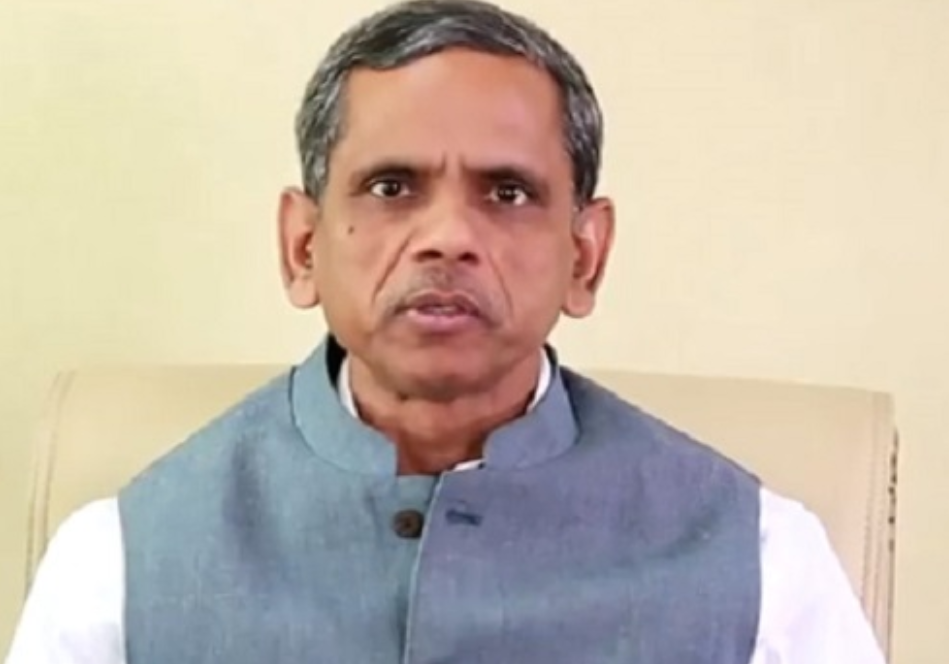
Sending out a strong message that court orders cannot be ignored indefinitely, the Telangana High Court has directed the Adarsh Nagar Mutually Aided Cooperative Housing Society Limited to immediately grant membership to senior IAS officer Dr Srivatsa Krishna (1994 batch, Karnataka cadre). The court also made it clear that any further delay would invite contempt proceedings against the society’s representatives.
The Bench ordered the housing society to convene an emergency meeting of its Board and complete all formalities for granting membership to the senior bureaucrat by 10:30 am the following day. It also warned that if the directions were not implemented within the stipulated time, the concerned representative would have to appear personally before the court and explain the non-compliance, with contempt proceedings likely to follow.
The order came during the hearing of a contempt petition filed by Dr Krishna, who alleged that the society had failed to comply with an earlier High Court judgment despite repeated opportunities.
Court Voices Strong Displeasure Over Years of Delay
The matter was heard by a Single Bench of Justice Jukanti Anil Kumar, who expressed dissatisfaction over the prolonged delay in implementing a judicial order that had already settled the issue.
The contempt petition was filed under the provisions of the Contempt of Courts Act, 1971, naming senior government officials as well as office-bearers of the cooperative housing society. The petition claimed that despite a clear direction issued by the High Court nearly three years ago, the respondents had still not acted upon it.
According to the petitioner, the dispute traces its origins to a writ petition filed as far back as 2011. After years of litigation, the High Court, in its order dated November 15, 2023, directed the society to include Dr Krishna’s name among its members. Even after that judgment, however, the order remained unimplemented.
The court took note of the continued delay and questioned why a binding judicial order had still not been executed.
Contempt Proceedings Focus Only on Compliance, Says Court
During the hearing, Justice Anil Kumar clarified an important legal principle. A contempt court, he observed, is not expected to reconsider or reopen issues that have already been decided in the original case.
Its role is much narrower.
The only question before the court was whether the respondents had complied with the earlier judicial directions. If they had not, they would have to face the legal consequences prescribed under the Contempt of Courts Act.
The Bench also noted the absence of the concerned official during the proceedings, even though senior counsel appeared on behalf of the State. The court indicated that officials responsible for implementing judicial directions cannot avoid accountability by remaining absent from proceedings.
Petitioner Says Assurances Were Given But Never Honoured
Appearing for Dr Srivatsa Krishna, counsel informed the court that the respondents had earlier assured the Bench that the membership would be granted in accordance with the previous order.
Those assurances, however, never translated into action.
As a result, Dr Krishna was compelled to approach the High Court once again by filing a second contempt petition, seeking enforcement of the earlier judgment.
The petitioner also pointed out that the respondents challenged the original judgment only after a delay of 32 months, raising questions over the timing of their legal strategy. According to the submissions, the appeal was filed long after the High Court had already passed its directions, yet the respondents continued to rely on procedural delays rather than implementing the order.
Membership Fee Paid More Than Two Decades Ago
One of the key submissions made before the court related to Dr Krishna’s longstanding claim for membership.
According to the petitioner, he had deposited the prescribed membership fee of Rs 7.5 lakh way back in 2005, making the payment in three separate instalments. Since then, he had consistently maintained that he fulfilled every requirement necessary to become a member of the cooperative housing society.
His counsel argued that several IAS officers belonging to the same batch had already been granted membership under similar circumstances. Therefore, denying him the same treatment amounted to discrimination and unequal application of the society’s rules.
The petitioner also maintained that he had been seeking nothing more than equal treatment in accordance with the society’s own procedures.
Earlier Objections Had Already Been Dropped
The housing society had previously questioned Dr Krishna’s eligibility on the ground that he owned property in Karnataka.
That issue, according to the petitioner’s counsel, had already been examined in detail during earlier proceedings. The objection was eventually withdrawn by the society itself, leaving no legal hurdle to granting membership.
The petitioner argued that despite the withdrawal of those objections, the society continued to delay implementation of the court’s directions without any valid justification.
High Court Rejects Fresh Arguments on the Original Dispute
Justice Anil Kumar made it abundantly clear that the respondents could not use contempt proceedings as an opportunity to reopen issues already decided by the High Court.
The Bench observed that the respondents had only two lawful choices before them.
Either they complied with the earlier order without delay, or they faced contempt proceedings for wilfully disobeying judicial directions.
The court refused to entertain fresh submissions on the merits of the original litigation, observing that those questions had already been settled. It instead directed the concerned official to appear personally before the court during the afternoon session and listed the matter for 1:25 pm the same day.
Respondents Cite Supreme Court Judgment
When the hearing resumed later in the day, counsel representing the cooperative housing society referred to a Supreme Court judgment dealing with the distribution of public land.
Relying on that decision, they argued that government officials should not receive residential plots below prevailing market prices.
The respondents attempted to draw parallels between the Supreme Court ruling and the present dispute.
High Court Says Present Case Is Entirely Different
The High Court was not convinced.
Justice Anil Kumar clarified that the dispute before the court had nothing to do with the allotment of public land or the grant of any special concession to a government officer.
Instead, the case revolved around a much narrower issue.
Dr Srivatsa Krishna had applied for membership in a cooperative housing society, deposited the prescribed membership amount more than twenty years ago, and was now seeking implementation of a judicial order directing the society to admit him as a member.
The court observed that these facts clearly distinguished the present case from the Supreme Court decision cited by the respondents.
Society Directed to Grant Membership Without Further Delay
After considering the submissions from both sides, the High Court directed the Adarsh Nagar Mutually Aided Cooperative Housing Society Limited to immediately complete the admission process.
The Bench observed that the society remained legally bound by the payment received from Dr Krishna in 2005 and could not indefinitely postpone granting him ordinary membership.
The court also stated that the petitioner should receive treatment identical to that extended to other eligible members, while remaining within the legal framework laid down by the Supreme Court wherever applicable.
To eliminate any scope for further delay, the court instructed the society’s President to convene an emergency Board meeting and issue formal membership proceedings in favour of Dr Krishna by 10:30 am the next morning.
Clear Warning of Personal Appearance and Contempt
The High Court coupled its directions with a firm warning.
If the society failed to implement the order within the stipulated deadline, its representative would have to appear personally before the court. Such non-compliance could also result in contempt proceedings under law.
The Bench’s observations reflected the judiciary’s growing concern over administrative authorities delaying or ignoring court orders despite repeated judicial directions.
A Strong Message on Enforcement of Judicial Orders
The proceedings serve as a reminder that obtaining a favourable court order is only one part of the legal process. Equally important is its timely implementation.
By insisting on immediate compliance and warning of contempt action, the Telangana High Court underscored that judicial orders are binding and cannot be kept in abeyance through prolonged administrative delays or repeated procedural objections.
The case also highlights the judiciary’s commitment to ensuring that litigants are not forced into endless rounds of litigation simply to secure the enforcement of rights that have already been recognised by the courts.