Rajasthan Becomes an Investment Powerhouse: Chief Secretary V. Srinivas Says ₹8 Lakh Crore Projects Already Under Implementation
Rajasthan is rapidly transforming into one of India’s most sought-after investment destinations, with projects worth more than ₹8 lakh crore already under implementation and a new wave of industrial expansion gathering pace across sectors such as artificial intelligence, semiconductors, renewable energy, defence manufacturing, logistics and data centres.
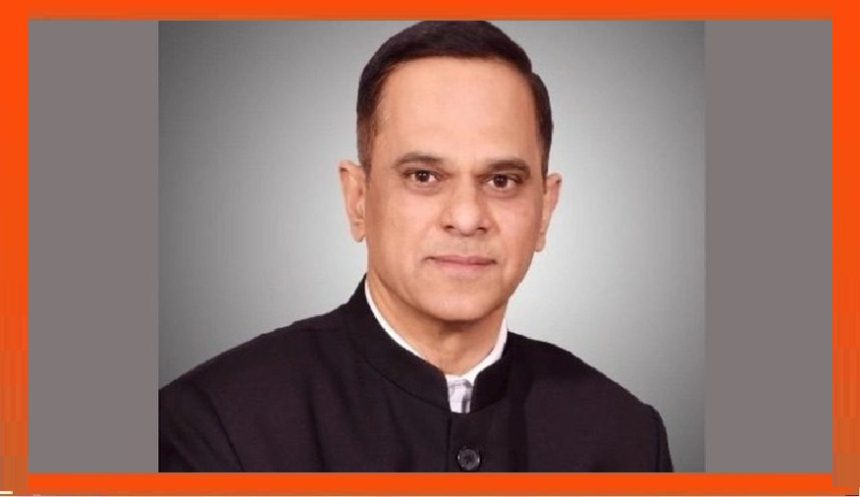
The assessment came from Rajasthan Chief Secretary V. Srinivas, a 1989-batch IAS officer, during an interaction with representatives of the Public Affairs Forum of India (PAFI) in Jaipur. Addressing policymakers, industry stakeholders and corporate representatives, Srinivas outlined the state government’s strategy to position Rajasthan as a major manufacturing, technology and infrastructure hub.
His remarks offered a detailed picture of the scale of investment activity currently underway in the state. He said Rajasthan is witnessing unprecedented momentum in industrial development, supported by sector-specific policies, rapid infrastructure creation and a strong emphasis on ease of doing business.
Investment Momentum Accelerates After Rising Rajasthan Summit
According to the Chief Secretary, the investment pipeline has expanded significantly following the Rising Rajasthan Global Investment Summit 2024, held in December last year.
He said projects worth over ₹8 lakh crore have already undergone groundbreaking ceremonies and entered the implementation phase, while additional investments linked to the memorandums of understanding signed during the summit are moving through various stages of execution.
The government expects these projects to translate into substantial industrial activity, large-scale job creation and sustained economic growth over the coming years.
Officials from the Department of Industries and Commerce also briefed the PAFI delegation on Rajasthan’s industrial growth trajectory, infrastructure readiness, investment opportunities and the policy framework designed to attract both domestic and international investors.
Focus on High-Growth and Future-Ready Sectors
Srinivas emphasized that Rajasthan is no longer competing only on the basis of land availability or traditional industries. The state is increasingly targeting high-growth and technology-driven sectors that are expected to shape the next phase of India’s economic expansion.
He identified several sectors where Rajasthan is seeing strong investor interest:
Renewable energy
Semiconductors
Artificial intelligence (AI)
Data centres
Defence manufacturing
Logistics
Tourism
Textiles
Other emerging industries
The Chief Secretary said the government’s proactive and business-friendly policy environment has been a major factor behind the growing confidence among investors.
He noted that companies today look for regulatory certainty, faster approvals, reliable infrastructure and long-term policy support. Rajasthan, he argued, has been working systematically on each of these fronts.
Geography Gives Rajasthan a Natural Advantage
A significant part of Srinivas’s presentation focused on the state’s strategic location.
He pointed out that Rajasthan enjoys extensive connectivity through the national highway network and is directly linked to two of India’s most important logistics corridors – the Dedicated Freight Corridor (DFC) and the Delhi-Mumbai Industrial Corridor (DMIC).
These connectivity advantages, he said, substantially reduce transportation costs and improve supply chain efficiency, making the state particularly attractive for manufacturing, warehousing and export-oriented industries.
For industries such as electronics, automotive components, defence manufacturing and data infrastructure, efficient logistics can often be as important as fiscal incentives. Rajasthan’s position along major freight and industrial corridors gives it a competitive edge in attracting such investments.
Projects Worth ₹8 Lakh Crore Already Moving Forward
Srinivas said the investment story is not limited to announcements or proposals.
He stated that projects worth more than ₹8 lakh crore have already moved into the implementation stage, indicating that investment commitments are translating into on-ground activity.
The government is also working on projects linked to the MoUs signed during the Rising Rajasthan summit. Preparatory work for many of these investments is progressing rapidly, with departments coordinating land allocation, infrastructure support, approvals and other facilitation measures.
The Chief Secretary said the state administration is closely monitoring the progress of major projects to ensure timely execution and minimize procedural bottlenecks.
Industrial Expansion at an Unusually Fast Pace
One of the most striking figures shared during the interaction was the pace at which new industrial areas are being developed.
Srinivas said Rajasthan has created 40 new industrial areas in just the last two-and-a-half years.
Put differently, he noted, the state has been adding roughly one new industrial park every three weeks. He described this as evidence of the government’s aggressive push toward industrialization and its commitment to creating investment-ready infrastructure.
The rapid expansion of industrial areas is particularly significant because land availability remains one of the biggest constraints for manufacturing investments in many parts of India.
RIICO Allotting Nearly Six Plots Every Day
The Chief Secretary also highlighted the role of the Rajasthan State Industrial Development and Investment Corporation (RIICO).
According to him, RIICO is currently allotting nearly six industrial plots every day, a pace intended to ensure that investors receive land without unnecessary delays.
Quick land allocation is often a critical factor in investment decisions. Delays in obtaining industrial land can push projects back by months or even years. Srinivas said the government has therefore focused on creating a system where land allotment is faster, more transparent and better integrated with other approval processes.
RIICO Positioned as the Backbone of Industrial Infrastructure
Srinivas said RIICO has evolved considerably over the past decade and now functions as the backbone of Rajasthan’s industrial infrastructure ecosystem.
He pointed to the 1,100-acre Japanese Zone as one of the corporation’s flagship initiatives. Developed specifically for Japanese companies, the zone is intended to provide a dedicated manufacturing ecosystem for global investors.
The zone already hosts major firms, including Honda Motors, and is being projected as a model for attracting international manufacturing investment.
The presence of established global companies, officials believe, creates a demonstration effect that can encourage additional foreign investment into the state.
More Than 30 Sector-Specific Policies in Place
The Chief Secretary said Rajasthan has built a robust industrial ecosystem through the implementation of more than 30 sector-specific policies.
These policies have been designed to address the distinct requirements of different industries, ranging from renewable energy and electronics to textiles, tourism and advanced manufacturing.
He also highlighted the newly introduced Private Industrial Park Promotion Policy-2026, under which modern industrial parks are being developed with active participation from the private sector through the Public-Private Partnership (PPP) model.
The idea, officials explained, is to leverage private investment and expertise in developing high-quality industrial infrastructure while reducing the fiscal burden on the government.
Ease of Doing Business Reforms
A major portion of the discussion focused on regulatory reforms.
Srinivas said the government has introduced several measures aimed at reducing procedural delays and improving the overall investment experience.
Key reforms include:
190 government services available online through a single-window system
A fixed 30-day timeline for land-use change approvals
Fast-tracked approvals for MSMEs
Permission for 24×7 industrial and commercial operations
He said these changes have significantly improved administrative efficiency and enhanced investor confidence.
The shift toward online service delivery is particularly important for investors operating across multiple states, as it reduces the need for physical interactions with departments and makes the approval process more predictable.
₹3,200 Crore Approved for Industrial Area Development
Speaking at the same meeting, Shikhar Agarwal, Additional Chief Secretary for Industries, MSME and State Enterprises and Chairman of RIICO, provided additional details on the infrastructure push.
He said approvals worth nearly ₹3,200 crore have already been granted for the development of industrial areas across Rajasthan.
Agarwal added that the government continues to update and refine its policy framework to align with evolving business requirements and investor expectations.
This includes adapting policies to emerging sectors such as AI, semiconductor manufacturing, data infrastructure and advanced industrial technologies.
Invitation to Global Investors
Srinivas used the interaction to invite industry leaders and PAFI members to deepen their engagement with Rajasthan.
He urged them to participate in Pravasi Rajasthani Diwas, scheduled to be held in December, describing it as a platform that can connect global investors with Rajasthan’s expanding industrial ecosystem.
The event, he said, is expected to facilitate business partnerships, investment discussions and collaboration opportunities across sectors.
Rajasthan’s Investment Pitch Is Getting Stronger
The overall message from the state leadership was clear – Rajasthan wants to be seen not just as a large state with abundant land, but as a modern, investment-ready economy with strong logistics connectivity, sector-focused policies and rapidly expanding industrial infrastructure.
With ₹8 lakh crore worth of projects already under implementation, 40 new industrial areas developed in just two-and-a-half years, RIICO allotting nearly six plots daily, and ₹3,200 crore approved for further industrial area development, Rajasthan is making an aggressive push to attract manufacturing, technology, infrastructure and global supply-chain investments.
If the current pace of execution continues, the state could emerge as one of India’s most significant destinations for large-scale industrial and technology investment over the next few years