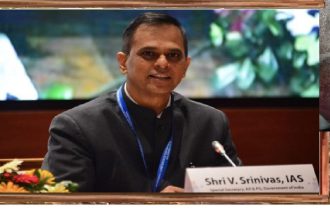
The Government of India has appointed 36 Joint Secretary-level officers from different Central ministries and departments as State Prabhari Officers for the TB Mukt Bharat Abhiyaan, giving them responsibility for supporting and monitoring the implementation of the tuberculosis elimination campaign across States and Union Territories.
The appointments follow directions issued during a PRAGATI meeting held on June 24, 2026, where the implementation of the TB Mukt Bharat Abhiyaan was reviewed. During the meeting, it was decided that senior officers at the Joint Secretary level from Central ministries and departments should be assigned specific States and UTs to strengthen coordination, monitoring and implementation of the campaign on the ground.
The Department of Personnel and Training issued an Office Memorandum dated August 7, 2026, formally notifying the appointments. The memorandum states that the designated officers will serve as the link between the Union government and their assigned States or UTs and will work closely with state administrations, health authorities and district officials to accelerate efforts aimed at TB elimination.
36 senior officers assigned States and UTs
The list covers officers drawn from a wide range of Central government services and ministries. The officers include IAS, Indian Forest Service, Indian Audit and Accounts Service, Indian Defence Accounts Service, Indian Railway Traffic Service, Indian Revenue Service, Indian Postal Service, Indian Ordnance Factories Service and other services.
The assignments have been distributed across the country, with each officer given responsibility for a particular State or Union Territory. The officers will continue to work from their respective Central government positions while taking on the additional responsibility of supporting TB elimination efforts in their allotted jurisdictions.
The role assigned to these officers goes well beyond simply reviewing figures or attending official meetings. According to the second annexure of the government memorandum, the State Prabhari Officers will act as the nodal interface between the Government of India and their assigned States or UTs.
Their primary task will be to maintain continuous coordination and alignment between the Centre and state administrations on TB elimination activities. They will regularly review the progress of the TB Mukt Bharat Abhiyaan and monitor important programme indicators.
These indicators include screening of vulnerable populations, detection of TB cases, treatment coverage, nutritional support, treatment outcomes and preventive treatment for household contacts and other eligible vulnerable groups.
The officers will also monitor efforts under Jan Bhagidari, with the aim of bringing communities and citizens more actively into the TB elimination campaign.
Focus on block-level implementation
One of the important responsibilities assigned to the Prabhari Officers is to ensure timely selection and effective functioning of Class-I Nodal Officers for each block.
They have also been asked to facilitate the constitution and operationalisation of TB Mukt Bharat Teams, comprising five NCC volunteers and five MY Bharat volunteers, to strengthen grassroots implementation and community outreach.
This block-level focus is significant because TB elimination depends heavily on early identification of cases, treatment adherence, contact tracing, preventive treatment and community awareness. The Prabhari Officers will therefore be expected to identify gaps between policy decisions and actual implementation at the local level.
Field visits and direct monitoring
The government has specifically asked the officers to undertake periodic field visits to districts and blocks. Particular attention is to be given to areas carrying a high TB burden.
During these visits, officers are expected to assess the ground-level implementation of TB elimination activities and provide actionable feedback to state and district authorities. The idea is to create a stronger feedback mechanism so that administrative problems are identified early and addressed rather than remaining confined to official reports.
The officers have also been tasked with identifying operational challenges and bottlenecks and helping resolve them in coordination with state authorities.
Coordination with Chief Secretaries and health departments
The Prabhari Officers will be required to maintain close coordination with the Chief Secretary, State Health Department and District Administration. This is intended to ensure that TB elimination remains an administrative priority and that the campaign maintains momentum at both state and district levels.
They will also promote convergence with other government programmes and departments. This includes working with Panchayati Raj institutions, urban local bodies, social welfare departments and rural and urban development agencies.
Such convergence is expected to help address TB through a broader social and development approach rather than treating it only as a health-sector issue.
Stronger support for TB patients
Another major responsibility is to intensify Ni-kshay Mitra support for TB patients and their families. Ni-kshay Mitra is designed to encourage community participation and provide additional support to people undergoing TB treatment.
The officers will also work towards strengthening accountability mechanisms and promoting data-driven monitoring at the State and district levels. Better use of programme data is expected to help authorities identify underperforming areas and improve overall implementation.
They have additionally been asked to support efficient utilisation of financial resources, human resources and healthcare infrastructure available under the national TB programme.
Community participation and reducing stigma
The government has also placed considerable emphasis on public participation. The Prabhari Officers will encourage community involvement, public awareness campaigns and engagement with civil society and private-sector stakeholders.
This is particularly important because social stigma remains a major challenge in TB control. Greater awareness and community engagement can encourage people to seek diagnosis and complete treatment while also helping families and communities support patients rather than isolating them.
The officers will also identify successful practices and innovative approaches in their assigned States and UTs. Such models can then be promoted for replication in other districts and States.
Regular reports to Health Ministry
The Prabhari Officers will be expected to submit regular feedback and structured reports to the Ministry of Health and Family Welfare, Government of India.
These reports will cover progress, implementation challenges and areas where additional policy or administrative intervention may be required. The mechanism is intended to create a direct flow of information from the field to the Centre.
For any clarification related to their responsibilities, the officers have been asked to contact Dr. Shobini Rajan, Deputy Director General (TB), Department of Health and Family Welfare. The memorandum provides the official email address and telephone contact for coordination.
PRAGATI meeting triggered fresh monitoring mechanism
The appointment of the 36 Prabhari Officers follows the June 24 PRAGATI meeting on the TB Mukt Bharat Abhiyaan. The decision taken during that meeting to deploy Joint Secretary-level officers reflects a push to bring greater administrative oversight to the national TB elimination effort.
By assigning senior Central officers to individual States and UTs, the government has created a structured monitoring mechanism that combines high-level administrative coordination with field-level assessment.
The August 7 memorandum issued by the Department of Personnel and Training formally puts that arrangement into effect. With 36 officers now assigned across States and UTs, the Centre is seeking closer monitoring, quicker resolution of implementation bottlenecks and stronger coordination between national and local authorities as India continues its efforts to eliminate tuberculosis.