

The Supreme Court has granted regular bail to suspended 1999-batch IAS officer Vinay Kumar Choubey in a case related to alleged irregularities in land mutations and the purported encroachment of government and forest land in Jharkhand’s Hazaribagh district. The former Hazaribagh Deputy Commissioner had challenged the Jharkhand High Court’s decision refusing him bail in the case.
A Bench comprising Justice Aravind Kumar and Justice Vipul M. Pancholi allowed Choubey’s appeal on July 31 and directed that he be released on regular bail, subject to the conditions imposed by the jurisdictional court. The Supreme Court also directed him to appear before the trial court on every date of hearing unless his personal appearance is specifically exempted.
The Court’s decision was primarily based on the fact that the investigation had been completed, the chargesheet had already been filed and a co-accused in the case had been granted bail. Taking these circumstances into account, the Bench held that Choubey was entitled to similar relief under the principle of parity.
Case Originated From Hazaribagh ACB FIR
The case dates back to an FIR registered at the Anti-Corruption Bureau Police Station in Hazaribagh on September 25, 2025. Choubey has been booked under Sections 420, 467, 468, 471 and 120B of the IPC, along with Section 13(2) read with Section 13(1)(d) of the Prevention of Corruption Act, 1988.
The allegations concern irregularities in the mutation of revenue records involving several categories of land in Hazaribagh. These include Bhudan land, forest land, government land, grazing land, Gair Majrua Aam and Gair Majrua Khas land.
According to the prosecution, the investigation uncovered alleged irregularities in 33 mutation cases involving land classified as Gair Majrua Khas, which the prosecution claimed was forest land. The allegations suggest that certain revenue officials, allegedly acting in conspiracy with private sellers and purchasers, misused their official positions to facilitate mutations in violation of the applicable legal provisions.
Supreme Court Examined the Timing of the Mutations
One of the significant aspects considered by the Supreme Court was the timeline of the alleged land mutations and Choubey’s tenure as Deputy Commissioner of Hazaribagh. The Court took note of the fact that Choubey served as Hazaribagh Deputy Commissioner from May 26, 2008, to October 5, 2010.
However, according to the material placed before the Court, 23 of the mutations relied upon by the prosecution were carried out during 2011 and 2012. In particular, these mutations took place between October 20, 2011, and March 21, 2012.
The prosecution has alleged that Choubey had facilitated or influenced the mutation of revenue records in favour of private individuals while serving as Deputy Commissioner. The timeline of the transactions was therefore an important part of the arguments considered by the Supreme Court while examining the bail plea.
Choubey Was Arrested in November 2025
Choubey was arrested on November 11, 2025, and subsequently remained in judicial custody. The investigation was completed during his period of custody and the chargesheet was filed before the competent court on February 5, 2026.
The Supreme Court had earlier granted him interim bail on February 10, 2026. With the investigation now complete and the chargesheet on record, the Court considered whether continued incarceration was justified, particularly when another accused in the same matter had already received bail.
The principle of parity eventually became an important factor in the decision. The Bench concluded that Choubey should also receive similar relief, subject to the conditions imposed by the trial court.
Bail Does Not Clear Choubey of the Allegations
The Supreme Court’s decision to grant regular bail should not be interpreted as an acquittal or as a finding that the allegations against Choubey are false. The order concerns his custody during the pendency of the criminal proceedings and does not decide the final merits of the prosecution case.
The former Hazaribagh DC will still have to face the trial and comply with all conditions imposed by the jurisdictional court. He has also been directed to remain present before the trial court on each date of hearing unless the court specifically grants an exemption from personal appearance.
Another Land Case Also Pending Against Choubey
The former Hazaribagh Deputy Commissioner is facing another case involving alleged illegal transactions of government land during his tenure in the district. The allegations in that case are separate from the land-mutation matter in which the Supreme Court has now granted him regular bail.
In the other case, the Anti-Corruption Bureau has alleged that transactions involving nearly 5,000 acres of land were carried out illegally. The land allegedly included forest land, Gair Majrua Aam, Sarkari Khas Mahal, Kesher-e-Hind, Lakheraj and Trust land.
The Jharkhand High Court rejected Choubey’s bail application in that matter on January 6, 2026. At the time, the High Court observed that there was prima facie material indicating his alleged involvement in the transactions.
The latest Supreme Court order, therefore, applies specifically to the Hazaribagh land-mutation case before it. It does not amount to a judicial finding on the allegations arising from the separate land case.
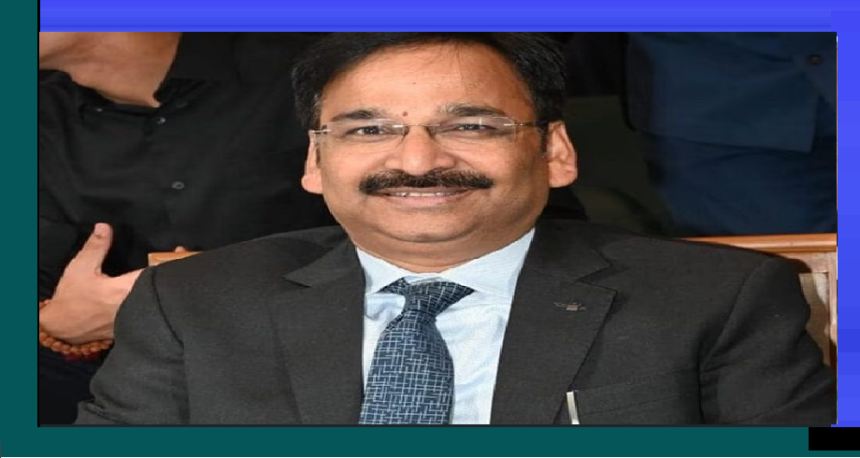
Who Is IAS Officer Vinay Kumar Choubey?
Vinay Kumar Choubey is a 1999-batch IAS officer of the Jharkhand cadre. Born on October 27, 1975, he holds a B.Tech degree and has served in several important administrative positions during his career.
Over more than two decades in public service, Choubey has held a range of senior responsibilities within the Jharkhand government. His assignments have included positions such as Principal Secretary, Secretary to the Chief Minister, Vice Chairman, Managing Director, Chief Executive Officer, State Project Director, Deputy Chairman, Joint Secretary and Administrator. His career has included several important administrative and policy-level assignments in the state. He is currently under suspension.
Why the Supreme Court Granted Bail
The Supreme Court’s decision was based on several circumstances that had emerged during the course of the proceedings. The investigation was already over, the chargesheet had been filed and Choubey had spent considerable time in custody following his arrest in November 2025.
The Court also took note of the fact that it had earlier granted him interim bail and that a co-accused had already been granted bail in the same case. The principle of parity consequently weighed in favour of granting him regular bail. The order requires Choubey to comply with the conditions prescribed by the jurisdictional court and to remain present before the trial court whenever required.
For now, the Supreme Court’s ruling provides significant relief to the suspended IAS officer, but the criminal proceedings arising from the alleged land irregularities will continue. The final determination of Choubey’s alleged role will depend on the evidence presented during the trial and the eventual decision of the competent court.