

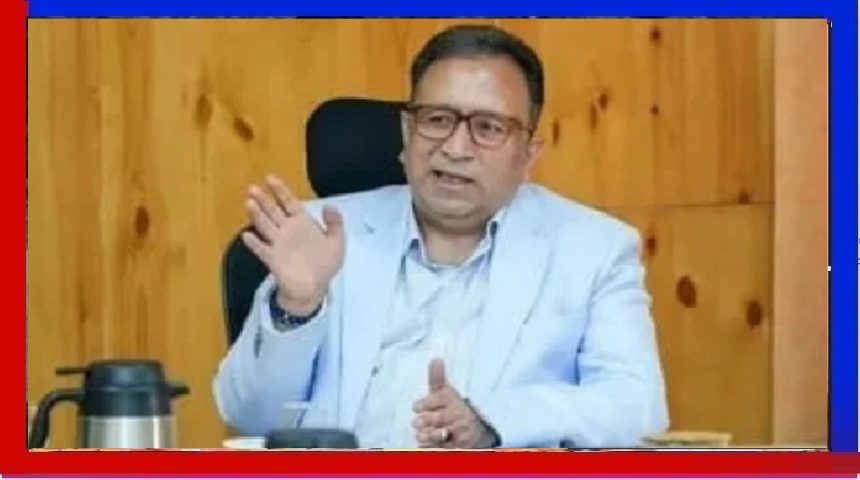
Ladakh Panchayat Elections: Ashish Kundra Announces Preparations as 1,340 Recruitment Posts Are Filled
The Ladakh administration has begun preparations for Panchayat elections, with Chief Secretary Ashish Kundra announcing that the Union Territory will approach the Election Commission to initiate the electoral process. The announcement came as the administration presented a broader picture of governance reforms, including a major recruitment drive, expansion of the district and tehsil structure, changes in land-use provisions and efforts to strengthen grassroots administration across the region.
Kundra, a 1996-batch IAS officer of the AGMUT cadre, shared the details during a press conference in Leh on Wednesday. He said electoral rolls would be revised before the Panchayat elections are formally notified, while the proposed Panchayati Raj institutions are expected to function alongside the existing Ladakh Autonomous Hill Development Councils (LAHDCs) as the Union Territory moves towards a more extensive seven-district administrative structure.
Panchayat Election Preparations Underway
The proposed Panchayat elections are among the more important developments in Ladakh’s evolving local governance framework. The administration is now preparing to approach the Election Commission, with revision of electoral rolls expected to be one of the first steps before the election process formally moves ahead.
The proposed arrangement will allow Panchayati Raj institutions to operate alongside the Hill Councils, creating a multi-layered local governance system. This is particularly significant for Ladakh because the Union Territory has undergone a major administrative expansion, with its district count increasing from two to seven following the creation of five new districts earlier this year.
The administration’s approach suggests that the Panchayat election process will have to be aligned with the new administrative boundaries and the emerging governance structure. Electoral roll revision will therefore be an important exercise before the polls are formally notified.
Ladakh Now Has Seven Districts
The expansion of Ladakh’s administrative structure is one of the key developments behind the latest governance measures. The Union Territory previously had two districts – Leh and Kargil – but the government has now created five additional districts: Sham, Nubra, Changthang, Zanskar and Drass.
The expansion is expected to bring administration closer to people living in remote and geographically challenging areas. At the same time, it has created a substantial requirement for new government offices, personnel, administrative infrastructure and institutional mechanisms in the newly created districts.
The administration has also outlined plans to establish an Autonomous Hill Development Council in each of the seven districts. At present, LAHDCs operate in Leh and Kargil, while the proposed expansion would extend the Hill Council model to the five newly created districts.
1,340 of 1,609 Recruitment Posts Filled
Alongside preparations for the Panchayat elections, the Ladakh administration is pursuing a large-scale recruitment exercise to strengthen its government machinery.
Chief Secretary Ashish Kundra said that 1,340 of the 1,609 posts advertised under the administrative recruitment process have already been filled. The figure indicates the scale of the government’s effort to address staffing requirements at a time when Ladakh’s administrative footprint is expanding rapidly.
Another 314 vacancies have been filled through the Departmental Promotion Committee process, providing existing government employees with opportunities for career progression while also helping departments fill vacant positions.
The administration has also advertised recruitment for 302 Group B and Group C posts. Around 1,205 additional posts are expected to be taken forward for recruitment in the coming weeks, suggesting that the staffing exercise is far from complete.
Police and Teaching Recruitment Also Being Expanded
The recruitment push extends to several critical public-facing departments. The administration has begun recruitment for 40 Sub-Inspector posts, while notifications for Teachers and Police Constables are expected to be issued shortly.
These recruitments are particularly important as the creation of new districts and tehsils increases the demand for personnel on the ground. Police, education and other frontline departments require adequate staffing if the newly established administrative units are to function effectively.
For Ladakh, the challenge is more pronounced because geographical distances and difficult terrain can make it harder to deploy and retain government personnel. Strengthening manpower is therefore an essential part of making the new administrative structure operational rather than merely creating new units on paper.
224 Gazetted Vacancies Notified
The administration has also moved ahead with recruitment for higher-level government positions. According to Kundra, 224 gazetted vacancies have been notified, including 125 Medical Officer posts.
Interviews for the Medical Officer positions are expected to begin next month. Filling these vacancies could help strengthen healthcare services in a Union Territory where access to specialised medical facilities remains closely linked to the availability of qualified professionals across different regions.
Higher education recruitment is also being pursued, with appointments and recruitment processes involving Lecturers, Assistant Professors and Associate Professors. Several appointments have already been completed, while additional recruitment is expected in the coming months.
The combined recruitment activity indicates that the administration is trying to address vacancies across multiple levels rather than concentrating on a single category of government posts.
New Tehsil-Level Arrangements
The expansion of the district structure is being accompanied by changes at the tehsil level. Kundra said that new tehsils have been created in place of 17 Sub-Tehsils in different areas.
The administration will also examine requests from other areas seeking tehsil-level administrative arrangements. Such decisions are important because tehsils serve as a crucial link between district administration and local residents.
In a region as vast and geographically challenging as Ladakh, bringing revenue and other administrative services closer to communities can reduce the distance people have to travel to access government offices. The creation of new tehsils is therefore part of the broader decentralisation effort underway in the Union Territory.
Land-Use Changes Introduced
The administration is also working on changes to land-use provisions. During the press conference, Kundra outlined a mechanism under which eligible landowners will be able to seek permission to use agricultural land for permitted non-agricultural purposes.
The provisions are intended to facilitate industrial and other productive activities, subject to the applicable rules and permissions. A dedicated portal is being developed to allow eligible applicants to submit applications under the new mechanism.
The initiative could have implications for economic activity and investment in Ladakh, particularly where land-use restrictions have historically influenced how agricultural land can be used for other productive purposes.
The administration’s decision to create a dedicated online mechanism also points towards a more structured and transparent application process, allowing requests to be processed through a defined institutional framework.
Nautor Land Rights Also on the Agenda
Another important issue highlighted by the Chief Secretary relates to Nautor land tenancy rights. The Lieutenant Governor has decided to regularise long-pending Nautor land tenancy rights, including cases involving unauthorised allotments.
The issue has been pending for a considerable period and has implications for people who have been occupying or cultivating land under various forms of Nautor arrangements. The administration’s decision to address these cases forms part of a broader effort to streamline land-related governance.
Taken together with the proposed changes in land-use permissions, the latest measures indicate that land administration is becoming an important component of Ladakh’s wider governance reform agenda.
Focus on Transparency and Citizen Engagement
Kundra also reiterated the administration’s emphasis on transparent governance, implementation of reforms and engagement with citizens and stakeholders.
The issues discussed during the press conference covered a wide administrative spectrum, from elections and recruitment to land rights and institutional restructuring. The common thread is the attempt to strengthen the government’s administrative capacity while responding to the changing needs of a Union Territory that is itself undergoing major structural changes.
The Panchayat elections, in particular, could become an important milestone in strengthening grassroots participation. With the Election Commission expected to be approached and electoral rolls due for revision before notification, the administration has now signalled that preparations have moved into an active phase.
A Major Administrative Transition for Ladakh
The latest announcements come at a time when Ladakh is undergoing one of the most significant administrative expansions since becoming a Union Territory. The creation of five new districts, plans for additional Hill Councils, new tehsils and large-scale recruitment are collectively changing the way administration is expected to function across the region.
For Chief Secretary Ashish Kundra, the immediate challenge will be to ensure that these institutional changes are backed by adequate personnel, infrastructure and functioning systems. The recruitment of 1,340 out of 1,609 advertised posts is a substantial step, but the administration still has thousands of positions and several new institutions to operationalise.
The proposed Panchayat elections add another important layer to this transition. If the electoral process moves ahead as planned, Ladakh will be looking at a significantly strengthened grassroots governance framework alongside its expanding district administration and Hill Council structure.
For residents, the real test will ultimately be visible on the ground – whether new districts and tehsils bring services closer, whether recruitment fills critical gaps, whether land reforms provide greater clarity, and whether Panchayati Raj institutions give communities a stronger voice in local governance. The administration’s latest announcements suggest that all of these areas are now moving together as part of Ladakh’s broader push to build a more decentralised, better-staffed and more responsive governance system.