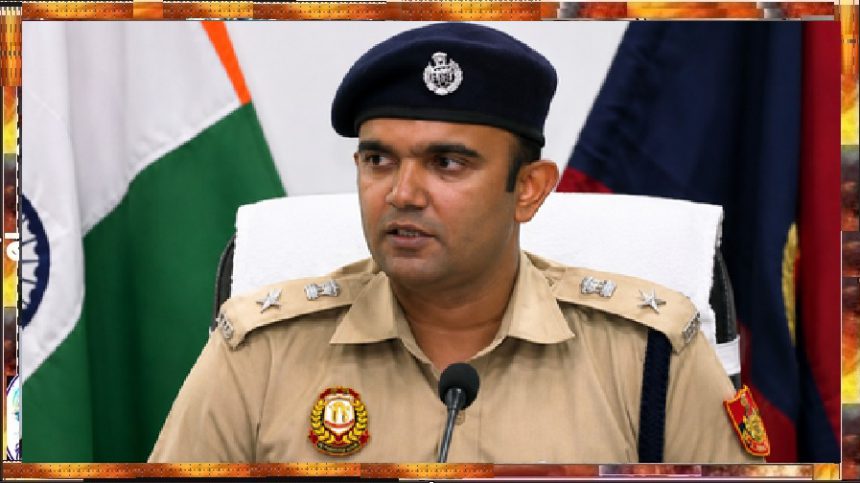
IPS Ravi Kumar Singh Appointed Director, NTA: 2012-Batch AGMUT Officer Gets Key Role Amid Major Exam Reforms
IPS Ravi Kumar Singh, a 2012-batch AGMUT officer, has been appointed Director of the National Testing Agency under the Department of Higher Education for five years amid a major overhaul of the NTA.
The Centre has appointed Ravi Kumar Singh, a 2012-batch Indian Police Service (IPS) officer of the AGMUT cadre, as Director of the National Testing Agency (NTA) under the Department of Higher Education. His appointment comes at an important moment for the country’s national examination body, which is undergoing a major administrative and examination-system overhaul following continuing concerns surrounding the conduct and security of major competitive examinations.
The appointment was approved through an order issued by the Department of Personnel and Training (DoPT) on August 27, 2026. Singh has been selected for the post under the Central Staffing Scheme for a period of five years from the date he assumes charge, or until further orders, whichever is earlier. The appointment places a senior police officer with experience in economic offences and administration in a significant position within the organisation responsible for conducting several of India’s largest entrance and eligibility examinations.
Ravi Kumar Singh Appointed Director of NTA
Ravi Kumar Singh belongs to the 2012 batch of the Indian Police Service and the AGMUT cadre, which covers Arunachal Pradesh, Goa, Mizoram and the Union Territories. His induction into the NTA marks an interesting administrative development because the agency is bringing in officers from different All India Services as it seeks to strengthen its institutional structure and improve examination management.
According to reports on the appointment, Singh was recommended for central deputation by the Ministry of Home Affairs. Before his move to the NTA, he was serving in the Delhi Police, including in a senior role connected with the Economic Offences Wing. His experience in policing, investigation and handling complex financial and administrative matters could prove relevant as the NTA works to strengthen systems around examination integrity and operational security.
The government has directed the newly appointed officers to take charge within the prescribed period. As part of the standard conditions attached to Central Staffing Scheme appointments, an officer is required to join the new post within three weeks of the appointment order. Failure to do so can trigger the process of debarment from the Central Staffing Scheme, according to the personnel ministry orders reported in connection with the latest appointments.
A Key Appointment at a Crucial Time for NTA
Singh’s appointment comes when the National Testing Agency is facing one of the most significant administrative and operational restructuring exercises in its history. The agency has been under sustained scrutiny over examination-related controversies, particularly those involving the NEET-UG examination and other national-level tests.
The Centre has been working on a broad reform programme intended to tighten examination procedures, improve security and rebuild confidence among students, parents and examination aspirants. The latest appointments are therefore not simply routine bureaucratic postings. They form part of a larger effort to reinforce the organisation with experienced officers from different professional backgrounds.
The NTA conducts several important examinations across the country, making its administrative functioning critical for millions of students. Any changes in its internal structure, examination protocols or security arrangements can therefore have a direct impact on a very large section of India’s higher education and competitive examination ecosystem.
Three Senior Officers Brought Into NTA
Ravi Kumar Singh is not the only senior officer being brought into the NTA. The Centre has announced a series of appointments involving the IAS, IPS and IRS, creating a broader mix of administrative, policing, taxation and management experience within the agency.
Along with Singh, Prasanna Venkatesh V, a 2012-batch IAS officer of the Andhra Pradesh cadre, has been appointed Director in the NTA. He will also serve for five years from the date of taking charge, subject to the usual condition of further orders. At the same time, Amit Samdariya, IRS (C&IT:2016), has been selected as Joint Director at the Deputy Secretary level in the agency for four years.
The government has subsequently strengthened the NTA’s senior structure even further with additional appointments. Reports indicate that the Centre has brought in five officers within a short period, including Anshuman Sharma, IRS (IT:2005), as Joint Secretary and Sathiya S, IRS (IT:2011), as Director, alongside Singh, Prasanna Venkatesh V and Samdariya.
This combination of officers from three different services reflects the scale of the restructuring now underway at the examination agency.
Who Is IPS Ravi Kumar Singh?
Ravi Kumar Singh is a 2012-batch IPS officer belonging to the AGMUT cadre. He entered the Indian Police Service through the UPSC Civil Services Examination and subsequently built a career involving important policing responsibilities.
Before being selected for the NTA, Singh served in the Delhi Police, including an assignment with the Economic Offences Wing. The EOW deals with complicated cases involving financial fraud, cheating, corporate irregularities and other economic offences, giving officers posted there exposure to investigations involving large volumes of documents, financial transactions and regulatory issues.
His policing background is particularly notable in the context of the NTA’s current priorities. Examination security today goes well beyond maintaining order at examination centres. It involves technology, data protection, document security, prevention of malpractice, investigation of suspected irregularities and coordination between multiple agencies.
Why an IPS Officer at the National Testing Agency Matters
The appointment of an IPS officer as an NTA Director comes against the backdrop of growing emphasis on examination security and institutional accountability. The Centre’s latest approach appears to bring together administrative expertise with specialised experience in areas such as policing, investigation and enforcement.
For an examination body conducting tests involving millions of candidates, security is an important part of the overall process. Question-paper handling, digital systems, examination-centre management, candidate verification and the prevention of organised malpractice all require close coordination and strong institutional controls.
Singh’s experience in the police service could therefore complement the administrative experience of officers from the IAS and IRS who are also being brought into the organisation.
NTA Overhaul and the Road Ahead
The latest appointments come alongside wider changes being planned for the NTA’s examination framework. Reports indicate that the government is considering and implementing measures aimed at making the examination process more robust, including changes in paper-checking procedures, expert panels and security arrangements.
The Centre’s decision to bring several senior officers into the NTA in quick succession suggests that strengthening the organisation’s internal management has become a priority. With an IPS officer, IAS officers and IRS officers taking up key responsibilities, the agency is getting a wider pool of experience at senior levels.
For Ravi Kumar Singh, the new assignment also represents a shift from conventional police administration to a national-level institutional role in the higher education and examination sector. His five-year appointment gives him a substantial window to contribute to the agency’s functioning, although the order makes it clear that the tenure remains subject to further orders.
At a time when the credibility, transparency and security of public examinations are under intense public focus, the appointment of an experienced 2012-batch AGMUT IPS officer as NTA Director is being seen as part of the Centre’s broader attempt to reinforce the organisation and prepare it for the next phase of examination reforms.