

DGP Rajeev Krishna to 912 New Police Recruits: Serve With Honesty, Discipline and Dedication
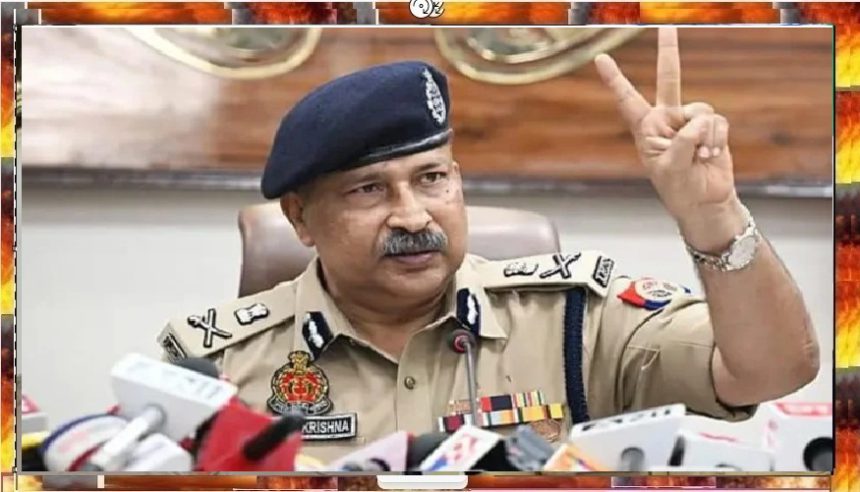
Uttar Pradesh Director General of Police Rajeev Krishna, a 1991-batch IPS officer of the Uttar Pradesh cadre, has asked 912 newly recruited police personnel to approach their new responsibilities with honesty, discipline and dedication as they prepare to enter basic training.
Krishna was speaking at an appointment-letter distribution ceremony held at Lok Bhawan in Lucknow, where appointment letters were handed over to candidates selected for the ministerial and confidential cadres of the Uttar Pradesh Police. The occasion marked the formal beginning of their journey in the police organisation, with the recruits now set to undergo structured institutional and practical training before taking up their assigned responsibilities.
Addressing the newly selected personnel, the DGP underlined that entering government service should not be viewed simply as obtaining a job. Instead, it brings with it a continuing responsibility towards the public, the department and the system in which the recruits will work.
“Today you have been selected; from tomorrow, your responsibility begins,” Krishna told the recruits, stressing the importance of maintaining professional standards from the very beginning of their careers.
912 Recruits Selected for Three Police Posts
The 912 personnel have been selected through the Clerical Cadre Direct recruitment-2023 for three categories of posts within the Uttar Pradesh Police. These include – Sub-Inspector (Confidential), Assistant Sub-Inspector (Clerical), Assistant Sub-Inspector (Accounts)
The recruitment batch also includes 173 women, making their induction part of the broader expansion of the police department’s ministerial and support cadres. While these posts have different functional responsibilities, Krishna emphasised that all three require accuracy, integrity and a strong sense of responsibility.
Their work supports the wider police organisation and involves handling information, records, financial matters and other administrative functions that directly contribute to the efficiency of police operations.
The DGP therefore urged the new recruits to understand the importance of their individual roles rather than viewing their assignments simply through the designation attached to their posts.
Confidential, Clerical and Accounts Roles Require Precision
The three categories of posts carry distinct responsibilities within the police administration. Personnel appointed to the confidential branch will be expected to handle sensitive information while maintaining a high level of confidentiality and reliability.
The nature of their work requires discretion, accuracy and careful handling of official material. Those entering the clerical cadre will be responsible for maintaining official records and ensuring that documentation is kept accurately and updated on time.
In a large police organisation, proper record management is an essential part of administrative functioning, particularly when information has to move between police stations, district offices and senior headquarters.
The recruits appointed to accounts-related positions will have responsibilities connected with financial management. The DGP stressed the importance of financial discipline, transparency and accountability in such work.
Krishna’s message to all three categories was clear: regardless of the nature of the assignment, honesty and discipline have to remain central to their professional conduct.
Six Months of Institutional Training, Three Months Practical Training
The newly recruited personnel are scheduled to begin their basic training on October 6, 2026. The training programme has been structured in two broad stages. The recruits will undergo six months of institutional training, followed by three months of practical training.
The institutional component will focus on developing the functional and subject-specific knowledge required for their respective positions. The practical phase, meanwhile, will provide an opportunity to understand how the knowledge gained during classroom and institutional training translates into day-to-day police administration.
The training will cover not only functional skills and subject knowledge but also behavioural aspects considered important for personnel working in the police establishment. Training for the recruits will be conducted at police training institutions located in Moradabad, Sitapur, Meerut and Jalaun.
The multi-stage programme is intended to prepare the personnel for the practical demands of their assignments and help them understand the standards expected of them once they formally enter service.
UP Police Pushes Towards SMART Working
During his interaction with the recruits, DGP Rajeev Krishna also spoke about the changing nature of police administration and the increasing use of technology in departmental functioning.
He referred to the Uttar Pradesh Police’s move towards “SMART Police, SMART Office and SMART Office Assistant”, highlighting the importance of modern resources and technology in improving efficiency.
For the newly recruited ministerial and confidential personnel, this technological transition is particularly relevant because their responsibilities involve records, office procedures, communication, documentation and other administrative processes.
Krishna also shared the scale of ongoing recruitment and promotion activity in the state police. According to the information shared at the event, direct recruitment is currently underway for around 35,000 police posts, while promotion proceedings are being undertaken for another 9,457 posts.
The figures point to a wider manpower expansion within the Uttar Pradesh Police, with recruitment and promotion processes taking place across different levels of the organisation.
Residential Infrastructure for Police Personnel
The DGP also highlighted the development of residential infrastructure for police personnel in Uttar Pradesh. According to the details shared during the programme, the state has undertaken significant construction and expansion of residential facilities since 2017. These developments have been presented as part of efforts to improve infrastructure and welfare-related facilities available to police personnel.
Residential infrastructure is an important component of police administration because police personnel often work irregular hours and remain available for duty beyond conventional working schedules.
Expanding accommodation facilities is therefore linked with the broader effort to strengthen the working environment for the police force. Krishna’s remarks placed the recruitment drive, training programme and infrastructure expansion within the larger process of strengthening the state’s police establishment.
Who Is Rajeev Krishna?
Rajeev Krishna is a 1991-batch IPS officer of the Uttar Pradesh cadre and currently serves as the Director General of Police, Uttar Pradesh. He holds a B.E. degree in Electronics and Communication and joined the Indian Police Service in September 1991. Over a career spanning more than three decades, he has held several important assignments at the state and central levels.
Before taking over as full-time DGP of Uttar Pradesh in May 2026, Krishna served as DG Vigilance and also headed the Uttar Pradesh Police Recruitment and Promotion Board.
His career has included senior assignments at the ADG level in Lucknow and Agra, apart from a period of deputation with the Border Security Force (BSF).
Krishna was given charge of the Uttar Pradesh Police Recruitment and Promotion Board following the 2024 constable recruitment paper-leak controversy. In that role, he oversaw the subsequent examination and recruitment process that eventually resulted in the selection of 60,244 constables.
His experience in recruitment administration is particularly relevant as the Uttar Pradesh Police continues to undertake large-scale recruitment and promotion exercises.
A New Beginning for 912 Police Personnel
For the 912 newly recruited personnel, the appointment-letter ceremony at Lok Bhawan represents the formal transition from selection to service. Their next major step will be the nine-month basic training programme beginning October 6.
As they move into their institutional and practical training, the emphasis from the state police leadership has been on professional conduct, accuracy, confidentiality, financial accountability and public responsibility.
The recruits will eventually take up different assignments within the ministerial and confidential structures of the Uttar Pradesh Police. Though their duties will differ depending on their cadre, the message from DGP Rajeev Krishna remains the same: government service brings responsibility, and that responsibility has to be carried out with honesty, discipline and dedication.