
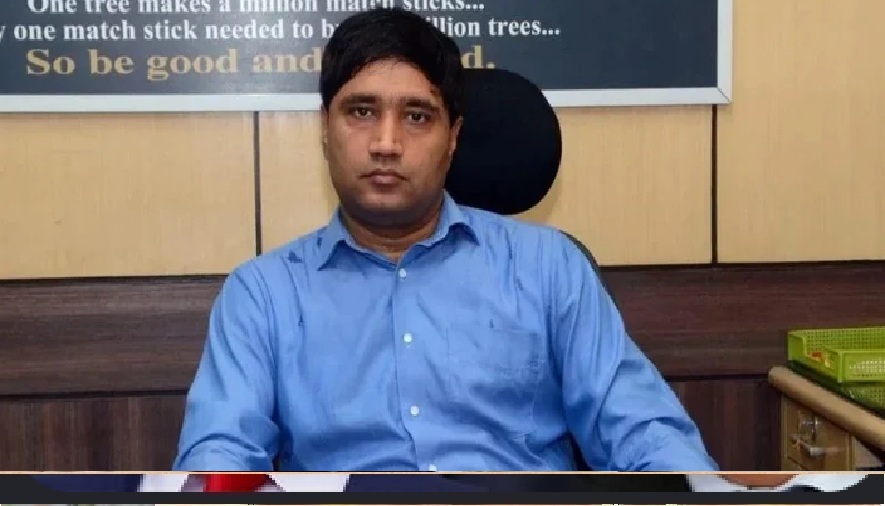
Ramon Magsaysay Award-winning Indian Forest Service officer Sanjiv Chaturvedi has approached the Supreme Court seeking an interim framework to protect whistleblowers, highlighting the continued non-implementation of the Whistle Blowers Protection Act, 2014.
In an application filed in pending proceedings before the apex court, the 2002-batch IFS officer has sought judicial intervention to establish guidelines protecting individuals who expose corruption and wrongdoing in the public interest.
Chaturvedi has argued that the failure to operationalise the 2014 legislation has created a serious institutional gap, leaving whistleblowers vulnerable to retaliation without an effective statutory mechanism for protection.
He has also requested the Supreme Court to expand the scope of the ongoing proceedings to examine the Centre’s failure to bring the legislation into force.
What Has Sanjiv Chaturvedi Asked the Supreme Court?
Chaturvedi has urged the Supreme Court to invoke its powers under Article 142 of the Constitution to frame interim guidelines or establish a temporary whistleblower protection framework until the 2014 law becomes operational.
According to his application, there is no single institutional mechanism where a whistleblower facing retaliation can approach for protection or seek an effective response.
He has described the situation as a “structural vacuum”, arguing that the absence of a designated authority makes it difficult to prevent or investigate retaliatory actions against individuals who disclose information about corruption.
The officer has maintained that the issue goes beyond his personal circumstances and affects public servants and citizens who make disclosures in the public interest.His plea seeks a broader institutional solution that would provide protection to whistleblowers until the statutory framework is brought into force.
Why Has the Whistle Blowers Protection Act, 2014, Not Been Implemented?
The Whistle Blowers Protection Act, 2014, was passed by Parliament and received Presidential assent on May 9, 2014. It was subsequently published in the Gazette of India on May 12, 2014.
However, the legislation has not been brought into force because the Central Government has not issued the commencement notification required under Section 1(3) of the Act. The government has cited the need to address concerns relating to disclosures affecting national sovereignty and integrity, state security and other sensitive matters.
The major developments concerning the legislation include:
* May 2014: The Whistle Blowers Protection Act received Presidential assent and was published in the Gazette of India.
* May 2015: The government introduced the Whistle Blowers Protection (Amendment) Bill, 2015, in the Lok Sabha.
* May 13, 2015: The Lok Sabha passed the amendment Bill and transmitted it to the Rajya Sabha.
* Subsequently: The amendment Bill lapsed following the dissolution of the 16th Lok Sabha.
* November 2026: The original 2014 legislation remains non-operational in the absence of the required commencement notification.
The Centre reiterated its position in a parliamentary reply in December 2025, stating that amendments were necessary to address concerns before the Act could be brought into force.
Who Is IFS Officer Sanjiv Chaturvedi?
Sanjiv Chaturvedi is a 2002-batch Indian Forest Service officer of the Uttarakhand cadre. He is widely recognised for his work in exposing alleged corruption and administrative irregularities during his government service.
He received the prestigious Ramon Magsaysay Award in 2015 for Emergent Leadership, in recognition of his efforts to promote accountability and expose corruption in public administration.
Chaturvedi completed his Bachelor of Engineering from Motilal Nehru National Institute of Technology (MNNIT), Prayagraj, in 1995, before joining the Indian Forest Service.
Career and Major Administrative Assignments
Chaturvedi initially served in the Haryana cadre before receiving approval for an inter-cadre transfer to Uttarakhand in August 2015.
Some of his notable assignments include:
* Divisional Forest Officer, Haryana (2005-2012): Served in the state’s forest administration and raised allegations of irregularities involving forest-related activities.
* Chief Vigilance Officer, AIIMS, New Delhi (2012-2014): Handled vigilance matters at the premier medical institution and initiated inquiries into alleged irregularities.
* Inter-cadre transfer to Uttarakhand (2015): Moved from Haryana to Uttarakhand following approval by the Central Government.
* Chief Conservator of Forests, Uttarakhand: Subsequently held senior responsibilities in the state forest department.
* Director, Uttarakhand Forestry Training Academy, Haldwani: Also served in this capacity alongside his forest department responsibilities.His 2015 Ramon Magsaysay Award brought national and international attention to his work on transparency and accountability in public administration.
A Wider Debate on Whistleblower Safety and Accountability
In his application, Chaturvedi has argued that the absence of an operational statutory framework leaves individuals exposing wrongdoing vulnerable to professional and personal consequences.
He has referred to the actions and legal proceedings he has faced over the years, presenting his experience as an example of the wider institutional challenges confronting whistleblowers.
The relief sought by him is not confined to his individual circumstances. He has asked the Supreme Court to consider an interim protection mechanism applicable to whistleblowers across the country until the government brings the statutory framework into operation.
The application has therefore brought renewed attention to the long-pending implementation of the Whistle Blowers Protection Act, 2014, and the question of how individuals who expose corruption in the public interest can be protected from retaliation.