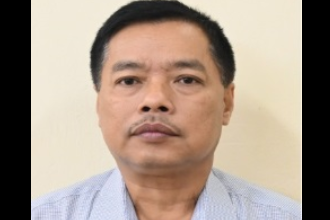



ACC Approves Two Director-Level Appointments Under Central Staffing Scheme; Yuvraj Patil Moved to DPIIT, Santosh Kumar Tiwari Posted to Lokpal
The Central Government has cleared two significant Director-level appointments under the Central Staffing Scheme, paving the way for a lateral shift for an Indian Railway Traffic Service officer and a fresh deputation posting for an Indian Statistical Service officer. The approvals came after the Appointments Committee of the Cabinet (ACC) accepted the recommendations made by the Civil Services Board (CSB), a key body that evaluates and recommends senior bureaucratic appointments for central deputation.
The latest orders involve Shri Yuvraj Ravindra Patil, an officer of the Indian Railway Traffic Service (IRTS) 2012 batch, and Shri Santosh Kumar Tiwari, an officer of the Indian Statistical Service (ISS) 2011 batch. Both appointments are at the Director level, a crucial rank in the Union Government’s administrative structure where officers handle policy implementation, departmental coordination, and strategic governance responsibilities.
The appointments reflect the government’s ongoing efforts to place experienced officers in departments where their expertise can contribute to policy execution and institutional strengthening.
Yuvraj Ravindra Patil shifted from Lokpal to DPIIT
One of the key decisions approved by the ACC is the lateral transfer of Yuvraj Ravindra Patil from the Lokpal to the Department for Promotion of Industry and Internal Trade (DPIIT) under the Ministry of Commerce and Industry.
Patil, who belongs to the 2012 batch of the Indian Railway Traffic Service, has been serving as Director in the Lokpal under the Department of Personnel and Training (DoPT). The government has now approved his appointment as Director in DPIIT on a lateral shift basis under the Central Staffing Scheme.
The order specifies that his tenure in the new role will continue until March 15, 2027, which represents the remaining balance of his existing five-year deputation tenure under the Central Staffing Scheme. His tenure may also conclude earlier if further government orders are issued.
The move is considered an administrative redeployment rather than a fresh deputation, allowing continuity in central service while placing the officer in a department that plays a pivotal role in India’s industrial and investment ecosystem.
Why DPIIT is a strategically important department
The Department for Promotion of Industry and Internal Trade occupies a central position in India’s economic governance framework. It is responsible for promoting industrial development, encouraging domestic and foreign investment, improving the ease of doing business, regulating internal trade policies, and overseeing intellectual property administration.
DPIIT has been at the forefront of several flagship government initiatives, including Make in India, Startup India, industrial corridor development, and reforms aimed at attracting global manufacturing investments into the country.
As Director in the department, Patil is expected to contribute to policy implementation and administrative coordination in one of the Union Government’s most influential economic ministries.
Santosh Kumar Tiwari appointed Director in Lokpal
The second major decision approved by the ACC concerns Santosh Kumar Tiwari, a 2011 batch Indian Statistical Service officer, who has been selected for appointment as Director in the Lokpal under the Department of Personnel and Training.
Tiwari was recommended for central deputation by the Ministry of Statistics and Programme Implementation (MoSPI), which serves as the cadre-controlling authority for Indian Statistical Service officers.
His appointment has been approved under the Central Staffing Scheme for a five-year tenure, beginning from the date he assumes charge of the post. The order also provides that the tenure will remain subject to further government directions, whichever event occurs earlier.
The government has directed that Tiwari be relieved from his current responsibilities immediately so that he can join his new assignment in Delhi without delay.
Immediate relieving ordered
Unlike the lateral transfer involving Patil, Tiwari’s appointment represents a fresh central deputation from his parent ministry.
The official order explicitly instructs the concerned authorities to relieve him immediately. Such directions are commonly issued for priority appointments where timely assumption of charge is considered important for administrative continuity and operational requirements.
Once he takes over, Tiwari will serve in the Lokpal’s administrative structure, supporting the institution’s functioning through senior-level managerial and policy responsibilities.
What is the Central Staffing Scheme?
The Central Staffing Scheme (CSS) is one of the Union Government’s most important mechanisms for deploying officers from various All India Services and Central Civil Services into senior positions across ministries and departments.
Under this system, eligible officers are selected for appointments at levels such as Deputy Secretary, Director, Joint Secretary, Additional Secretary, and Secretary after recommendations by the Civil Services Board and approval from the competent authority.
The scheme allows officers from different services to gain experience across multiple sectors of governance, bringing diverse administrative perspectives into policymaking and implementation.
In many cases, officers continue serving for fixed tenures, while others may be shifted laterally between departments if administrative requirements call for it.
Role of the Civil Services Board and ACC
The appointments were processed through the standard mechanism involving the Civil Services Board (CSB) and the Appointments Committee of the Cabinet (ACC).
The CSB examines proposals for central deputation, evaluates officers’ eligibility, experience, and suitability, and forwards recommendations for approval.
The ACC, headed by the Prime Minister with the Home Minister as a key member, serves as the final authority for approving appointments to several senior positions in the Government of India.
This two-stage process is designed to ensure that appointments to important policy and administrative posts follow an institutional approval mechanism.
Different services, different expertise
Although both officers have now been appointed at the same Director level, they bring expertise from two distinct central services. Yuvraj Ravindra Patil, as an IRTS officer, has experience in railway operations, logistics management, transportation systems, and administrative coordination.
Such experience can prove valuable in DPIIT, where industrial logistics, supply chain efficiency, and business facilitation remain important policy priorities. Santosh Kumar Tiwari, coming from the Indian Statistical Service, brings strengths in data analysis, statistical systems, evidence-based policymaking, and programme evaluation.
These skills can support institutional governance and administrative decision-making within the Lokpal.
Administrative reshuffles continue across the Centre
The latest appointments form part of a broader pattern of administrative restructuring that continues across Union ministries and departments through regular ACC approvals.
The Central Government periodically fills key positions through fresh deputations, extensions of tenure, lateral shifts, and repatriations to ensure experienced officers are available where governance priorities demand them most.
Director-level officers occupy a particularly significant position within this framework because they bridge policy formulation and on-ground execution. They supervise divisions, coordinate with multiple ministries, monitor implementation, and help translate government decisions into actionable programmes.
With Yuvraj Ravindra Patil moving to the Department for Promotion of Industry and Internal Trade and Santosh Kumar Tiwari taking charge in the Lokpal, the latest ACC decisions reinforce the government’s continuing focus on strengthening institutional capacity through targeted deployments under the Central Staffing Scheme.