

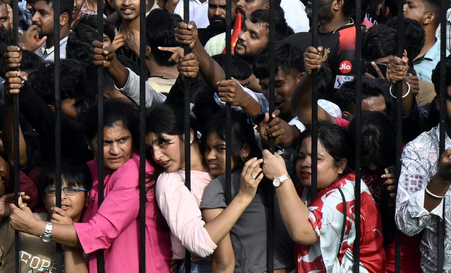
What began as a tragic stampede at Bengaluru’s M. Chinnaswamy Stadium on June 4—claiming 11 lives—has snowballed into a major confrontation between two of India’s elite civil services: the Indian Police Service (IPS) and the Indian Administrative Service (IAS). The fallout has intensified with the suspension of senior IPS officers, prompting allegations of selective action and deepening an already fragile relationship between the two cadres.
State Government Action Sparks IPS Outrage
A day after the incident, Chief Minister Siddaramaiah suspended five police officers for “serious dereliction of duty.” The list includes three senior IPS officers:
B. Dayananda – ADG and Commissioner of Police, Bengaluru
Vikash Kumar Vikash – IGP and Additional Commissioner (West)
Shekar H. Tekkannavar – DCP, Central Division
C. Balakrishna – ACP, Cubbon Park
A.K. Girish – Inspector, Cubbon Park Police Station
The swift action, announced on June 5, has led to sharp backlash within IPS circles.
IPS vs IAS: Allegations of Bias and Scapegoating
Senior IPS officers have raised concerns of selective targeting, questioning why no IAS official has been held accountable. They point fingers at the Department of Personnel and Administrative Reforms (DPAR), managed by senior IAS officers, accusing it of ignoring police warnings about potential crowd mismanagement—particularly related to the felicitation event at Vidhana Soudha on the same day.
“How can the police alone be blamed when the DPAR approved the event despite our clear warnings?” asked a senior IPS officer.
The IPS community has reportedly demanded that accountability extend to top IAS officials, including the DPAR Secretary, Home Secretary, and Chief Secretary, who were directly involved in approving the event.
IPS Officer Challenges Suspension in Tribunal
In a key development, IGP Vikash Kumar Vikash has filed a petition before the Central Administrative Tribunal (CAT), challenging the legality of his suspension. The plea alleges procedural lapses and reflects broader dissatisfaction within the IPS fraternity, which sees the suspensions as scapegoating for what they call a “systemic administrative failure.”
In response, IAS officers have distanced themselves from direct responsibility, asserting that the stampede occurred at the stadium, not at Vidhana Soudha, where the government event proceeded smoothly. They contend that the stadium event was organised by the Karnataka State Cricket Association (KSCA) and Royal Challengers Bengaluru (RCB)—both outside the IAS purview.
However, this explanation has failed to calm IPS concerns, with the IPS Association formally petitioning the Chief Minister to reconsider and revoke the suspension orders.
Beyond Bureaucracy: Larger Implications
This conflict underscores a growing rift between the IAS and IPS in Karnataka, raising questions about inter-service accountability, administrative coordination, and preparedness for managing large-scale public events. With public lives lost and bureaucratic reputations on the line, this case could set a significant precedent in the handling of high-profile administrative failures in India.