Breaking Glass Ceilings: Women Now Secure a Record 41% of IAS Spots as India’s Bureaucracy Undergoes a Radical Facelift
The face of Indian governance just changed forever. Look closely at the latest crop of country-level administrators, and you will notice something drastically different from the stuffy, male-dominated boardrooms of decades past. Women have just shattered the glass ceiling of India’s most elite bureaucratic institution, capturing a historic 41% of all Indian Administrative Service (IAS) positions in the newly minted 2024 batch.
It is a massive, unprecedented leap. For a service that historically functioned as an exclusive boys’ club, crossing the 40% threshold is not just a statistical anomaly; it is a seismic cultural shift.
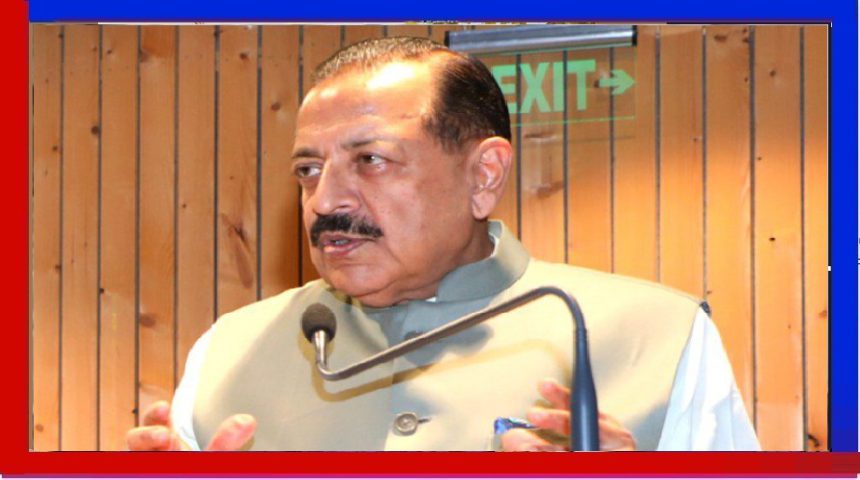
Union Minister Dr. Jitendra Singh broke the news while rubbing shoulders with the fresh-faced officer trainees at the Civil Services Officers’ Institute in New Delhi. He did not mince words about the gravity of the moment, either. Singh boldly called this milestone a direct reflection of what he termed the “democratisation of opportunity” in modern India. The old barriers are crumbling. Success in the civil services is no longer reserved for the elite, urban, male demographic. Instead, it is spreading organically across deeply entrenched social, regional, and gender boundaries.
The 2047 Blueprint: A High-Stakes Inheritance
This is not your grandfather’s bureaucracy. The energy in the room during the interaction under the Central Government’s Assistant Secretary Programme was palpable, mixed with a heavy dose of real-world responsibility. These young officers are stepping onto the stage at a very specific, high-stakes juncture in India’s geopolitical story.
Minister Singh put it bluntly to the young trainees: “India@2047 will belong to you.”
Let that sink in for a moment. When India celebrates a century of independence from colonial rule in 2047, these very men and women—currently sitting in orientation rooms and learning the ropes—will be occupying the ultimate leadership positions across the country. They will be the Cabinet Secretaries, the state Chief Secretaries, and the policy masterminds dictating national strategy. Singh urged them to completely reinvent the country’s governance journey, demanding a heavy focus on relentless innovation, absolute accountability, and a deeply emotional commitment to public service.
It is a long way from the classic red-tape stereotypes. The expectations are dizzyingly high, and the runway is already laid out.
Real-World Boot Camp: 184 Officers Hit Central Ministries
Right now, the theoretical training wheels are officially coming off. As part of the highly structured Assistant Secretary Programme, exactly 184 IAS officers from this historic 2024 batch have just been distributed across 49 different ministries and departments of the Central Government.
This is not a casual observational internship. It is an intense, eight-week trial by fire running between May 4 and June 25, 2026.
The core philosophy behind this initiative is brilliant yet simple: give young field officers a taste of high-level national decision-making before they get buried under district administration. They get direct exposure to how laws are drafted, how massive budgets are allocated, and how complex geopolitical machinery functions at the absolute highest level.
The event also brought out some of the heaviest hitters in bureaucratic training. Sitting in on the session were Chhavi Bhardwaj, Joint Secretary (Training) for the Department of Personnel and Training; Shanmuga Priya Mishra, Joint Director at the iconic Lal Bahadur Shastri National Academy of Administration (LBSNAA) in Mussoorie; and Kranthi Kumar Pati, the academy’s Deputy Director. Their presence alone underscored the institutional weight behind this batch’s deployment.
Engineers, Doctors, and Lawyers: The Death of the Generalist
If the gender balance of the 2024 batch is a shock to the system, the educational background of these officers is equally wild. The era of the pure liberal arts generalist leading a complex technical department is officially dead.
Out of the current batch, an astonishing 78 officers come armed with rigorous engineering degrees. The rest of the roster reads like a prestigious university directory, boasting trained medical doctors, corporate management experts, legal scholars, and deep-thinking humanities graduates.
Educational Background Key Contribution to Modern Governance
Engineering (78 Officers) Systems architecture, algorithm optimization, digital infrastructure scale
Medicine & Healthcare Public health policy, epidemic response, data-driven rural clinic management
Law & Jurisprudence Statutory drafting, regulatory compliance, rights-based governance
Management & Humanities Resource allocation, human-centric design, public communication
This diverse mix is a necessity, not a luxury. Modern administration is no longer just about maintaining law and order or collecting land revenue. It is an incredibly complex, data-driven, and digitally hyper-connected ecosystem. When a state government wants to rollout a massive welfare scheme, they do not just need an administrator; they need someone who understands database architecture, encryption, and digital product delivery.
Singh strongly nudged the officers to treat their graduation as the beginning of their education, not the end. He explicitly told them to continuously upgrade their professional toolkits through state-sponsored initiatives like Mission Karmayogi. The mandate for the modern bureaucrat? Deepen your understanding of Artificial Intelligence, master data analytics, learn digital governance inside out, and completely overhaul how you communicate with the public.
Ethics Over Ego: The War Against Bureaucratic Arrogance
With great power, however, comes the eternal trap of bureaucratic arrogance. Minister Singh spent a significant portion of his address hammering home a message that often gets lost in the glitz and glamour of passing the UPSC exam: ethical governance.
He issued a direct, unvarnished challenge to the future administrators. Remain neutral. Stay accessible. Be empathetic.
“Civil servants must combine technological competence with deep emotional sensitivity. Focus on delivering actual, meaningful outcomes for the poorest citizens rather than chasing cheap personal visibility on social media.”
It was a timely critique. In an era where young officers often trend on Instagram or YouTube for simply doing their basic jobs, the Minister’s message was loud and clear: the service is about the citizens, not the individual’s brand. The real victory is not a viral video; it is a smoothly functioning public distribution system or a corruption-free local land registry.
The Human Cost Behind the Spreadsheet
When you look past the cold, hard numbers of the 41% female representation and the technology-heavy resumes, you find a deeply human narrative unfolding across India. Behind every single one of these selected candidates is a family that likely scraped together resources for expensive books, tolerated years of grueling, isolated study schedules, and gambled on an exam with a less than 1% success rate.
The changing demographic means that a young girl growing up in a remote district of Bihar or a tribal village in Odisha can look at the evening news and see someone who looks exactly like her running a powerful central ministry. That psychological shift is priceless. It alters the ambitions of an entire generation.
As India aggressively pushes its digital public infrastructure, tackles climate-induced agricultural crises, and tries to sustain its massive economic momentum, these 184 young professionals are the ones who will actually execute the vision on the ground. They are the execution layer of the world’s largest democracy.
The 2024 batch has officially broken the old mold. With a record-breaking influx of women, a heavy concentration of technical minds, and an institutional push toward empathetic, AI-driven governance, the Indian Administrative Service is finally beginning to mirror the vibrant, diverse, and rapidly modernizing country it is tasked to lead. The road to 2047 is long and incredibly bumpy, but India’s newest greenhorn administrators are officially in the driver’s seat.