In a significant step toward shaping India’s long-term population and development strategy, the Central Government has constituted a High-Level Committee on Demographic Change, bringing together some of the country’s most experienced administrators, security experts, economists, and demographic specialists.
The committee is part of the broader High-Powered Demography Mission announced by Prime Minister Narendra Modi during his Independence Day address from the Red Fort in August 2025. The mission was envisioned as a national initiative to study demographic trends and their implications for governance, economic planning, social development, urbanisation, and public policy.
Now, nearly a year after that announcement, the government has formally established the committee that will serve as one of the mission’s key institutional pillars.
The newly constituted panel will be chaired by retired judge Justice Prakash Prabhakar Navlekar and has been tasked with conducting a comprehensive study of demographic changes taking place across India. The committee has been asked to submit its report to the government within one year.
Experienced Bureaucrats Given Key Responsibility
One of the most notable aspects of the committee is the presence of several distinguished former civil servants who have held some of the country’s most influential administrative positions.
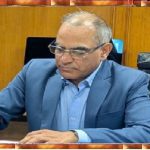
Among them is Durga Shankar Mishra, a retired 1984-batch IAS officer of the Uttar Pradesh cadre. Mishra is widely regarded as one of India’s most experienced administrators, having served as Chief Secretary of Uttar Pradesh and earlier as Secretary in the Ministry of Housing and Urban Affairs.
During his long bureaucratic career, he played important roles in urban development, infrastructure planning, housing policy, and governance reforms. His experience in managing large-scale public administration is expected to contribute significantly to the committee’s work, particularly in areas involving migration, urban growth, and population-driven development challenges.
The committee also includes Balaji Srivastava, a retired 1988-batch IPS officer of the AGMUT cadre and former Commissioner of Delhi Police.
Srivastava spent decades in policing, internal security, intelligence coordination, and public administration. His inclusion reflects the government’s recognition that demographic changes often have implications for law and order, migration management, social stability, and urban security planning.
Together, the two former officers bring decades of hands-on governance experience to the panel.
Justice P.P. Navlekar to Lead the Committee
The responsibility of steering the committee has been entrusted to Justice Prakash Prabhakar Navlekar (Retd.), who will chair the panel and oversee its deliberations.
As chairman, Justice Navlekar will guide the committee’s examination of demographic trends and ensure that its recommendations are grounded in legal, administrative, and policy realities.
His leadership is expected to provide an independent and balanced framework for evaluating issues that may have long-term implications for national planning.
Diverse Group of Experts on the Panel
The committee has been designed to bring together expertise from multiple disciplines rather than relying solely on bureaucratic experience.
Apart from retired IAS and IPS officers, the panel includes senior government officials, economists, and experts involved in demographic research and public policy.
Among the prominent members is Dr Shamika Ravi, a well-known economist whose work has focused on economic growth, public policy, labour markets, healthcare, and development issues.
The committee also includes the Registrar General and Census Commissioner of India, ensuring that population data, census trends, and statistical evidence remain central to the panel’s analysis.
Officials associated with demographic research and government policy are also expected to contribute to the committee’s findings.
This multidisciplinary approach reflects the complexity of demographic issues, which often cut across economics, governance, healthcare, education, employment, migration, urbanisation, and social welfare.
Background: The High-Powered Demography Mission
The roots of the initiative can be traced back to Prime Minister Narendra Modi’s Independence Day speech on August 15, 2025.
During his address, the Prime Minister announced the launch of a High-Powered Demography Mission, emphasizing the need for India to prepare for long-term demographic shifts that could influence the country’s future trajectory.
The announcement came amid growing discussions about changing population patterns, migration trends, ageing populations in some regions, youth concentration in others, rapid urbanisation, and evolving workforce dynamics.
The government indicated that demographic developments would play a critical role in determining future policy priorities and developmental strategies.
The newly constituted committee is expected to function as one of the mission’s most important advisory mechanisms.
Ministry of Home Affairs to Coordinate the Initiative
The Ministry of Home Affairs (MHA) has been designated as the nodal ministry for the committee.
According to the official order, the Joint Secretary (Foreigners-I), Ministry of Home Affairs, will serve as the Member Secretary of the panel.
The role involves coordinating meetings, facilitating administrative support, arranging research inputs, managing documentation, and ensuring smooth communication among committee members.
The Member Secretary will also play a key role in helping the committee meet its reporting deadlines and operational requirements.
By placing the initiative under the Home Ministry, the government appears to be treating demographic change as a matter with broad governance implications that extend beyond any single department.
One-Year Deadline to Submit Recommendations
The committee has been given a timeline of one year to complete its study and present recommendations to the Central Government.
During this period, members are expected to examine available demographic data, evaluate emerging trends, consult stakeholders, and identify challenges that may require policy interventions.
However, recognizing the complexity of the subject, the government has kept the door open for additional time if necessary.
The Ministry of Home Affairs has been empowered to extend the committee’s tenure by up to six months should circumstances require further study or consultation.
This flexibility is expected to allow the panel to undertake a more comprehensive examination of demographic issues rather than rushing to produce recommendations.
What Issues Could the Committee Examine?
Although the government has not publicly released a detailed list of terms of reference, experts believe the committee is likely to focus on a wide range of interconnected issues.
Among the areas expected to receive attention are:
- Population growth patterns
- Regional demographic variations
- Urbanisation trends
- Internal migration
- Workforce and employment dynamics
- Ageing populations
- Youth demographics
- Resource allocation
- Social welfare planning
- Healthcare infrastructure requirements
- Educational needs
- Housing and urban development challenges
The committee may also study how demographic changes influence governance structures, public expenditure priorities, and long-term economic planning.
As India continues to evolve economically and socially, demographic patterns are increasingly being viewed as one of the most important factors shaping future development.
Why the Committee Matters
Demography affects virtually every aspect of governance.
Population shifts can influence where schools are built, how healthcare services are distributed, where infrastructure investments are made, and how governments plan for jobs, housing, transportation, and social welfare.
Rapid urbanisation creates new opportunities but also places pressure on civic infrastructure. Migration can transform regional economies while creating new governance challenges. Changes in age profiles can alter labour markets, healthcare demands, and pension systems.
For policymakers, understanding these trends is essential for making informed decisions.
The formation of this committee signals the government’s intention to develop a more structured and evidence-based approach to demographic planning.
A Key Step in India’s Long-Term Policy Planning
The creation of the High-Level Committee on Demographic Change marks an important milestone in the implementation of the government’s demographic policy agenda.
By bringing together retired senior administrators, security experts, economists, census officials, and policy specialists, the Centre is attempting to create a platform capable of examining demographic issues from multiple perspectives.
The presence of experienced figures such as Durga Shankar Mishra and Balaji Srivastava adds significant administrative depth to the panel, while the involvement of economists and census authorities ensures that the discussion remains rooted in data and evidence.
Over the coming year, the committee’s findings are expected to contribute to policy debates on population trends, development priorities, governance reforms, and national planning.
As India navigates the opportunities and challenges of the coming decades, the recommendations of this newly formed panel could play an important role in shaping the country’s demographic and developmental roadmap.