

Centre Declares Extension “Illegal”, Seeks Immediate Rollback of Anurag Gupta’s Appointment
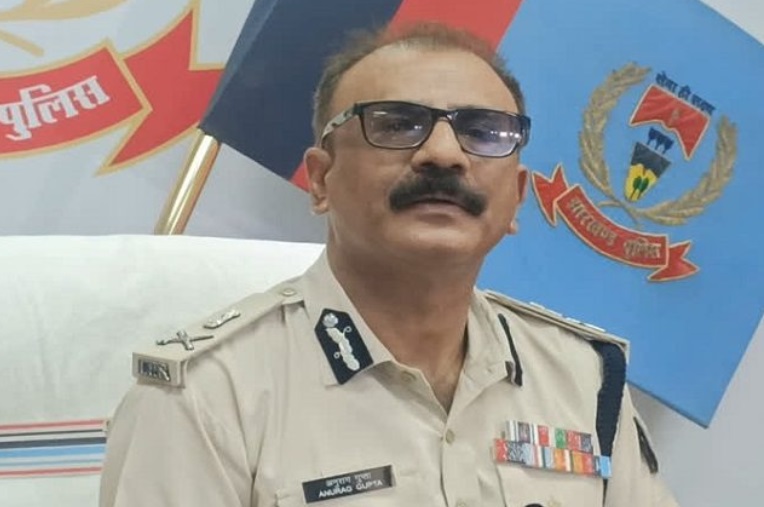
A sharp conflict has erupted between the Central Government and the Jharkhand state administration over the extension granted to Anurag Gupta, a 1990-batch IPS officer, as the state’s Director General of Police (DGP), despite his official retirement on April 30, 2025.
The Ministry of Home Affairs (MHA) has strongly objected to the decision, declaring Gupta’s continued tenure beyond retirement as “illegal” and a violation of the All India Services (AIS) Rules. The Centre has demanded the immediate withdrawal of the extension, stating that no formal approval was granted for such an extension.
Centre Alleges Breach of Service Norms
According to sources within the Union government, Jharkhand’s justification for retaining Gupta was summarily rejected, with officials noting that he had superannuated on April 30 and that any extension of service must be explicitly sanctioned by the Centre.
In a letter dated April 22, the MHA conveyed its position to the Jharkhand Chief Secretary, emphasizing that the state’s move is procedurally unsound and legally invalid.
A senior Home Ministry official stated:
“The extension undermines the statutory framework laid down for police leadership. It contradicts Supreme Court rulings aimed at ensuring uniformity and transparency in DGP appointments across states.”
The Centre has cited provisions from the AIS rules and the Government Services Act, asserting that extensions beyond retirement without central clearance are impermissible.
State Defends Move, Cites Supreme Court Guidelines
The Hemant Soren-led state government, however, has firmly defended its decision, arguing that the extension was in accordance with Supreme Court-mandated reforms, which call for a minimum two-year fixed tenure for state DGPs to promote stability and autonomy in law enforcement.
State officials clarified that Gupta’s appointment was made in line with updated state-specific guidelines, inspired by frameworks in Uttar Pradesh, Telangana, Punjab, Andhra Pradesh, and West Bengal. A high-level selection committee, chaired by a retired judge, had recommended Gupta based on seniority and merit.
Jharkhand’s response to the Centre, they added, was prepared after extensive legal consultation, aimed at addressing all concerns raised by the MHA.
A Legal Battle on the Horizon
The standoff is now heading toward a potential legal and constitutional confrontation, as Jharkhand continues to resist the Centre’s order to relieve Gupta. The state government maintains that the extension is lawful, consistent with judicial precedents, and critical for administrative continuity.
While the Centre insists Gupta’s tenure ended on April 30, the state is determined to retain him until April 2027, completing what it believes to be a legally protected fixed tenure.
This escalating dispute has triggered wider debate on Centre-State relations, particularly on police reforms, and highlights the ongoing challenges in aligning Supreme Court directives with All India Service norms.