

Chhattisgarh Unveils Ambitious Global Ecotourism Plan with 350-Acre Botanical Garden, Nandan-Van Redevelopment Under PPP Model
In a major step towards transforming Chhattisgarh into one of India’s leading ecotourism destinations, the State Forest Department has unveiled an ambitious plan to develop a world-class 350-acre Botanical Garden in Nava Raipur while simultaneously giving a modern facelift to the iconic Nandan-Van recreational park in Raipur through the Public-Private Partnership (PPP) model.
The large-scale initiative is designed to combine environmental conservation with sustainable tourism, private investment, local employment and cultural promotion. Officials believe the project has the potential to redefine tourism in the state by creating internationally benchmarked attractions while preserving Chhattisgarh’s rich ecological heritage.
To move the proposal forward, the Forest Department has invited private sector participation for developing eco-friendly tourism infrastructure on non-forest land under its administrative control, ensuring that conservation remains at the heart of the initiative.
High-Level Meeting Brings Together Leading Investors
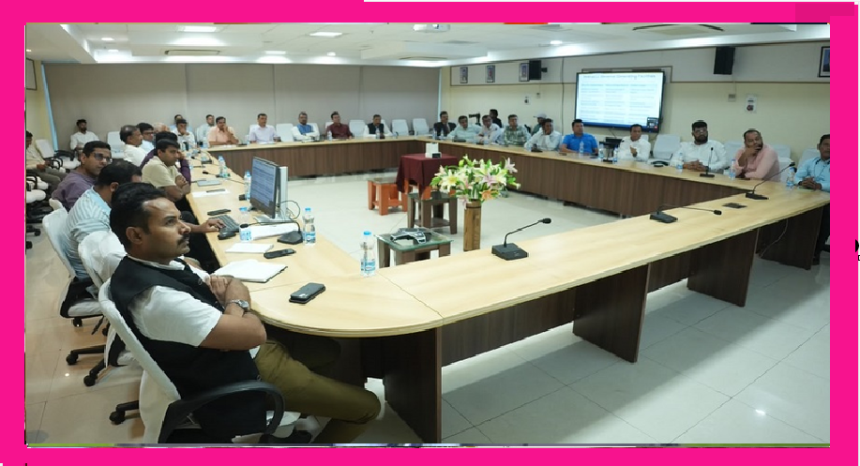
The ambitious vision took shape during a high-level consultation convened by the Chhattisgarh Forest Department at Aranya Bhavan on July 6, where senior officials interacted with representatives from several leading investment firms from across the country.
The meeting focused on exploring opportunities for private participation under the state’s Public-Private Partnership policy while seeking expert suggestions for developing environmentally responsible tourism destinations capable of attracting both domestic and international visitors.
Officials explained that the government intends to leverage private investment, innovative design and professional expertise to create globally competitive ecotourism facilities without compromising environmental sustainability.
According to the department, the initiative is expected to generate long-term economic opportunities, strengthen local livelihoods and encourage responsible tourism practices across the state.
350-Acre Botanical Garden Planned Near Jungle Safari
The centrepiece of the proposed ecotourism expansion is a 350-acre Botanical Garden to be developed in Nava Raipur, close to the existing Jungle Safari.
The Forest Department envisions the project as one of India’s finest botanical and ecological tourism destinations, built to international standards with a strong emphasis on biodiversity, education, recreation and sustainable development.
Rather than creating a conventional park, officials are planning an integrated tourism destination that blends nature with modern visitor experiences.
Several attractions have been proposed as part of the master plan, including:
Eco-friendly luxury hotel resorts
Military Heritage Museum
Musical fountain shows
Water-world attractions
Nature-based adventure and recreational facilities
Landscaped gardens and thematic ecological zones
The project is also expected to celebrate Chhattisgarh’s cultural identity through dedicated spaces showcasing traditional arts, handicrafts and local produce.
Boost for Local Artisans and Rural Economy
One of the defining features of the Botanical Garden project is its focus on community participation and livelihood generation.
The proposed development includes:
Dedicated Bastar handicraft outlets
Permanent exhibition spaces for tribal art
Marketplace for local artisans
Organic farmers’ market
Spaces promoting indigenous products and rural enterprises
Officials believe these facilities will create direct market access for local craftsmen, tribal communities and farmers while providing tourists with authentic cultural experiences unique to Chhattisgarh.
The initiative is expected to support sustainable income generation and strengthen the state’s rural economy alongside promoting tourism.
Nandan-Van Set for Complete Transformation
Along with the Botanical Garden, the Forest Department has also announced an extensive redevelopment plan for Nandan-Van, the historic 43-acre recreational park situated on the Raipur-Bhilai Road.
For decades, Nandan-Van has remained one of Raipur’s popular leisure destinations. The proposed makeover aims to transform it into a modern eco-friendly recreational hub catering to families, wellness enthusiasts and tourists.
The redevelopment plan includes several new attractions, such as:
A state-of-the-art aviary housing exotic bird species
Ayurveda wellness and herbal treatment centre
Herbal products and medicinal plant gallery
Open-air cultural and event venue
Children’s sports and recreation zone
Modern visitor facilities
Improved landscaping and green spaces
Officials expect the upgraded Nandan-Van to emerge as one of central India’s leading urban ecotourism destinations while retaining its natural charm.
Learning from International Success Stories
The Forest Department has indicated that the proposed projects will incorporate global best practices in botanical garden management, biodiversity conservation and sustainable tourism.
Among the internationally acclaimed models being studied are:
Seychelles National Botanical Garden
Bogor Botanical Gardens, Indonesia
Brindavan Gardens, Mysuru
Officials are examining these destinations to understand successful approaches to visitor engagement, ecological restoration, landscape architecture, educational outreach and tourism management.
The objective is not merely to replicate international attractions but to adapt proven ideas to suit Chhattisgarh’s own ecological diversity, cultural richness and tourism potential.
Private Sector Welcomes the Initiative
Representatives from leading investment firms who attended the consultation reportedly appreciated the government’s long-term vision.
Participants described the proposal as one of the country’s most innovative attempts to integrate conservation, tourism and private investment under a single Public-Private Partnership framework.
According to officials, investors shared several recommendations regarding tourism infrastructure, hospitality services, visitor facilities, recreational attractions and operational models.
The Forest Department has assured stakeholders that all practical suggestions will be carefully examined before finalising the master plan for implementation.
Conservation Remains the Core Objective
Even while pursuing large-scale tourism infrastructure, the government has reiterated that environmental protection will remain the project’s central guiding principle.
Officials clarified that every proposed facility will be developed exclusively on non-forest land under the administrative control of the Forest Department.
This approach has been adopted to ensure that ecological conservation is not compromised while expanding tourism infrastructure.
With nearly 44 per cent forest cover, Chhattisgarh ranks among India’s most forest-rich states and possesses exceptional biodiversity, wildlife habitats and natural landscapes.
The government believes that carefully planned ecotourism can generate employment, strengthen conservation efforts and create new economic opportunities without placing additional pressure on protected forests.
Creating a Sustainable Tourism Economy
The proposed projects are expected to generate employment at multiple levels during both construction and operation.
Hospitality services, tourism management, landscaping, transport, handicrafts, food services, maintenance, eco-guiding and cultural activities are likely to create new livelihood opportunities for thousands of people.
Officials also expect increased tourist footfall to benefit nearby businesses, hotels, transport operators and local entrepreneurs.
By combining environmental conservation with tourism and community participation, the government hopes to establish a sustainable development model capable of delivering long-term economic and ecological benefits.
A Vision to Put Chhattisgarh on the Global Ecotourism Map
The Botanical Garden and Nandan-Van redevelopment projects represent one of the most ambitious tourism initiatives undertaken by the Chhattisgarh Forest Department in recent years.
If implemented according to plan, the projects have the potential to significantly enhance the state’s tourism profile while showcasing its forests, biodiversity, tribal heritage and ecological wealth before a national and global audience.
Officials believe the initiative can serve as a model for environmentally responsible tourism by balancing conservation, private investment and community participation.
With international design standards, modern visitor amenities and a strong focus on sustainability, Chhattisgarh is seeking to position itself not merely as a forest-rich state but as a globally recognised ecotourism destination where nature conservation and economic development move forward together.