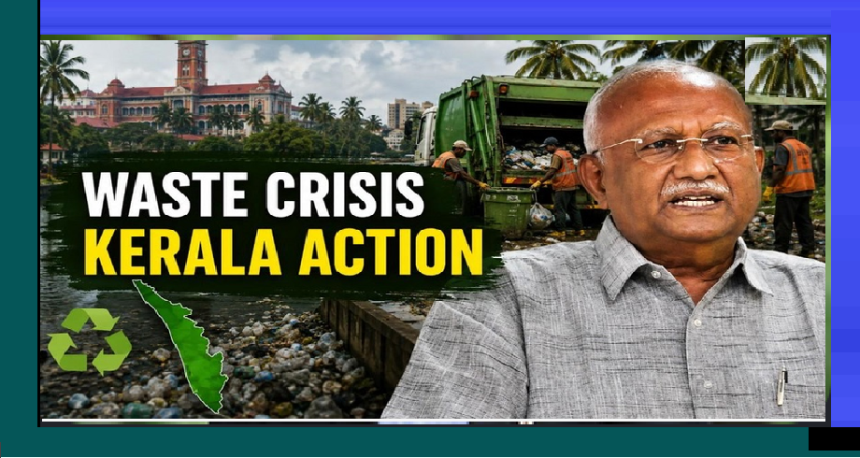
Thiruvananthapuram Waste Crisis: Former Chief Secretary S M Vijayanand Appointed Special Monitor by KSHRC
Thiruvananthapuram, August 12, 2026: The Kerala State Human Rights Commission (KSHRC) has brought in a senior retired bureaucrat to examine the growing waste-management crisis in Thiruvananthapuram. Former Kerala Chief Secretary S M Vijayanand, a 1981-batch IAS officer, has been appointed as Special Rapporteur-cum-Special Monitor to assess the city’s waste-disposal system and suggest concrete measures to fix the problems.
The Commission has described the situation as a “huge crisis”, particularly because large quantities of waste are reportedly accumulating in public places, canals and water bodies. Vijayanand will conduct a detailed assessment of the existing system, identify administrative and operational gaps and recommend corrective steps to the authorities.
KSHRC Takes Serious Note of Waste Accumulation
The appointment follows the KSHRC’s suo-motu intervention into the waste-management situation in the Thiruvananthapuram Corporation area. The Commission took up the issue after reports highlighted widespread dumping of garbage and inadequate cleaning of drains in different parts of the capital.
According to the Commission, several canals and water bodies have become heavily polluted because of the dumping of waste, including plastic. The Pazhavangadi Canal and Thekkanamkara Canal have emerged as particularly serious concerns, with illegal dumping reportedly turning them into major carriers of waste through the city.
The Commission has also raised questions over the regular maintenance and cleaning of drains located alongside public roads. Poorly maintained drains can create serious sanitation and public-health concerns, particularly during periods of heavy rain when accumulated waste can obstruct the flow of water.
Former Chief Secretary to Examine Ground Situation
Vijayanand’s assignment will involve a comprehensive examination of how the city’s waste-management system is functioning on the ground. He will look into complaints about illegal dumping, the condition of major canals and water bodies, drain maintenance and the broader arrangements for collecting, transporting, processing and disposing of solid waste.
The assessment will also look beyond individual dumping sites. It is expected to examine whether the city’s existing administrative machinery, infrastructure, manpower and financial resources are adequate to handle the scale of the waste-management challenge.
The Commission had earlier directed officials of the Thiruvananthapuram Corporation and the Local Self-Government Department to conduct inspections and inquiries and take appropriate action.
Two Experts to Assist Vijayanand
Vijayanand will not be working alone. The KSHRC has appointed a two-member expert team to assist him in the assessment. The team includes R Ajay Kumar Varma, former Chief Scientist at the National Centre for Earth Science Studies and former Executive Director of Suchitwa Mission, and N Jagajeevan, a waste-management consultant associated with Suchitwa Mission.
The two experts are expected to bring technical and practical knowledge of environmental science and waste management to the exercise. Their role will include helping assess the ground situation, gathering relevant information and supporting the preparation of recommendations for improving the city’s waste-disposal arrangements.
Pazhavangadi, Thekkanamkara and Amayizhanchan Thodu Under Focus
The assessment will cover several locations that have figured prominently in complaints and reports about waste accumulation. Particular attention will be paid to the Pazhavangadi Canal, Thekkanamkara Canal and Amayizhanchan Thodu. The team will examine the extent of waste accumulation at these locations and the reasons behind the continuing dumping.
The condition of drains across the corporation area will also be reviewed. The exercise is expected to identify recurring problems in cleaning, maintenance, waste collection and enforcement and determine where administrative intervention is required. The broader functioning of the city’s solid-waste management system will form another major part of the review.
Corporation Asked to Provide Complete Details
The KSHRC has directed the Secretary of the Thiruvananthapuram Corporation to provide detailed information about the waste-management programmes currently being implemented in the city.
The Corporation has been asked to furnish information about the manpower, infrastructure and financial resources available for managing solid waste. Details of proposed waste-management projects and their expected funding sources will also have to be submitted.
The civic body has further been instructed to facilitate visits to waste-management facilities and extend logistical support to the assessment team.
This will allow the team to physically inspect facilities, collect data, map problem areas and prepare a detailed assessment of the city’s waste-management capacity.
LSGD Asked to Nominate Nodal Officer
The Principal Director of the Local Self-Government Department has also been asked to nominate a nodal officer for coordinating the exercise.
Consultation meetings will be organised as part of the process, allowing officials and other stakeholders to discuss the problems faced by the city and possible solutions.
The approach suggests that the KSHRC wants the assessment to go beyond simply documenting instances of illegal dumping. It intends to examine the institutional and administrative reasons behind the continuing waste problem and identify measures that can actually improve the situation.
Who Is S M Vijayanand?
S M Vijayanand is a retired 1981-batch Kerala-cadre IAS officer who served as Chief Secretary of Kerala from April 2016 until his retirement in March 2017.
Born on March 15, 1957, Vijayanand holds postgraduate degrees in English and Applied Economics. During his career, he served in several important administrative positions, including District Collector, Labour Commissioner, Deputy Secretary, Special Secretary, Additional Secretary and Secretary.
Much of his professional work has been associated with decentralised governance, rural development and participatory planning.
That experience could prove particularly useful in the present assignment, where effective waste management requires coordination between local governments, state departments, officials and communities.
Closely Associated With Kerala’s People’s Planning Campaign
Vijayanand is widely associated with Kerala’s landmark People’s Planning Campaign, known as Janakeeyasoothranam, which was launched in 1996. He was also involved in the conceptualisation and development of Kudumbashree, Kerala’s prominent women-led poverty-eradication and community-development programme.
His administrative career has therefore involved substantial work at the grassroots level, particularly in areas where government institutions have to work closely with local communities.
That background makes his latest role significant because urban waste management is not simply an infrastructure issue. It also involves public participation, local administration, behavioural changes, enforcement and effective delivery of civic services.
Experience at the National Level
Vijayanand also served at the Centre as Secretary in the Ministry of Panchayati Raj. During his tenure there, he was associated with the introduction of the Gram Panchayat Development Plan (GPDP) framework across the country. The initiative sought to strengthen participatory planning and improve development outcomes at the grassroots level.
His experience thus extends from district administration and state government to the Union government and local governance institutions.
Continued Public Policy Role After Retirement
Vijayanand’s public-policy engagement did not end with his retirement as Kerala Chief Secretary. He subsequently served as Chairman of the Sixth State Finance Commission of Kerala and has been associated with institutions such as the Centre for Management Development and the Laurie Baker Centre.
His continued involvement in governance and institutional development has kept him connected with issues concerning public administration and decentralisation. The KSHRC’s latest appointment brings that experience to bear on one of the most visible civic challenges confronting Thiruvananthapuram.
Why the KSHRC Intervention Matters
The decision to appoint a former Chief Secretary as Special Rapporteur-cum-Special Monitor underlines the seriousness of the Commission’s concerns about the capital city’s waste-management system.
The exercise will examine not only illegal dumping but also the capacity of the existing system to collect and dispose of waste, the condition of drains and water bodies, availability of manpower and infrastructure, funding arrangements and implementation of planned projects.
The final assessment could therefore provide a much broader picture of why the city’s waste-management problems have persisted despite repeated administrative interventions. For Thiruvananthapuram, the immediate challenge is to translate the findings into action.
If the assessment successfully identifies the structural gaps in the city’s waste-management system, the recommendations could provide the Kerala government and local authorities with a practical roadmap for tackling garbage accumulation, protecting water bodies and improving sanitation across the capital.