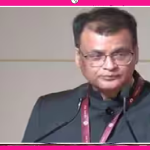



The arrest of former Jharkhand Chief Secretary and former Jharkhand Public Service Commission (JPSC) chairman Lalbiaktluanga Khiangte, widely known as L Khiangte, has put the state’s recruitment examination system under renewed scrutiny. The retired 1988-batch IAS officer was taken into custody by the Jharkhand CID on Monday in connection with alleged irregularities surrounding the JPSC’s 14th Civil Services Examination.
Khiangte’s arrest comes against the backdrop of growing protests by students and government job aspirants across Jharkhand. Protesters have been raising allegations of question paper leaks, manipulation of examination material, irregularities in evaluation and lack of transparency in the recruitment process. The investigation has also focused on the alleged selection and empanelment of TDPL as the agency responsible for conducting the examination.
The former bureaucrat had already resigned as JPSC chairman on July 22, less than three weeks before his arrest. His resignation followed a CID raid at the commission’s office and came at a time when pressure was mounting over the examination controversy.
Why was L Khiangte arrested?
The Jharkhand CID had been questioning Khiangte over decisions connected with the conduct of the 14th Civil Services Examination. A major point of investigation reportedly relates to the selection and empanelment of TDPL as the examination agency.
Investigators are examining the circumstances in which the company was brought into the examination process and whether all prescribed procedures were followed. Questions have also been raised over the company’s reported blacklisting status and the manner in which it came to be associated with the recruitment examination.
Before his arrest, Khiangte reportedly appeared for multiple rounds of questioning before the state CID. The questioning continued for several hours as investigators sought to understand the decision-making process within the commission and the former chairman’s alleged role in it.
After these rounds of questioning, the CID took him into custody on August 10.
The arrest, however, should not be interpreted as a finding of guilt. The allegations remain subject to investigation and any eventual judicial proceedings will determine individual criminal liability.
Khiangte resigned as JPSC chairman in July
The development comes shortly after Khiangte stepped down as chairman of the JPSC.
He resigned from the post on July 22, 2026, following a CID raid at the commission’s premises. At the time, his resignation was seen in the context of the ongoing investigation into alleged examination irregularities.
Khiangte had indicated that stepping aside would allow the investigation to proceed independently and fairly. His departure from the commission, however, did not bring the probe to an end.
The CID continued examining the examination process and the decisions taken by the commission. Khiangte was subsequently questioned multiple times before being arrested.
What is the TDPL controversy?
The examination agency has emerged as a central point in the controversy surrounding the JPSC’s 14th Civil Services Examination.
Investigators are looking into the alleged empanelment of TDPL despite concerns reportedly surrounding the company’s status. The key questions include how the agency was selected, whether the required checks were carried out and whether the commission followed the prescribed procedure while awarding examination-related responsibilities.
The issue has assumed greater significance because it is linked to allegations of broader irregularities in the recruitment examination.
The CID probe is expected to examine documents, decision-making records and the roles played by officials involved in the process. Any findings from the investigation will determine whether procedural lapses occurred and whether they had any impact on the integrity of the examination.
Students step up protests across Jharkhand
The arrest has come at a particularly tense moment for students and job aspirants in Jharkhand.
Protests have been reported in Ranchi, Hazaribagh, Dhanbad, Bokaro and other parts of the State. Students have been demanding transparency in government recruitment examinations and action against those allegedly responsible for irregularities.
For thousands of aspirants, recruitment examinations are tied directly to their employment prospects. That is one reason allegations of examination malpractice have generated such a strong response.
Assembly march turns tense
The student agitation escalated further on August 10 when protesters attempted to march towards the Jharkhand Assembly.
According to reports, protesters moving from the Old Assembly towards the New Assembly breached several police barricades. Police subsequently used lathicharge and water cannons to disperse the demonstrators.
Some protesters were reportedly injured during the confrontation.
Student leader Devendra Nath Mahto, who had been observing a nine-day hunger strike, also joined the Assembly march. He reportedly reached the protest site in an ambulance and was brought to the location on a stretcher.
The confrontation added another layer to an already heated dispute between student groups and the state administration.
Government says most demands have been accepted
The Jharkhand government has maintained that it has accepted most of the demands that fall within its jurisdiction.
State Minister Deepika Pandey Singh has said the government is prepared to address the issues raised by students. The government has also indicated its willingness to have an inquiry into alleged examination irregularities under judicial monitoring.
One of the biggest unresolved issues, however, remains the demand for cancellation of the JSSC-CGL examination.
The government has maintained that it cannot simply cancel the examination because the matter is linked to judicial directions. This position has not satisfied protesting aspirants, who continue to demand stronger action and greater clarity on the examination process.
Opposition seeks CBI investigation
The controversy has also moved into the political arena.
Jharkhand Leader of Opposition Babulal Marandi has demanded a CBI probe into the alleged irregularities involving JPSC and JSSC examinations.
JLKM MLA Jairam Kumar Mahato has also extended support to the protesting students and said he would raise their concerns both inside and outside the Assembly.
The opposition has accused the state government of failing to adequately address the grievances of students and job seekers. The government, meanwhile, has pointed to the steps already taken and the ongoing investigation.
Who is L Khiangte?
Lalbiaktluanga Khiangte is a retired 1988-batch IAS officer who spent a significant part of his administrative career in Jharkhand.
Born on October 26, 1964, Khiangte is from Mizoram. He has an academic background in history and management and went on to serve in several important administrative positions during his career.
His professional journey included assignments in district administration as well as senior positions in the state government. Among the responsibilities he held were posts connected with tribal welfare, senior administrative departments and the Sri Krishna Institute of Public Administration (SKIPA).
His career eventually took him to the highest bureaucratic office in Jharkhand.
From Buxar administration to Jharkhand Chief Secretary
Khiangte began his IAS career in the erstwhile Bihar cadre. During his early administrative years, he served as District Magistrate of Buxar in the period when Bihar and Jharkhand were still part of the undivided State.
Following the creation of Jharkhand and subsequent cadre-related developments, he became associated with the Jharkhand administration. He was formally transferred to the Jharkhand cadre in 2008.
Over the following years, Khiangte held several senior positions in the state government and gradually rose through the administrative hierarchy.
On December 6, 2023, he was appointed the 24th Chief Secretary of Jharkhand during the tenure of Chief Minister Hemant Soren.
He served as Chief Secretary until his retirement on October 31, 2024.
Retirement did not end his administrative career
Khiangte’s retirement from the IAS did not mark the end of his association with government administration.
In February 2025, he was appointed chairman of the Jharkhand Public Service Commission, the constitutional body responsible for conducting recruitment examinations for various government posts in the State.
The position placed him at the head of one of Jharkhand’s most important recruitment institutions. The JPSC plays a central role in selecting candidates for civil services and other government positions, making the integrity and credibility of its examinations especially important.
His tenure as chairman, however, came under a cloud of controversy following allegations surrounding the 14th Civil Services Examination.
A three-decade administrative career now under scrutiny
Khiangte’s career spans more than three decades and includes assignments at district, departmental and senior state-government levels.
His career trajectory can broadly be traced as follows:
- 1988: Joined the Indian Administrative Service
- Early career: Served in district administration, including as District Magistrate of Buxar
- 2008: Became associated with the Jharkhand cadre following inter-cadre transfer
- December 6, 2023: Appointed Chief Secretary of Jharkhand
- October 31, 2024: Retired as Chief Secretary
- February 2025: Appointed Chairman of JPSC
- July 22, 2026: Resigned as JPSC chairman
- August 10, 2026: Arrested by Jharkhand CID in connection with the examination irregularity investigation
What happens next?
Khiangte’s arrest is likely to intensify scrutiny of the JPSC’s functioning and the decisions taken during the preparation and conduct of the 14th Civil Services Examination.
The CID investigation will now be closely watched for its findings on the alleged role of officials, the selection of the examination agency and other aspects of the examination process. Investigators may also examine whether any procedural violations or deliberate manipulation took place and whether these affected candidates.
For students and aspirants protesting across Jharkhand, the investigation could become a crucial test of the government’s commitment to ensuring transparency in recruitment examinations.
At the same time, the legal position remains important. The allegations against Khiangte and any other individuals involved are yet to be established through due process. His arrest is an investigative step and does not, by itself, amount to a determination of guilt.
The case has nevertheless brought the JPSC’s examination system into sharp focus. With students demanding accountability, the government facing political pressure and the CID investigation underway, the findings of the probe could have wider implications for the credibility of competitive examinations and government recruitment in Jharkhand.