

From Kurukshetra to Gurugram: IAS Officer KM Pandurang Maps Haryana’s Diverse Tourism Potential
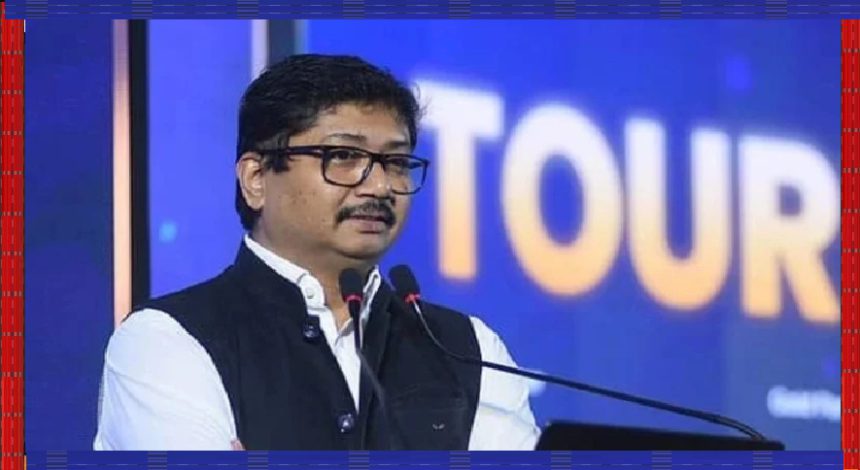
At the Bharat Dekho Tourism Summit 2026 in Chennai, senior Haryana IAS officer K. M. Pandurang presented a broader picture of the state, bringing together its ancient heritage, modern urban centres, food traditions, biodiversity, festivals and even cinema as elements that can shape its tourism identity.
Pandurang, a 2007-batch IAS officer of the Haryana cadre and currently Commissioner and Secretary, Information, Public Relations, Languages and Culture Department, Haryana, spoke during a session titled “Land of Mahabharata – The Epic Odyssey.” His remarks focused on the way Haryana can present different experiences to different categories of travellers, with Kurukshetra representing its deep spiritual and mythological connections and Gurugram offering a very different, contemporary urban experience.
Kurukshetra and Gurugram Offer Two Very Different Experiences
Kurukshetra naturally occupies an important place in Haryana’s tourism narrative. Its association with the Mahabharata gives the city a distinctive place in India’s cultural and spiritual geography, attracting visitors interested in mythology, history, religion and the traditions associated with the epic.
Pandurang, however, pointed out that travellers visiting Haryana are not restricted to one type of experience. The state can simultaneously offer deeply rooted heritage and a modern metropolitan environment, with Gurugram providing an urban destination that can particularly appeal to younger visitors.
His description underlined the considerable contrast between the two destinations. Kurukshetra carries the weight of mythology and spiritual history, while Gurugram represents Haryana’s contemporary face, shaped by its corporate environment, modern infrastructure, entertainment options and rapidly evolving urban culture.
“If you are looking for religious significance, there is Kurukshetra; if you are looking for something for the youth, there is Gurugram,” Pandurang said.
The observation reflects a larger point about Haryana’s tourism potential. Rather than presenting the state through a single identity, its attractions can be positioned as a collection of experiences that span centuries, landscapes and traveller preferences.
Food Could Be a Major Part of Haryana’s Tourism Identity
Food was another important element highlighted by Pandurang during the discussion. Haryana’s culinary traditions, he suggested, can themselves become part of the state’s tourism appeal, particularly when visitors are looking for experiences that connect them with local culture.
Paranthas featured prominently in his remarks. For many travellers, regional food is not simply something consumed during a trip but a way of discovering the character of a place. Haryana’s traditional cuisine, therefore, can add another dimension to a tourism experience that might otherwise focus primarily on monuments, religious sites or historical locations.
“When you think of Haryana, you think of its food, especially paranthas,” Pandurang said, drawing attention to the state’s culinary identity while discussing its wider tourism possibilities.
The idea also fits into the growing importance of food-led tourism, where local dishes, traditional cooking practices and regional eating habits become part of the visitor experience. For Haryana, this could provide a way of connecting its cultural heritage with contemporary tourism interests.
Biodiversity Adds a Natural Dimension
Haryana’s tourism potential, according to Pandurang’s presentation, also extends into nature and biodiversity. The state has biodiversity parks and natural spaces that can provide visitors with an alternative to conventional heritage and religious tourism.
This gives Haryana another tourism narrative to develop. A visitor could move from the historical significance of Kurukshetra to urban Gurugram and then explore the state’s natural spaces, creating a more varied itinerary without limiting the Haryana experience to a single category.
Pandurang also referred to Haryana’s geographical position on routes leading towards destinations such as Ladakh. Its location gives the state an additional opportunity to position itself within larger travel circuits rather than viewing tourism only through visitors whose final destination is Haryana itself.
Festivals Can Showcase Haryana’s Cultural Traditions
Cultural festivals and events were also identified as an important part of the state’s tourism offering. Such occasions can bring together local traditions, music, art, food, crafts and community participation, giving visitors an opportunity to experience Haryana’s culture in a more immediate setting.
Festivals can also create opportunities for local artists and craftspeople. When cultural events are connected with tourism, the benefits can extend beyond the destination itself and involve people whose livelihoods are linked to traditional skills, performances, handicrafts and local enterprises.
For Haryana, this could help turn cultural heritage into a living tourism experience rather than treating heritage only as something associated with historical sites and monuments.
Cinema and Popular Culture Also Find a Place
Interestingly, Pandurang also included cinema and popular culture among the elements that can contribute to Haryana’s tourism identity. The state’s cultural presence in Indian popular culture, along with its distinctive social and rural imagery, has given it visibility far beyond its geographical boundaries.
Cinema can influence how audiences perceive places and can sometimes encourage travellers to explore locations associated with films, personalities or cultural narratives. Bringing popular culture into the tourism conversation therefore broadens the range of ways through which Haryana can connect with younger audiences.
This becomes particularly relevant when the state is trying to appeal to travellers who may not necessarily plan trips around traditional pilgrimage or heritage destinations.
A Tourism Story That Goes Beyond the Mahabharata
The Mahabharata remains one of Haryana’s strongest cultural tourism assets, and Kurukshetra is central to that narrative. But Pandurang’s remarks at the Chennai summit suggested that the epic heritage can be an entry point rather than the entire tourism story.
A visitor interested in mythology may begin with Kurukshetra. Another traveller may be drawn to Gurugram’s urban attractions, while someone else may be interested in food, biodiversity or cultural festivals. These experiences can coexist within the same state and potentially attract different visitor groups.
That diversity could become an important part of Haryana’s tourism positioning. The state’s historical identity does not have to compete with its modern identity. Instead, both can form parts of a larger tourism proposition.
Bharat Dekho Tourism Summit 2026 Highlights Haryana
Pandurang made these observations at the Bharat Dekho Tourism Summit 2026, held in Chennai. The session, titled “Land of Mahabharata – The Epic Odyssey”, provided a platform to discuss Haryana through the lens of its historical and cultural connection with the Mahabharata.
The discussion also brought attention to the broader tourism possibilities available across the state. Kurukshetra’s spiritual significance was discussed alongside Gurugram’s appeal to younger travellers, while food, biodiversity parks, festivals and cinema were identified as additional components of Haryana’s tourism landscape.
The overall message was that Haryana can offer considerably more than a conventional heritage itinerary. Its tourism identity can combine mythology and modernity, food and nature, cultural festivals and urban experiences.
Who Is K. M. Pandurang?
- M. Pandurang, IAS (2007: HY) is currently serving as Commissioner and Secretary, Information, Public Relations, Languages and Culture Department, Haryana. His present assignment places him directly within the state’s administrative framework dealing with information, public communication, languages and cultural affairs.
During his administrative career, Pandurang has held several significant positions. His previous responsibilities have included serving as Deputy Principal Secretary to the Chief Minister, Director of Town & Country Planning, and Managing Director of the Haryana State Warehousing Corporation.
His professional background combines administrative experience with a technical education. Pandurang holds a Bachelor of Engineering degree in Chemical Engineering and a Diploma in Computer Systems from ACTS, Pune.
His current role also puts him in a position closely connected with Haryana’s cultural and public communication activities, making his participation in a tourism-focused discussion particularly relevant to the state’s efforts to present its cultural identity to audiences outside Haryana.
Haryana’s Tourism Canvas Is Wider Than Its Traditional Image
The picture emerging from Pandurang’s presentation is of a state with several distinct tourism narratives operating side by side. Kurukshetra provides the powerful mythology and spiritual heritage associated with the Mahabharata, while Gurugram offers a distinctly modern urban experience.
Then there is the food, especially Haryana’s much-loved paranthas, along with biodiversity parks, cultural festivals, cinema and other contemporary attractions. Taken together, these elements offer a more expansive way of looking at Haryana as a tourism destination.
At the Bharat Dekho Tourism Summit, Pandurang’s remarks placed that diversity at the centre of the conversation. The state’s tourism potential, as presented at the event, lies not in a single attraction but in the range of experiences available – from the ancient landscape of Kurukshetra to the modern energy of Gurugram, and from traditional food and festivals to nature and popular culture.