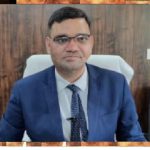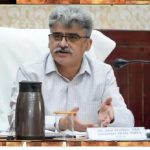


Former Kerala Chief Secretary S.M. Vijayanand Says IAS Officers Must Avoid Political Commentary, Reflects on PM Modi, Oommen Chandy, Pinarayi Vijayan and Kerala’s Governance Model
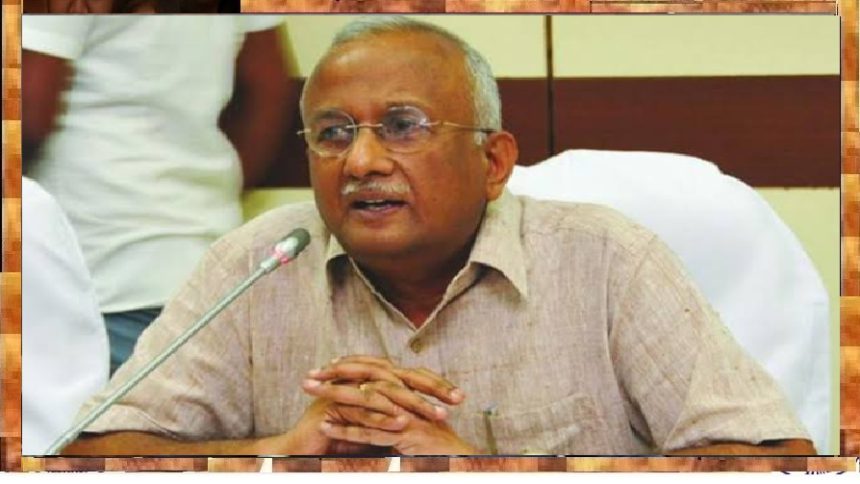
Former Kerala Chief Secretary S.M. Vijayanand, one of the state’s most respected retired civil servants and a key architect of Kerala’s landmark People’s Planning initiative, has delivered a strong message on the role of India’s bureaucracy. In a candid interaction with The New Indian Express, the retired 1981-batch IAS officer argued that serving civil servants must stay away from public political commentary and preserve the neutrality that lies at the heart of the Indian Administrative Service.
Drawing upon more than three decades of administrative experience across state and Central governments, Vijayanand reflected on the evolution of decentralised governance in Kerala, his working relationships with political leaders across party lines, his interactions with Prime Minister Narendra Modi, and the changing nature of India’s civil services.
His observations come at a time when the role of bureaucrats in public discourse is increasingly being debated, especially with the growing influence of social media and digital communication.
Civil Servants Must Preserve Neutrality, Says Vijayanand
Vijayanand left little room for ambiguity while speaking about serving IAS officers making political observations in public.
According to him, once individuals voluntarily join the civil services, they also voluntarily accept certain restrictions on public expression. The service demands that officers maintain institutional discipline and political neutrality, even if they personally disagree with government decisions.
He stressed that differences with ministers or governments should be recorded through official channels such as file notings, departmental meetings or institutional mechanisms designed for administrative decision-making.
Taking disagreements into the public domain through television debates, newspaper interviews or social media platforms, he said, undermines the credibility of the civil services.
In his view, the growing tendency among some officers to publicly express political opinions or project themselves as individual personalities weakens one of the core strengths of the bureaucracy – its reputation for impartiality.
‘IAS Officers Are Part of an Institution, Not Public Celebrities’
Reflecting on the changing culture within the bureaucracy, Vijayanand said civil servants should never lose sight of the principles on which the Indian Administrative Service was built.
He pointed out that every IAS officer is trained at the Civil Services Academy with three foundational values:
Anonymity
Integrity
Neutrality
According to him, these principles are not merely theoretical concepts but practical guidelines that enable officers to serve governments of different political ideologies with equal professionalism.
He observed that officers are representatives of an institution rather than individual public figures seeking visibility.
Vijayanand attributed the increasing trend of self-promotion partly to the rapid expansion of social media and partly to what he described as weaker enforcement of service conduct rules.
Thirty Years of People’s Planning: A Remarkable Journey with Challenges
Looking back at Kerala’s celebrated People’s Planning Campaign, which recently completed three decades, Vijayanand offered a balanced assessment.
He said that if the programme were judged solely against its original ambitions, it would perhaps deserve “pass marks.” Yet, when compared with decentralisation efforts elsewhere in the country, he described it as an extraordinary achievement that fundamentally reshaped local governance.
The initiative significantly increased citizen participation in development planning, strengthened local self-government institutions and improved access to essential public infrastructure.
According to him, the campaign also transformed the delivery of public services, especially in government hospitals and rural development programmes.
At the same time, he acknowledged that the political enthusiasm that initially drove the movement has gradually diminished over the years.
Political Commitment Remains the Key
While discussing the future of decentralisation, Vijayanand emphasised that institutional reforms cannot succeed through administrative orders alone.
In his assessment, effective decentralisation requires three essential ingredients:
Sustained political commitment.
Clear ideological conviction regarding local governance.
Active involvement of senior bureaucrats, district collectors and elected local bodies.
He noted that although the second government led by Chief Minister Pinarayi Vijayan announced a “Second People’s Plan,” the initiative never acquired the political momentum required for large-scale implementation.
According to him, decentralisation must remain a continuous political and administrative process rather than a one-time reform programme.
Remembering the Unsung Contributors
Vijayanand also highlighted the contributions of several political leaders who, in his opinion, played significant yet often underappreciated roles in strengthening Kerala’s decentralisation journey.
He particularly acknowledged former Local Self-Government Minister Paloli Mohammed Kutty, describing him as a quiet but highly effective force behind many decentralisation initiatives.
He also praised former Chief Minister A.K. Antony, saying his support during 2001 helped prevent setbacks that could have seriously weakened Kerala’s local governance reforms.
According to Vijayanand, the original vision behind People’s Planning extended well beyond administrative restructuring.
Its broader objectives included reducing corruption, bringing citizens closer to decision-making processes and making governance more transparent and participatory.
Waste Management Progress, But Challenges Continue
Kerala’s waste management system was another area discussed during the interview.
Vijayanand admitted that the state has not yet achieved a complete solution to the long-standing challenge of solid waste management.
However, he praised the Kudumbashree waste collection model as one of Kerala’s most successful innovations.
According to him, the programme currently covers nearly 70 to 80 percent of the state, providing an organised waste collection mechanism while simultaneously generating employment opportunities for economically disadvantaged women.
Even with these achievements, he believes considerable work remains, particularly in urban centres where waste generation continues to increase.
A Rewarding Decade at the Centre
Reflecting on his tenure with the Union Government, Vijayanand described those years as among the most fulfilling periods of his administrative career.
He initially served under former Union Minister Jairam Ramesh before eventually becoming Secretary in the Ministry of Panchayati Raj.
He recalled that during one phase, the ministry’s budget witnessed a dramatic reduction from nearly Rs 8,000 crore to just Rs 90 crore.
Despite those financial constraints, the ministry focused on institutional reforms rather than financial expansion.
One of its major achievements during that period was the introduction of the Gram Panchayat Development Plan (GPDP).
Inspired largely by Kerala’s decentralisation experience, the framework encouraged local governments across India to prepare structured development plans based on local priorities.
Remarkably, Vijayanand noted, all 29 states at the time voluntarily adopted the model without any formal direction from the Union Government, with Telangana becoming the first state to implement it.
His Experience Working with Prime Minister Narendra Modi
Vijayanand also shared his experiences of interacting with Prime Minister Narendra Modi during his years at the Centre.
He described the Prime Minister as approachable, development-oriented and deeply interested in issues concerning rural development during the early years of his tenure.
According to Vijayanand, Modi personally monitored several rural development programmes and regularly held one-on-one meetings with senior officials to review implementation.
He recalled that the Prime Minister displayed particular interest in rural road connectivity and centrally sponsored development schemes.
At the same time, Vijayanand observed that Modi appeared comparatively less enthusiastic about the Mahatma Gandhi National Rural Employment Guarantee Act (MGNREGA).
He also shared an interesting anecdote, saying Modi had appreciated Kerala’s Kudumbashree programme even before becoming Prime Minister and had publicly acknowledged in Parliament that valuable lessons could be drawn from Kerala’s experience.
Working with Oommen Chandy and Pinarayi Vijayan
Having served as Kerala’s Chief Secretary under two Chief Ministers belonging to different political ideologies, Vijayanand refrained from making political comparisons.
Instead, he highlighted the distinctive administrative strengths of both leaders.
He described late Chief Minister Oommen Chandy as a leader deeply committed to the welfare of the poor and someone capable of separating political considerations from personal compassion.
In contrast, he characterised Pinarayi Vijayan as highly systematic, decisive and focused on creating a lasting administrative legacy.
According to Vijayanand, he enjoyed considerable administrative autonomy during his tenure under Pinarayi Vijayan.
He also recalled that the Chief Minister frequently conducted detailed one-on-one review meetings, enabling close monitoring of government programmes.
At the same time, Vijayanand pointed out that Kerala’s coalition-based political structure naturally limits the powers exercised by the Chief Secretary compared with certain other Indian states.
Views on Lateral Entry and Administrative Reforms
The retired bureaucrat also offered his perspective on ongoing debates surrounding reforms within the civil services.
He expressed reservations about the concept of lateral entry into senior administrative positions.
According to him, the practical administrative experience acquired through decades of government service cannot easily be replicated by professionals entering from outside the system.
That said, he acknowledged that domain specialists can make valuable contributions in highly technical sectors where specialised expertise is required.
Revenue Generation More Practical Than Spending Cuts
Commenting on Kerala’s financial situation, Vijayanand argued that governments should focus more on improving revenue mobilisation rather than relying primarily on expenditure reduction.
He suggested that innovative approaches, including rational user charges and alternative revenue sources, may provide more sustainable fiscal solutions.
In his view, merely reducing expenditure without strengthening revenue generation is unlikely to address long-term financial challenges.
Greater Role for Local Governments
One of Vijayanand’s recurring themes throughout the interview was the need to strengthen local governance institutions.