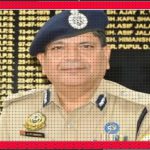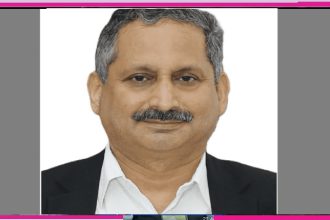


Who Is IPS M Chandra Sekhar? 1998-Batch Karnataka Officer Faces Allegations Over Family Business Interests and Government Tenders
Senior IPS officer M Chandra Sekhar, a 1998-batch officer of the Karnataka cadre, has come under scrutiny following allegations raised in the Karnataka Legislative Assembly over the business interests of his family members and their alleged participation in government tenders.The state government has now sought a report from the state police chief to examine the allegations and establish whether there was any violation of service rules or disclosure requirements.
Sekhar is currently serving as Additional Director General of Police (ADGP), Internal Security Division, Karnataka, in Bengaluru. Over a career spanning nearly three decades, he has handled several high-profile policing assignments in Karnataka as well as Himachal Pradesh, including Commissioner of Police in Mangaluru and Belagavi and Joint Commissioner of Police (Crime) in Bengaluru.
Who Is M Chandra Sekhar?
M Chandra Sekhar is a 1998-batch Indian Police Service officer of the Karnataka cadre who has built his career across policing, crime investigation, law and order and internal security. According to available profiles, he was born in 1974 and is originally from Nellore in Andhra Pradesh.
Before joining the civil services, Sekhar reportedly worked as a software engineer with Infosys between 1995 and 1996. He later entered the Indian Police Service after being selected through the Union Public Service Commission’s Civil Services Examination and joined the IPS on December 28, 1998.
His academic background is also notable. Sekhar completed a B.Tech in Aerospace Engineering from the Indian Institute of Technology, Kharagpur, before moving into public service. His career subsequently took him through several demanding assignments in different states and policing jurisdictions.
Early Career in Himachal Pradesh
Sekhar began his policing career in Himachal Pradesh, where he served as Assistant Superintendent of Police in Shimla. His early years in the service gave him field-level exposure to policing and district administration before he moved into more senior responsibilities.
He later served as Superintendent of Police in Bilaspur and Mandi districts of Himachal Pradesh. These assignments involved the routine but demanding responsibilities of district policing, including maintenance of law and order, crime prevention, investigations and coordination with the civil administration.
In 2009, Sekhar returned to Karnataka on deputation, beginning a phase of his career that would see him take up several important positions within the state’s police establishment.
Major Karnataka Police Assignments
During his tenure in Karnataka, Sekhar served as Commissioner of Police in Mangaluru, where he was responsible for overseeing policing operations in the coastal city. The position involved handling law-and-order challenges, crime control, investigations and coordination among various police units.
He was later appointed Commissioner of Police, Belagavi, in April 2018. The posting placed him in charge of policing in another strategically important Karnataka city and added to his experience in managing large police establishments.
Sekhar also served as Joint Commissioner of Police (Crime) in Bengaluru. In that role, he was associated with the investigation of serious crimes and the supervision of crime-related policing operations in the state capital, one of the country’s largest urban centres.
His career subsequently moved into the senior leadership ranks of the Karnataka Police. He was elevated to the rank of Additional Director General of Police and took charge of the Internal Security Division in Bengaluru in June 2023.
Internal Security Division Posting
As ADGP of the Internal Security Division, Sekhar occupies a senior position within the Karnataka Police structure. The division deals with matters connected with internal security and intelligence-related policing responsibilities, making it a significant assignment for a senior IPS officer.
His current position comes after years of field and investigative experience, including senior commissioner-level assignments and crime-related responsibilities. He has therefore served across several specialised areas of policing during his career.
The latest controversy has now brought his administrative and service-record disclosures under closer public scrutiny, although the allegations themselves are yet to be established.
Allegations Raised in Karnataka Assembly
The current issue surfaced in the Karnataka Legislative Assembly after JD(S) MLA C N Balakrishna raised allegations against Sekhar through a Rule 351 notice. The allegations concern the business interests of the IPS officer’s family and their alleged involvement in government contracts.
According to the claims raised in the Assembly, companies linked to Sekhar’s wife and other family members participated in government tenders without what the MLA alleged was adequate disclosure of their business interests. The allegations have raised questions over whether the relevant information was properly disclosed under the applicable service rules and in the officer’s property returns.
The matter has attracted attention because serving members of the All India Services are subject to conduct rules governing financial interests, property declarations and potential conflicts involving their official responsibilities.
Allegations Involving Government Tenders
The MLA alleged that Sekhar’s wife obtained government contracts through a private company from the Karnataka State Electronics Development Corporation. The company was also alleged to have participated in a tender connected with skill-management software for minority residential schools and colleges.
The allegations also extended to other members of Sekhar’s family. According to the claims made in the Assembly, family members of the IPS officer were directors in 10 companies, while two of those companies were alleged to have recorded annual transactions of around ₹400 crore.
These figures and claims are now part of the matter being examined by the state government. The key question is not simply whether family members were involved in private businesses, but whether the interests were appropriately disclosed and whether any such business activity created a conflict with the officer’s official position.
Questions Over All India Services Conduct Rules
The allegations have also raised questions about compliance with the All India Services (Conduct) Rules and the declarations required from senior government officials.
Government officers are required to disclose certain financial and property interests under applicable rules. The scrutiny in this case is focused on whether Sekhar adequately disclosed the business interests involving his wife, son and daughter and whether the relevant information was reflected in his official declarations and property returns.
At present, however, these remain allegations rather than established findings. The government’s decision to seek a formal report indicates that the authorities want the matter to be examined through the administrative process before drawing any conclusions.
Karnataka Government Seeks Detailed Report
Karnataka Chief Minister D K Shivakumar has said that the state government has sought a report from the state police chief regarding the allegations. The government has also referred to communications submitted by Sekhar concerning the business interests of his immediate family.
According to the information cited in the matter, Sekhar had informed the government through letters dated June 29 and July 3 that his wife, son and daughter were directors in several companies. He was subsequently asked to provide explanations and supporting documents in response to the issues raised.
The report from the police chief is expected to help the government establish the factual position and determine whether there was any breach of applicable service rules or disclosure requirements. The examination could also clarify the nature of the companies, the roles held by family members and the transactions or government contracts mentioned in the allegations.
Link to Lokayukta SIT Probe
Sekhar has reportedly connected the allegations with his earlier role in a high-profile Lokayukta Special Investigation Team investigation involving Union Minister H D Kumaraswamy. He indicated that the current allegations emerged against the backdrop of the investigation, which he had headed.
The Lokayukta SIT matter had placed Sekhar in a sensitive investigative role involving a prominent political figure. His comments suggest that the context of that investigation may be relevant to how the current allegations came to public attention.
That connection, however, does not by itself establish the validity or otherwise of the business-related allegations. The government-ordered inquiry will be important in determining the facts independently.
Police Medal for Meritorious Service
Despite the controversy now surrounding him, Sekhar has had a long career in the police service and has received official recognition for his work. He was awarded the Police Medal for Meritorious Service in 2016.
His nearly three-decade career has included field policing, district-level leadership, crime investigation, commissioner-level assignments and internal security responsibilities. His postings in Himachal Pradesh and Karnataka have given him experience across different policing environments and administrative challenges.
As the Karnataka government examines the latest allegations, the focus will now be on the factual report and supporting records rather than the claims alone. The key issues will include whether the family business interests were properly disclosed, whether government tender participation complied with applicable rules and whether any conflict of interest arose from the officer’s position.
For now, no conclusion can be drawn from the allegations alone. The state government’s inquiry and the documents submitted by the officer will determine whether the concerns raised in the Assembly point to any actual violation of service rules or whether the matter can be satisfactorily explained through the official record.