

Maharashtra Government has transferred five IAS officers in a fresh reshuffle. Mangesh Joshi has been appointed as Tourism Director, while key changes have been made in RUSA, Zilla Parishads, and tribal development administration to boost governance efficiency.
In a bid to strengthen governance and improve administrative efficiency, the Maharashtra Government has announced the transfer of five IAS officers across crucial departments including tourism, higher and technical education, municipal administration, and tribal development. The reshuffle, issued this week, is part of the state’s ongoing administrative restructuring exercise aimed at enhancing policy implementation and service delivery.
Changes in Tourism and Higher Education Departments
One of the most notable changes involves the Tourism Department.
Dr. B.N. Patil (IAS: Non-SCS: 2014), who was serving as Director of Tourism in Mumbai, has been appointed as Project Director of the Rashtriya Uchchatar Shiksha Abhiyan (RUSA) under the Higher and Technical Education Department in Mumbai.
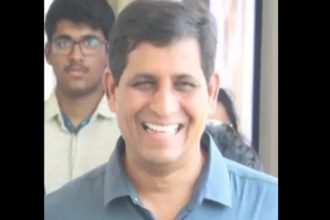
Mangesh Joshi (IAS: SCS: 2015), previously posted as Deputy Director General at YASHADA, Pune, has taken charge as the new Director of Tourism in Mumbai.
These changes are expected to bring renewed administrative focus to both the tourism and higher education sectors, which are critical to Maharashtra’s economic and social development.
Key Appointments in Municipal and Zilla Parishad Administration
The reshuffle also impacted local governance bodies:
Kuladeep Jangam (IAS: RR: 2020), who was serving as Chief Executive Officer (CEO) of Zilla Parishad, Solapur, has been appointed as Additional Municipal Commissioner of the Pimpri-Chinchwad Municipal Corporation.
Kushal Jain (IAS: RR: 2022), earlier posted as Project Officer of the Integrated Tribal Development Project (ITDP) in Aheri and Assistant Collector in Gadchiroli, has been named the new CEO of Zilla Parishad, Solapur, replacing Jangam.
These appointments highlight the government’s focus on strengthening municipal administration and ensuring effective district-level governance.
Posting in Tribal Development Administration
Further changes were made in the tribal development sector:
Revaiah Dongre (IAS: RR: 2023), who was serving as Assistant Collector of Bhoom Sub Division in Dharashiv, has been transferred and appointed as Project Officer of ITDP Pandharkawda. He will also hold additional charge as Assistant Collector of Kelapur Sub Division in Yavatmal.
This move underscores the government’s continued emphasis on tribal welfare and development in key regions of the state.
Previous Reshuffle Involving 11 IAS Officers
This reshuffle follows another major administrative exercise earlier, when the Maharashtra Government transferred 11 IAS officers across departments and institutions in cities such as Pune, Mumbai, Kalyan, and Nashik.
Among the notable appointments in that round:
Rahul Ranjan Mahiwal was posted as Member Secretary of the Maharashtra Council of Agricultural Education and Research, Pune, after serving as Managing Director of the Maharashtra State Farming Corporation.
Ruchesh Jaivanshi was appointed as the new Managing Director of the Maharashtra State Farming Corporation, Pune.
Minal Karanwal was appointed as Project Director of the Nanaji Deshmukh Krishi Sanjivanee Project, a flagship initiative focused on climate-resilient agriculture.
These changes were aimed at strengthening agriculture-related institutions and development programmes across the state.
Focus on Governance Efficiency and Development
Officials have indicated that the latest reshuffle is part of a broader effort to streamline administrative functioning, improve coordination between departments, and enhance the delivery of public services. By placing officers in strategic roles across tourism, education, rural administration, and agriculture, the government aims to accelerate development initiatives and ensure better governance outcomes across Maharashtra.
The transfer of five IAS officers, including the appointment of Mangesh Joshi as Tourism Director, reflects Maharashtra’s proactive approach to administrative restructuring. With changes spanning tourism, higher education, municipal governance, and tribal development, the reshuffle is expected to strengthen institutional capacity and improve service delivery across the state.