The Cost of Being ‘Singham’: Maharashtra Strips Maverick IAS Officer Tukaram Mundhe of Key Parbhani Guardianship Post
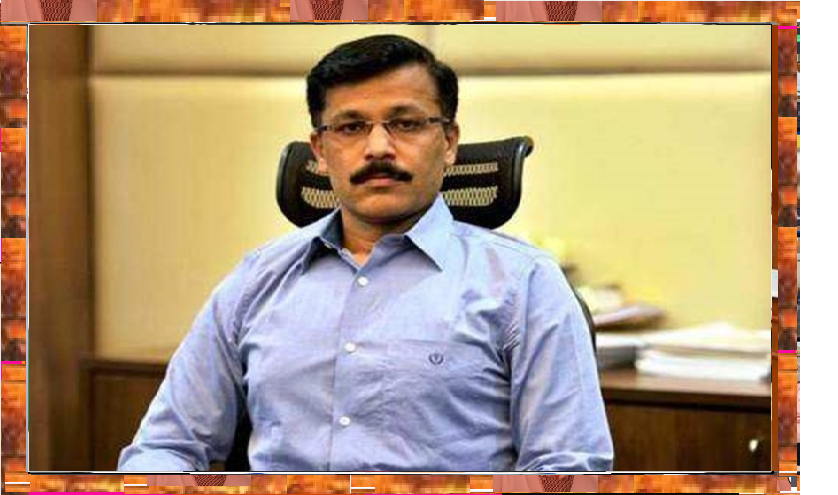
The Maharashtra government just dropped a quiet administrative order that has sent loud shockwaves through the state’s bureaucratic circles. Tukaram Haribhau Mundhe, the 2005-batch IAS powerhouse widely known as the “Singham” of Maharashtra’s civil service, has been abruptly stripped of his additional responsibility as the Guardian Secretary of the Parbhani district.
The low-profile notification issued by the General Administration Department (GAD) didn’t care to explain why. Instead, it flatly stated that Dr Chandrakant L. Pulakundwar, a seasoned 2008-batch officer currently steering the Rural Development and Panchayati Raj Department, will take over the guardianship post immediately. While a Guardian Secretary role is technically an additional oversight responsibility, taking it away from a hyper-visible, anti-corruption crusader like Mundhe has set tongues wagging across Mumbai. In the world of high-level administration, an unvarnished removal with zero explanation is rarely just a routine calendar shuffle.
The Endless Nomad of the Maharashtra Cadre
To understand why this development is trending in state administrative circles, you have to look at Mundhe’s jaw-dropping track record. Over a career spanning just over two decades, the man has been transferred more than two dozen times.
That is an astonishing average of almost one new job every single year.
Mundhe has built a near-mythical reputation among the public for his uncompromising stance against corruption, absolute transparency, and a clinical, by-the-book enforcement of government regulations. He doesn’t smooth over political feathers, and he doesn’t compromise with entrenched local interest groups. His supporters view him as a flawless symbol of honest, fearless governance. His critics, however, often whisper that his highly confrontational, unyielding administrative style makes it almost impossible for him to build the political-bureaucratic consensus required to run a district smoothly over the long haul.
Right now, Mundhe’s primary day job is serving as the Commissioner of the Food and Drug Administration (FDA) for Maharashtra – an intense, high-stakes portfolio he was handed just last month. Before the FDA gig, he was navigating the administrative waters of the Divyang Kalyan Department as Secretary.
From Selling Vegetables in Beed to the Corridors of Power
Mundhe’s aggressive, defensive style of public service makes a lot of sense when you look at his roots. Born on June 3, 1975, in the tiny village of Tadsonna within Maharashtra’s notorious, drought-prone Beed district, he grew up in a humble farming family.
He didn’t inherit a silver spoon. As a young boy navigating the harsh economic realities of rural Marathwada, he spent his mornings helping his family tend to dry agricultural plots and even stepped out to sell vegetables in local markets to prop up the household’s meager income. This raw, firsthand exposure to rural poverty, systemic neglect, and the daily struggles of common citizens deeply forged his worldview on what public service is supposed to accomplish.
Refusing to let his economic limitations dictate his horizon, Mundhe blew through his education. He attended local Zilla Parishad government schools before heading to Dr Babasaheb Ambedkar Marathwada University in Aurangabad, where he picked up both a Bachelor’s and a Master’s degree in Political Science. He didn’t just pass; he excelled, qualifying for the ultra-prestigious UGC-Junior Research Fellowship (JRF) before setting his sights on the civil services and cracking the UPSC.
Enter Dr Chandrakant Pulakundwar: The Consensus Builder
While Mundhe represents the fiery, disruptive side of the IAS machine, his replacement in Parbhani represents the ultimate steady hand. Dr Chandrakant L. Pulakundwar is a highly respected 2008-batch IAS officer who climbed into the elite cadre through a well-earned State Civil Service (SCS) promotion.
Born on October 26, 1968, in Nanded, Pulakundwar has a fascinating scientific background of his own, holding a Master of Veterinary Science (M.V.Sc.) degree in Veterinary Pathology from Marathwada Agricultural University – which, ironically, is located right in Parbhani, the very district he is now tasked with guarding.
Pulakundwar is a veteran of the massive, complex state bureaucratic reshuffle that hit Maharashtra in May 2026. Over his distinguished 18-year administrative run, he has handled some of the most sensitive, high-wire acts the state could throw at an officer. He served a long, high-intensity stint as the Divisional Commissioner of the crucial Pune Division from early 2024 to mid-2026. He has also operated as the Sugar Commissioner of Maharashtra and the Municipal Commissioner for the Nashik Municipal Corporation (NMC).
Perhaps his biggest claim to administrative fame was his role as the Joint Managing Director of the Maharashtra State Road Development Corporation (MSRDC). In that high-pressure infrastructure seat, Pulakundwar was the primary field general responsible for spearheading the incredibly complex, politically explosive land acquisitions for the multi-billion-dollar Samruddhi Mahamarg expressway project. Managing to clear thousands of hectares of land without triggering massive local riots or endless litigation proved he possesses incredible diplomatic tact and a masterclass ability to build bridges between suspicious local farmers and an aggressive state administration. He also served as the District Collector of Buldhana and spent time learning the ropes of top-tier political management as the Private Secretary to former Chief Minister Ashok Chavan back in 2008.
The Subtext of the Parbhani Shift
By putting Pulakundwar into Parbhani, the Maharashtra government is installing a local expert who holds a deep, native understanding of the Marathwada region’s unique agrarian crises and socio-political matrix.
But the removal of Mundhe from this regional equation is what will continue to dominate discussions among civil service observers. Guardian Secretaries are supposed to act as the ultimate systemic link between the state capital and local district dynamics, ensuring that state-level resources are deployed smoothly. When an officer with Mundhe’s “Singham” persona is quietly decoupled from a district responsibility, it usually hints at behind-the-scenes friction with local political structures or regional administrative machineries.
For now, Tukaram Mundhe remains locked into his core role as the FDA Commissioner. Given his explosive track record, he will likely turn his full, undivided attention toward tightening the screws on food safety violations, cracking down on pharmaceutical malpractice, and enforcing fierce consumer protection standards across Maharashtra. If history is any indicator, the state’s rogue pharmacy owners and food adulterators are about to have a very tough year.
An officer like Tukaram Mundhe always creates a massive debate around public service models. Do you think a modern democratic state functions better with “Singham-style” rule enforcers who ruthlessly attack systemic rot, or does it require diplomatic consensus-builders like Pulakundwar who excel at keeping multi-billion-dollar infrastructure projects moving forward?