Maharashtra UCC Panel Gets Retired IAS Officer Shatrughna Singh After Justice R.C. Chavan’s Resignation
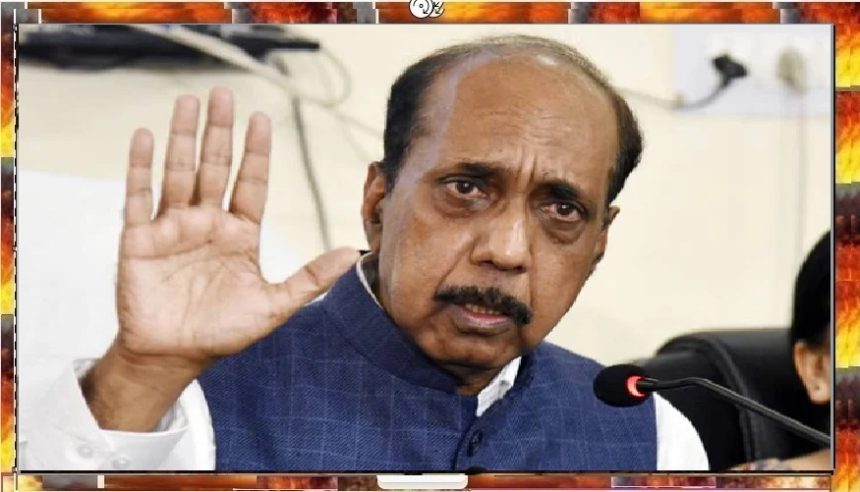
The Maharashtra government has inducted retired IAS officer Shatrughna Singh into the state’s Uniform Civil Code (UCC) committee, adding a former Uttarakhand Chief Secretary with direct experience of the UCC drafting and implementation process. Singh has been appointed member-cum-senior adviser to the panel headed by retired Supreme Court judge Justice Ranjana Desai.
The development comes shortly after retired Bombay High Court judge Justice R.C. Chavan resigned from the Maharashtra UCC committee following differences concerning the functioning of the panel and aspects of its public consultation exercise. Singh’s appointment is particularly notable because he had already attended the committee’s September 19 meeting as an adviser, and his presence at that meeting was referred to in Justice Chavan’s resignation communication.
Shatrughna Singh Joins Maharashtra UCC Committee
Shatrughna Singh, a retired 1983-batch IAS officer and former Chief Secretary of Uttarakhand, was formally appointed member-cum-senior adviser to the Maharashtra UCC committee on September 21, 2026. His induction comes as the seven-member panel continues work on preparing a draft Uniform Civil Code and recommendations for its implementation in Maharashtra.
According to reports citing a senior government official, Singh’s appointment was made at the request of committee chairperson Justice Ranjana Desai. The official said Desai wanted Singh to be associated with the Maharashtra panel because of his earlier experience in the development and implementation framework of Uttarakhand’s UCC.
Singh’s previous association with the Uttarakhand exercise gives him familiarity with several stages of the UCC process. His experience includes participation in the committee headed by Justice Desai, involvement in the sub-committee that worked on drafting the legislation, stakeholder consultations and subsequent work relating to rules for implementation.
Singh Has Experience With Uttarakhand UCC
Singh’s background is significant in the context of the Maharashtra committee because he was associated with the Uttarakhand UCC process at multiple stages. He served on the UCC committee headed by Justice Ranjana Desai and was also involved with the sub-committee that worked on drafting the law.
His role was not limited to the drafting exercise. He also participated in stakeholder consultations and subsequently headed the committee responsible for framing rules for implementing Uttarakhand’s UCC. He has also been associated with a committee in West Bengal that was constituted to work on UCC implementation.
Uttarakhand’s experience has become an important reference point in India’s ongoing discussion around a Uniform Civil Code. The state’s UCC Bill was passed by the Uttarakhand Assembly in February 2024 and received Presidential assent the following month. The legislation subsequently came into force on January 27, 2025.
For the Maharashtra committee, Singh’s previous exposure to both legislation and implementation gives him experience with issues that arise after a draft law moves beyond the policy stage. His new role, however, is specifically within the Maharashtra panel, which is still working on its draft and recommendations.
Justice R.C. Chavan Resigns From Panel
Singh’s formal induction follows the resignation of Justice R.C. Chavan from the Maharashtra UCC committee. The retired Bombay High Court judge stepped down after the committee’s September 19 meeting, with his resignation communication raising concerns about aspects of the panel’s functioning and its approach to public consultation.
Justice Chavan’s communication also referred to Singh’s presence at the September 19 meeting. According to reports, Chavan later indicated that he had not been informed beforehand about Singh’s appointment as an adviser.
The sequence of events has consequently attracted attention because Singh attended the September 19 meeting as an adviser and was formally appointed member-cum-senior adviser two days later, on September 21. The Maharashtra government has now brought him into the committee as a member while the panel continues its work under Justice Ranjana Desai.
The available reports describe differences over the committee’s procedure and consultation exercise. They do not establish that Singh’s subsequent appointment was itself the reason for Justice Chavan’s resignation, and the two developments are best viewed in the context of the sequence recorded in the reports.
Differences Over Public Consultation Questionnaire
One of the issues discussed during the September 19 meeting concerned the questionnaire being prepared to obtain public views on the proposed Uniform Civil Code. The committee has been working on a questionnaire that is expected to contain close to three dozen questions.
Reports indicate that Justice Chavan favoured the inclusion of more subjective questions, which would allow respondents to explain their views in greater detail. The committee ultimately decided to proceed with a combination of objective and subjective questions for the consultation exercise.
The questionnaire is expected to form an important part of the committee’s effort to gather public feedback before finalising its recommendations. The consultation process is being developed alongside the committee’s wider work on preparing a proposed legal framework for Maharashtra.
Singh was also reported to have raised concerns or suggestions regarding modifications to the website being prepared for the consultation exercise. These included the introductory material explaining the UCC and the manner in which the questionnaire would be presented to people accessing the consultation platform.
Maharashtra UCC Committee Constituted in July
The Maharashtra government constituted the seven-member UCC committee in July 2026, appointing Justice Ranjana Desai as its chairperson. The panel has been given the responsibility of preparing a draft Uniform Civil Code along with recommendations concerning its implementation in the state.
The committee was given a six-month period to complete its work and submit its draft. The panel’s responsibilities extend beyond simply preparing legislative language, as it is also examining the issues involved in putting a common civil framework into effect.
The other members of the committee include retired Bombay High Court judge Justice S.G. Mehare, former Maharashtra Chief Secretary D.K. Jain, former Advocate General Birendra Saraf, social activist and Padma Shri awardee Ramesh Patange, and education expert Suvarna Rawal.
With Singh now formally joining the panel, the committee has an additional member with experience from Uttarakhand’s UCC exercise. His role combines membership with that of senior adviser, according to the appointment made on September 21.
What Does a Uniform Civil Code Cover?
A Uniform Civil Code broadly refers to a common legal framework governing personal matters such as marriage, divorce, inheritance, succession and maintenance. The idea has been debated in India for decades and is linked to Article 44 of the Constitution, which speaks of the State endeavouring to secure a uniform civil code for citizens.
The subject has remained politically and legally significant, with different views expressed over how a common civil framework should be drafted, implemented and applied. Supporters have argued in favour of greater uniformity in personal laws, while critics and legal commentators have raised questions concerning religious freedom, diversity, constitutional rights and the manner in which different personal-law practices should be addressed.
Uttarakhand became the first Indian state to enact and implement a UCC under its current legislative framework, with its law coming into force in January 2025. Other states, including Gujarat, Assam and Madhya Pradesh, have also taken steps concerning UCC-related legislation or proposals, although the legal position and implementation arrangements differ from state to state.
Maharashtra Plans to Move Ahead With UCC
The Maharashtra committee is expected to submit its recommendations within the six-month period assigned to it. Chief Minister Devendra Fadnavis has stated that the state government aims to introduce a UCC Bill during the winter session of the Maharashtra Assembly in December, subject to the committee submitting its report.
That timeline makes the committee’s ongoing consultation exercise particularly important. Before the draft is finalised, the panel is examining responses from the public while also working through questions concerning the structure and possible implementation of the proposed framework.
The induction of Shatrughna Singh adds another layer of experience to this process. As a former Uttarakhand Chief Secretary who was associated with Justice Ranjana Desai’s earlier UCC exercise, Singh brings experience of drafting, stakeholder consultation and implementation-related rule-making to the Maharashtra panel.
For now, the committee continues its work under Justice Desai, with public consultation and preparation of the proposed legal framework among its key tasks. Singh’s appointment follows a period of internal differences that resulted in Justice R.C. Chavan’s resignation, but the Maharashtra government has indicated through the latest appointment that the committee’s work will continue toward its stated objective of preparing a draft UCC and recommendations for implementation in the state.