Meghalaya DGP Idashisha Nongrang Sets Up 5-Member SIT to Probe Shillong Violence, Arson and KSU Rally Fallout
Things clearly got out of hand in Shillong on August 19, and now the Meghalaya Police is moving to get to the bottom of exactly what happened. A five member Special Investigation Team has been put together to dig into the violence, arson, vandalism and assaults that broke out during and after the Khasi Students’ Union’s two wheeler rally and black flag march that day. It’s not a small or casual probe either, this is a full fledged investigative setup pulling together some serious policing experience.
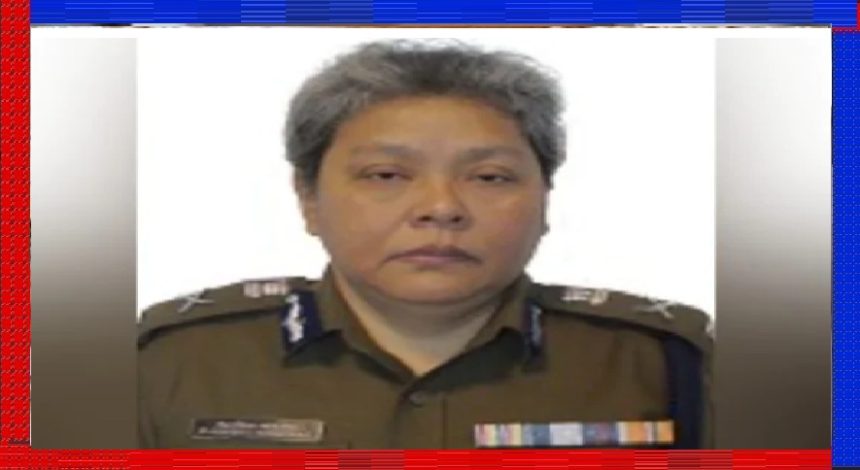
The order to form this SIT came straight from Meghalaya’s Director General of Police, Idashisha Nongrang, an IPS officer from the 1992 batch. It took effect immediately, and the whole point behind assembling this team quickly was to make sure the investigation moves ahead in a way that’s fair, impartial and doesn’t drag on forever. Given how much damage was reportedly caused, both to public and private property, and how many people ended up getting hurt, including members of the public and police personnel themselves, there was clearly pressure to act fast.
So who exactly makes up this team? The SIT is being headed by Inspector General of Police for Law and Order, DNR Marak, which already tells you this isn’t being treated as a routine local matter. Backing him up are four other officers pulled from different specializations within the force. There’s S. Nongtnger, who serves as Deputy Inspector General of Police for the Eastern Range, and V Syiem, Superintendent of Police for East Khasi Hills, the district where most of the action reportedly unfolded.
Alongside them is Dheeraj Yadav, Superintendent of Police for Cyber, whose presence on this team is a pretty clear signal about how much digital evidence is expected to matter here. Rounding off the group is Bipul Das, Deputy Superintendent of Police for Crime in East Khasi Hills. And interestingly, the DGP’s order leaves room to bring in more officers or personnel down the line if the investigation demands it, so this list isn’t necessarily final.
Getting to the Bottom of What Actually Happened
The SIT’s core job is to figure out exactly what caused things to spiral the way they did during and after the KSU rally. That means going through every single case that’s been registered in connection with the rally and the violence that followed, rather than treating each complaint or FIR as a separate, disconnected event. One of the bigger goals here is making sure the law gets applied consistently across all these cases, so nobody ends up facing wildly different treatment depending on which officer or station happens to be handling their particular file.
To pull this off, the team will need to piece together the sequence of events carefully, looking at everything from property damage to physical assaults on civilians and cops alike. It’s the kind of investigation where timelines matter a lot, since figuring out who did what and when tends to shape how the rest of the case unfolds.
Tracking Down the People Behind the Violence
Naturally, a huge chunk of this investigation is going to be about identifying and catching the people actually responsible for the violence. And this is where things get a bit more specific and honestly a bit more interesting. The SIT has been specifically told to focus on individuals who reportedly wore masks or otherwise tried hiding their identity during the chaos. There’s also a clear mandate to look into people who allegedly rode around on two wheelers with number plates that were deliberately covered or obscured, which is obviously a tactic meant to avoid being traced later.
To actually track these people down, investigators are going to lean heavily on CCTV footage, videos, photographs and whatever other evidence they can gather from the areas where the violence took place. Given how many people apparently tried to hide who they were, this digital and visual trail is expected to become one of the more important pieces of the whole probe, maybe even the deciding factor in quite a few cases.
Rally Organisers and Permit Conditions Also Under the Scanner
Here’s where the investigation goes beyond just chasing down the people who threw stones or set things on fire. The SIT has also been asked to look closely at the organisers and permit holders behind the rally itself. Specifically, investigators want to know whether the conditions attached to the rally permit were actually followed, or whether there was some kind of breach that set the stage for what happened afterward.
This part of the probe matters because it could help establish whether the violence was somehow connected to organisers stepping outside the boundaries of what they were officially allowed to do. In other words, the SIT isn’t just asking who threw the punches, it’s also asking who was supposed to be keeping things under control and whether they actually did their job.
A Wide Mandate Covering Arson, Assault and Property Damage
Taken together, the SIT’s mandate is honestly pretty broad. It covers arson, vandalism, property damage affecting both public and private assets, and physical assaults on regular citizens as well as police personnel. Instead of letting different police stations handle these cases in isolation, everything connected to the rally and its fallout is being pulled under one coordinated investigative umbrella.
The bigger goal here seems to be building a complete, coherent picture of what actually went down that day, figuring out exactly who’s responsible for what, and then making sure the law gets applied the same way across every single case tied to the incident.
DGP Wants This Wrapped Up Quickly
One thing that’s been made pretty clear is that this isn’t meant to be a slow, drawn out affair. The DGP has directed the SIT to complete its work within a defined timeframe, pushing the team to take these cases through to their logical conclusion rather than letting them linger. The language in the order, emphasizing fairness, impartiality and speed, suggests that police leadership plans to keep a fairly close eye on how this investigation progresses.
And as mentioned earlier, if the scale of the cases or the complexity involved ends up demanding more manpower, the SIT has the flexibility to pull in additional officers and personnel as needed.
What Led to All This: The August 19 Shillong Incident
All of this traces back to what unfolded during and after the KSU’s two wheeler rally and black flag march on August 19 in Shillong. What followed the rally involved reports of arson, vandalism and assaults, serious enough that Meghalaya Police decided a coordinated, dedicated investigation was necessary rather than leaving things to routine local handling.
By bringing this SIT together, the state has essentially pulled in senior officers spanning law and order, range level policing, district policing, cyber crime and general crime investigation, all working under one unified structure. Between them, the team is now tasked with reconstructing exactly what happened, identifying who’s responsible, and figuring out whether the people running or authorised to run the rally in the first place had any hand in how things eventually turned violent.