


Administrative Discord in Madhya Pradesh: SEIAA Chairman Recommends Suspension of IAS Officer Harshal Pancholi
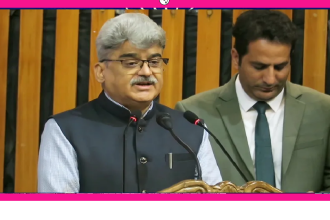
In a development that highlights growing administrative friction within Madhya Pradesh’s environmental regulatory framework, Shivnarayan Singh Chauhan, Chairman of the State-level Environment Impact Assessment Authority (SEIAA), has formally recommended disciplinary action and the immediate suspension of senior Indian Administrative Service (IAS) officer Harshal Pancholi.
The recommendation, detailed in a communication addressed to the Chief Secretary of Madhya Pradesh on October 20, 2026, alleges procedural deviations, administrative lapses in agenda preparation, and non-compliance with statutory timelines regarding environmental clearances. Copies of the representation have also been forwarded to the Union Ministry of Environment, Forest and Climate Change for concurrent review.
While the recommendation marks a significant escalation in regulatory oversight, official sources emphasize that the submission constitutes an administrative referral rather than a formal finding of guilt. The assertions contained within the letter remain subject to rigorous preliminary scrutiny and verification by competent state authorities.
Profile of the Officer: Harshal Pancholi, IAS
Harshal Pancholi is a 2015-batch officer of the Indian Administrative Service belonging to the Madhya Pradesh cadre. Having entered the civil services via direct recruitment through the Union Public Service Commission (UPSC) examination, Pancholi holds both Bachelor of Technology (B.Tech) and Master of Technology (M.Tech) degrees, bringing a strong technical background to his executive tenure.
Over the course of a decade-long career, Pancholi has held diverse leadership portfolios across district administration, state departments, and central government exposure:
-
Central Deputation (2017): Served as Assistant Secretary at NITI Aayog, gaining early exposure to public policy formulation and strategic governance.
-
Rural Development Leadership (2019–2020): Functioned as Chief Executive Officer (CEO) of Zila Panchayat in Tikamgarh district, directing rural infrastructure and welfare programs.
-
District Administration (2020–2022): Served as Additional Collector in Sidhi district, overseeing land revenue, law and order, and local administration.
-
State Secretariat (2022–2024): Held the post of Deputy Secretary in the Urban Development and Housing Department, managing municipal governance and policy implementation.
-
District Collectorate (2024–2026): Served as District Collector and Magistrate of Anuppur from August 13, 2024, through July 26, 2026.
-
Environmental Governance: Currently serves as Executive Director at the Environmental Planning and Coordination Organisation (EPCO) in Bhopal, while simultaneously discharging responsibilities as Member Secretary of SEIAA.
Anatomy of the Dispute: Allegations of Procedural Irregularities
The controversy originates from the administrative handling of SEIAA’s 974th and 975th formal meetings. In his communication to state leadership, Chairman Shivnarayan Singh Chauhan asserted that established protocols governing agenda formulation were bypassed during these proceedings.
1. Departure from First-In, First-Out (FIFO) Norms
With approximately 500 environmental clearance applications pending before the statutory body, standard protocol requires cases to be scheduled strictly according to submission dates. The Chairman alleged that this sequential queue was broken, with selective cases drawn from the middle of the register for consideration while older, pending applications were inexplicably bypassed.
2. Premature Inclusion of Proposals
The complaint notes that several projects listed on the agenda were actively under examination by the State Expert Appraisal Committee (SEAC). Under statutory guidelines, SEIAA considers matters only after SEAC completes its technical appraisal and submits formal recommendations.
3. Portal Uploading Protocols
The Chairman raised administrative concerns regarding the uploading of official meeting agendas to the Ministry’s centralized PARIVESH portal without securing prior concurrence from the authority’s chair.
NGT Compliance Directives and Environmental Clearance Delays
Beyond meeting agendas, the representation highlights broader compliance failures concerning judicial directives and procedural turnaround times.
The Chairman specifically referenced a order issued by the National Green Tribunal (NGT) on February 3. Despite repeated requests to place critical mining-related compliance matters on the meeting roster in alignment with NGT orders and ongoing Supreme Court proceedings, these matters were allegedly excluded from consideration.
Additionally, the letter drew attention to post-approval administrative delays:
-
Delayed Clearance Issuances: Extended time lapses between formal board approval and the issuance of final Environmental Clearance (EC) letters to project proponents.
-
Delayed Minute Uploads: Failure to adhere to the mandatory five-working-day window for uploading finalized meeting minutes onto the PARIVESH system.
In light of these points, Chauhan has requested an independent, impartial inquiry into the administrative operations of the authority.
Constituted under the Environment (Protection) Act, 1986, pursuant to the Environmental Impact Assessment (EIA) Notification of 2006, SEIAA serves as the primary state-level regulatory body for environmental clearance.
The authority evaluates industrial, mining, infrastructure, and commercial project proposals within its jurisdiction. While SEAC provides technical appraisal and risk evaluation, the final regulatory decision to grant, reject, or stipulate conditions for environmental clearance rests with SEIAA. Strict adherence to prescribed workflows ensures transparent governance and prevents ecological degradation.
Current Status and Administrative Outlook
At present, the recommendation for suspension remains under official consideration by the General Administration Department (GAD) and the Chief Secretary of Madhya Pradesh.
The state government may initiate a preliminary fact-finding inquiry, seek formal written explanations from the involved officers, or refer the matter to an independent committee. Any ultimate determination will require a detailed audit of meeting transcripts, portal submission timestamps, and corresponding judicial files.
Until competent authorities complete their assessment, the allegations serve as a reminder of the delicate balance required between administrative oversight, judicial compliance, and institutional integrity within environmental regulatory bodies.