

Centre Revises PMDDKY Central Nodal Officers; Anti-Naxal Veteran IPS Officer Sundarraj P Appointed IG in NIA
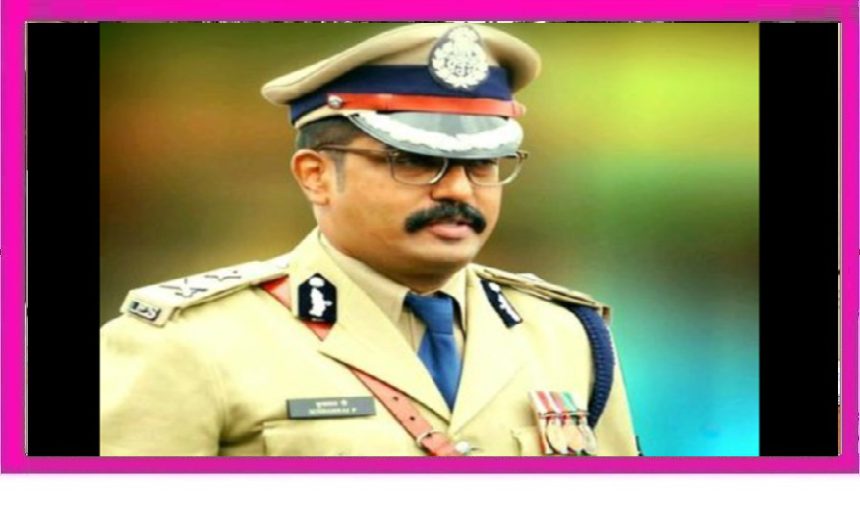
The Government of India has taken two important administrative decisions aimed at strengthening both developmental governance and national security. While the Department of Personnel and Training (DoPT) has revised the list of Central Nodal Officers (CNOs) tasked with monitoring Aspirational Agricultural Districts under the Prime Minister Dhan Dhaanya Krishi Yojana (PMDDKY), the Ministry of Home Affairs (MHA) has appointed senior IPS officer Sundarraj Pattilingam, popularly known as Sundarraj P, as Inspector General (IG) in the National Investigation Agency.
The twin decisions underscore the Centre’s ongoing efforts to strengthen governance mechanisms at the grassroots level while simultaneously enhancing the country’s internal security architecture through strategic appointments of experienced officers.
Centre Revises Central Nodal Officers Under PMDDKY
In an Office Memorandum issued on June 17, 2026, the Department of Personnel and Training announced a fresh round of appointments and replacements of Central Nodal Officers responsible for overseeing Aspirational Agricultural Districts under the Prime Minister Dhan Dhaanya Krishi Yojana.
The latest revision comes as part of the government’s continuing efforts to ensure effective monitoring and implementation of agricultural development initiatives in districts identified for focused intervention. The order follows earlier notifications issued in October 2025 and subsequent amendments introduced over the past several months.
The revised list, released through an annexure attached to the official notification, updates the officers responsible for supervising progress in designated districts and maintaining coordination among various stakeholders involved in programme implementation.
What Is the Role of Central Nodal Officers?
Central Nodal Officers serve as a crucial link between the Union Government, state administrations, district authorities, and implementing agencies.
Their role extends beyond simple monitoring. These officers are expected to facilitate coordination, identify implementation challenges, and ensure that developmental programmes achieve measurable outcomes on the ground.
Among their key responsibilities are:
Monitoring developmental progress in Aspirational Agricultural Districts.
Reviewing implementation of agriculture-focused initiatives and rural development programmes.
Coordinating with district administrations and sectoral departments.
Identifying administrative bottlenecks and recommending corrective measures.
Ensuring outcome-based monitoring and accountability.
Providing feedback to the Centre regarding implementation challenges and opportunities.
The appointment of experienced officers as Central Nodal Officers is considered an important component of the government’s strategy to improve programme delivery and accelerate district-level development.
PMDDKY and Its Developmental Vision
The Prime Minister Dhan Dhaanya Krishi Yojana has emerged as one of the Centre’s flagship initiatives focused on accelerating agricultural transformation in districts facing developmental challenges.
The scheme seeks to improve agricultural performance through targeted interventions, enhanced institutional coordination, and focused monitoring mechanisms.
Officials involved with the programme say its objectives include:
Increasing agricultural productivity.
Improving farmers’ incomes.
Strengthening rural infrastructure.
Enhancing agricultural market linkages.
Promoting sustainable and climate-resilient farming practices.
Encouraging technology adoption in agriculture.
Improving resource utilization and productivity.
The government believes that focused monitoring through Central Nodal Officers can help bridge implementation gaps and ensure that development initiatives reach intended beneficiaries more effectively.
For operational matters related to PMDDKY, the Department of Agriculture and Farmers Welfare has designated Chinmay P. Gotmare, Joint Secretary (Marketing & PMDDKY), as the nodal contact officer.
Major Security Appointment: Sundarraj P Moves to NIA
Alongside the PMDDKY notification, the Ministry of Home Affairs announced a significant appointment in the national security domain.
Senior IPS officer Sundarraj Pattilingam has been appointed as Inspector General in the National Investigation Agency, India’s premier federal counter-terrorism and national security investigation agency.
The appointment has been approved against an existing vacancy under the standard terms governing Central deputation.
The Ministry has also requested the Chhattisgarh Government to relieve the officer at the earliest so that he can assume his new responsibilities in New Delhi.
The move is being viewed as a recognition of Sundarraj’s extensive operational experience and his long-standing contribution to anti-Maoist campaigns in some of the country’s most challenging security environments.
The Longest-Serving IPS Officer in Bastar
Among police and security circles, Sundarraj P is widely known for his deep association with the Bastar region of Chhattisgarh.
A 2003-batch IPS officer of the Chhattisgarh cadre, he has spent nearly twelve years serving in Bastar, making him one of the longest-serving senior police officers in the region’s history.
His tenure includes:
Nearly twelve years of service in Bastar.
Seven consecutive years as Inspector General of Police, Bastar Range.
Leadership responsibilities across seven districts of south Chhattisgarh.
Coordination of large-scale anti-Maoist operations.
Close operational collaboration with Central Armed Police Forces.
Strategic planning and execution of security initiatives in insurgency-affected areas.
Bastar has long been regarded as one of India’s most sensitive security theatres due to the presence of Maoist insurgent groups. Managing security operations in such an environment requires a combination of operational expertise, intelligence coordination, community engagement, and administrative leadership.
Architect of the Widely Discussed “Bastar Model”
Sundarraj’s name became closely associated with what came to be popularly known as the “Bastar Model” of counter-insurgency.
Rather than relying solely on armed operations, the approach sought to combine security action with community outreach and developmental engagement.
One of the most notable initiatives introduced during his tenure was Poona Margham, which translates to “New Path.”
The programme was designed to encourage Maoist cadres to abandon violence and return to mainstream society through structured rehabilitation and support mechanisms.
The initiative included:
Counseling programmes.
Rehabilitation assistance.
Livelihood opportunities.
Reintegration support.
Community engagement efforts.
Security analysts have often highlighted the programme as an example of combining hard security measures with softer confidence-building initiatives.
Leadership During Crucial Anti-Maoist Operations
Over the years, Sundarraj supervised numerous operations targeting Maoist networks across south Chhattisgarh.
He became one of the most recognizable faces of anti-Maoist policing in the country, regularly briefing the media following major operations and security developments.
Officials credit his leadership with helping security agencies make significant gains against Maoist groups in several areas that were once considered strongholds of insurgent activity.
His tenure coincided with a period during which state police forces and Central Armed Police Forces intensified coordinated operations, resulting in substantial pressure on Maoist organizations.
Many within the security establishment regard his experience as particularly valuable because it combines field-level operational expertise with strategic leadership.
Academic Background and Early Career
Originally from Tamil Nadu, Sundarraj brings a strong academic foundation to his policing career.
He earned a Bachelor of Science degree in Agriculture from Tamil Nadu Agricultural University before joining the Indian Police Service.
He entered the IPS on September 5, 2003, and was allotted the Chhattisgarh cadre.
Over the years, he served in a variety of operational and leadership roles before emerging as one of the state’s most prominent anti-Maoist commanders.
Awards and National Recognition
Sundarraj’s contributions to policing and internal security have earned him several prestigious honours during his career.
His notable decorations include:
Police Medal for Gallantry (2008)
President’s Police Medal for Meritorious Service (2022)
These awards recognized his courage, leadership, and sustained contribution to public service and national security.
Why the NIA Appointment Matters
The decision to bring Sundarraj into the National Investigation Agency is being viewed as strategically significant.
According to reports, the Ministry of Home Affairs made a special recommendation for his deputation, acknowledging his extensive field experience and operational achievements.
His expertise is expected to strengthen the agency’s capabilities in areas such as:
Investigations related to left-wing extremism.
Counter-terrorism operations.
National security cases.
Intelligence-led investigations.
Inter-agency coordination.
Given the evolving nature of security threats and the continuing challenge posed by extremist networks in various regions, experienced officers with deep field knowledge are considered valuable assets for national-level investigative institutions.
Strengthening Governance and Security Simultaneously
Taken together, the Centre’s latest decisions highlight two parallel priorities – accelerating development in aspirational agricultural districts and strengthening the country’s security institutions through experienced leadership.
The revision of Central Nodal Officers under PMDDKY is expected to enhance monitoring and implementation of agricultural development initiatives, while the appointment of Sundarraj P to the National Investigation Agency brings one of India’s most experienced anti-Maoist officers into a key national security role.
As the government continues to focus on both rural transformation and internal security, these appointments reflect a broader strategy of leveraging administrative expertise and field experience to address some of the country’s most important governance and security challenges.