IPS Officers Faced Administrative Constraints Earlier, Commissionerate System Brought Major Change: CM Yogi Adityanath
Uttar Pradesh Chief Minister Yogi Adityanath has said that the introduction of the Police Commissionerate System has fundamentally transformed policing in the state, enabling faster decision-making, improving operational efficiency, and empowering Indian Police Service (IPS) officers with greater administrative authority.
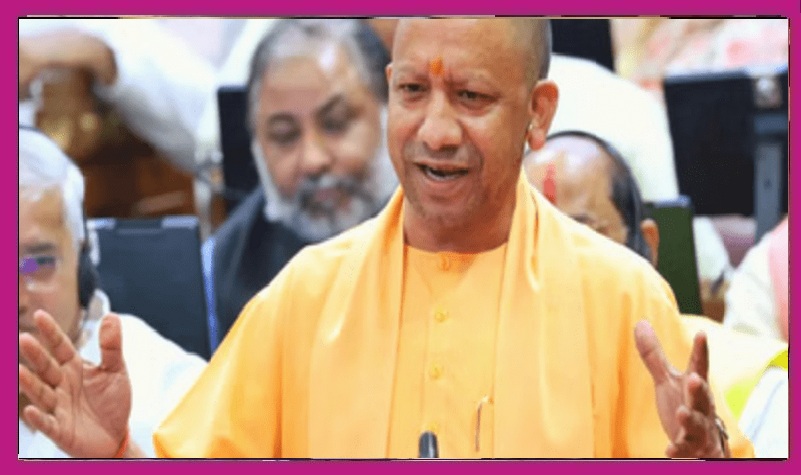
Addressing a function in Lucknow on Wednesday, where appointment letters were distributed to 930 newly recruited Computer Operators (Grade-A) selected through the Uttar Pradesh Police Recruitment and Promotion Board, the Chief Minister highlighted a series of reforms undertaken by his government to modernize the state’s policing structure and strengthen law-and-order management.
During his speech, Adityanath reflected on the administrative challenges that, according to him, existed under the earlier system and explained how structural reforms introduced in recent years have reshaped the functioning of the police force across Uttar Pradesh.
Commissionerate System Changed the Dynamics of Urban Policing
Speaking about one of the most significant policing reforms introduced during his tenure, the Chief Minister said the Police Commissionerate System has emerged as a game-changing initiative for law enforcement in the state.
According to him, the traditional administrative structure often limited the ability of senior police officers to take timely decisions, especially in rapidly growing urban centers where law-and-order situations can evolve quickly.
The commissionerate model, he noted, has helped remove many of those obstacles by granting greater executive authority to police commissioners, allowing them to respond more effectively to security challenges and administrative requirements.
The Chief Minister stated that discussions on introducing the commissionerate framework in Uttar Pradesh had been ongoing for decades. Proposals had reportedly remained under consideration since as far back as 1972, yet successive governments failed to implement the system.
It was only after the present government assumed office that the long-pending reform was translated into reality.
Seven Major Cities Now Under Commissionerate System
Yogi Adityanath pointed out that the commissionerate model has now been successfully implemented in seven major urban districts of Uttar Pradesh.
These include:
Lucknow
Gautam Buddha Nagar
Varanasi
Prayagraj
Ghaziabad
Kanpur
Agra
The Chief Minister said the decision was taken after carefully assessing the growing administrative and security requirements of large cities.
With expanding populations, increasing economic activity, rising traffic density, and evolving security concerns, urban centers require faster decision-making mechanisms and better coordination among law-enforcement agencies.
The commissionerate structure, according to officials, enables quicker responses to law-and-order situations while reducing procedural delays that can arise under traditional administrative arrangements.
Sharp Remarks on Earlier Administrative Practices
During his address, the Chief Minister made pointed observations regarding the administrative system that existed before the implementation of the commissionerate model.
He suggested that IPS officers often faced procedural hurdles and administrative constraints that limited their effectiveness in handling critical matters.
According to Adityanath, important files frequently remained pending for long periods, delaying decisions and affecting governance outcomes.
Referring to the bureaucratic processes of the past, he remarked that once a file was closed under the earlier framework, reopening it often became an extremely difficult exercise.
His comments were aimed at illustrating why structural reforms were necessary and why the government decided to empower police leadership through institutional changes.
The Chief Minister argued that efficient governance requires administrative systems capable of taking timely decisions, especially in matters related to public safety and law enforcement.
Recruitment Drive Strengthening Uttar Pradesh Police
A major portion of the Chief Minister’s address focused on the government’s recruitment initiatives within the police department.
Adityanath emphasized that transparent and merit-based recruitment remains one of the cornerstones of effective governance.
According to him, strengthening law and order begins with building a capable and adequately staffed police force.
The Chief Minister stated that nearly 2.15 lakh police personnel have been recruited in Uttar Pradesh during the past nine years.
He asserted that the recruitment process was conducted in a transparent manner without favoritism, recommendations, caste-based discrimination, regional preferences, or political influence.
The scale of recruitment represents one of the largest expansions of police manpower undertaken by any state in recent years.
Officials believe the recruitment drive has significantly enhanced the state’s policing capacity and improved the availability of personnel across districts.
Appointment Letters Distributed to 930 Computer Operators
The event in Lucknow was organized to formally hand over appointment letters to 930 newly selected Computer Operators (Grade-A).
These recruits have been selected through the Uttar Pradesh Police Recruitment and Promotion Board and are expected to play a vital role in strengthening the technological backbone of the state’s police force.
Police officials noted that modern policing increasingly depends on digital systems, data analytics, cyber monitoring, electronic record management, and technology-driven investigations.
The induction of trained computer operators is expected to improve efficiency in several operational areas, including:
Digital records management
Crime data processing
Cybercrime investigations
Intelligence analysis
Administrative automation
Data-driven policing initiatives
The recruits will support various departments within the police organization and contribute to the ongoing modernization efforts being undertaken across the state.
Focus on Technology-Driven Policing
The Chief Minister also highlighted the government’s efforts to integrate advanced technology into policing and public safety systems.
He said Uttar Pradesh has been investing heavily in modern investigative tools, digital infrastructure, and technological capabilities to meet emerging security challenges.
Over the past few years, several initiatives have been launched to improve operational efficiency and investigative effectiveness.
Among the major areas of focus are:
Expansion of forensic science infrastructure
Strengthening cybercrime investigation capabilities
Adoption of digital policing platforms
Modernization of police stations
Technology-enabled law-and-order monitoring
Improved emergency response systems
Officials say these initiatives are aimed at making policing more professional, efficient, and responsive to citizens’ needs.
Strengthening Forensic Science Infrastructure
The government has also placed considerable emphasis on expanding forensic capabilities.
Forensic science has become an increasingly important component of modern criminal investigations, helping investigators gather scientific evidence and improve conviction rates.
According to the Chief Minister, investments in forensic infrastructure are helping law-enforcement agencies conduct more accurate investigations while reducing dependence on traditional investigative methods.
Enhanced forensic facilities are expected to strengthen crime detection, support judicial processes, and improve the overall effectiveness of policing.
Cybercrime Challenges Demand New Approaches
Another major area highlighted during the event was cyber policing.
With the rapid growth of digital transactions, online communication, and internet-based services, cybercrime has emerged as one of the fastest-growing security challenges facing law-enforcement agencies.
The Chief Minister said the state government has prioritized the creation and strengthening of specialized cybercrime units capable of investigating complex digital offences.
These units are being equipped with modern tools and trained personnel to address challenges ranging from online financial fraud and identity theft to cyber extortion and digital security threats.
Law and Order Remains Government’s Top Priority
Throughout his address, Adityanath reiterated that maintaining law and order remains one of the government’s foremost priorities.
He argued that reforms in recruitment, infrastructure development, technology adoption, forensic science, and administrative restructuring have collectively contributed to a stronger policing ecosystem in Uttar Pradesh.
According to the Chief Minister, these reforms have helped create a more responsive, accountable, and efficient law-enforcement framework capable of addressing the demands of a rapidly changing society.
Commissionerate System at the Core of Police Reforms
As Uttar Pradesh continues expanding its policing infrastructure and modernizing law-enforcement mechanisms, the commissionerate system remains one of the flagship reforms of the government’s policing strategy.
The Chief Minister maintained that empowering police leadership through structural reforms has improved administrative efficiency, reduced delays, and strengthened operational capabilities in major urban centers.
With continued investments in manpower, technology, forensic science, and institutional reforms, the Uttar Pradesh government aims to further enhance public safety and strengthen governance systems across the state in the years ahead.
For the government, the commissionerate model represents more than just an administrative change. It is being projected as a cornerstone of a broader policing transformation designed to make law enforcement faster, more professional, and better equipped to meet the challenges of the future.