

IAS Rashmi Kamal Repatriated to West Bengal Cadre Before Completing Central Tenure – Inside the Journey of the Doctor-Turned Bureaucrat
In a significant bureaucratic development, the Central Government has ordered the premature repatriation of 2006-batch IAS officer Rashmi Kamal to her parent cadre in West Bengal. The decision, announced through a notification issued by the Department of Personnel and Training (DoPT) on Friday, June 26, 2026, brings an early end to her central deputation, barely months after she assumed one of the country’s most sensitive administrative assignments.
The order states that Rashmi Kamal has been sent back to the West Bengal cadre on administrative grounds. It also specifies that her return has been approved with the provision of “extended cooling off,” a clause generally invoked in cases where officers conclude their central deputation before the scheduled completion of their tenure.
The move has attracted attention across administrative circles, particularly because Rashmi Kamal had only recently taken charge as the Director of Census Operations (DCO) and Director of Citizen Registration (DCR), West Bengal. The position is regarded as one of considerable importance, especially at a time when preparations for the national Census and citizen registration-related activities have gathered momentum.
Centre Ends Deputation Ahead of Schedule
According to the DoPT notification, Rashmi Kamal, who was serving at the Director level in the Office of the Registrar General and Census Commissioner of India, has been relieved from her central assignment ahead of schedule. The official order makes it clear that the decision has been taken on administrative grounds.
Although the notification does not elaborate on the reasons behind the move, it confirms that the officer will now report back to her parent cadre in West Bengal. The inclusion of the “extended cooling off” provision indicates that her eligibility for any future central deputation will be governed by the prescribed cooling-off norms applicable to officers returning before the completion of their tenure.
Such administrative decisions are not uncommon in the civil services, but an officer returning from a key central posting within months of assuming office naturally draws considerable interest.
A Short Yet Crucial Central Assignment
Rashmi Kamal had assumed charge as Director of Census Operations and Director of Citizen Registration for West Bengal on December 31, 2025.
The appointment came at a crucial juncture. The Centre has been stepping up preparations for Census-related activities across the country while simultaneously coordinating processes connected with citizen registration and applications under the Citizenship Amendment Act (CAA). Her role placed her at the heart of multiple high-priority administrative exercises involving demographic data collection, coordination with state authorities, and implementation of citizen registration protocols.
The assignment required extensive coordination between the Union Government, state administration, district officials and various field-level agencies responsible for executing Census and registration-related work.
Despite the strategic importance of the role, her tenure in the position has now concluded much earlier than expected.
Who is IAS Rashmi Kamal?
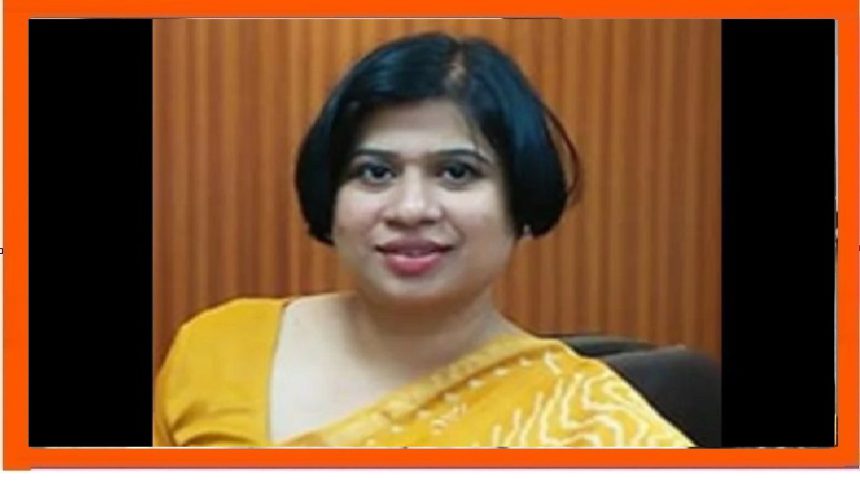
Dr. Rashmi Kamal belongs to the 2006 batch of the Indian Administrative Service and is an officer of the West Bengal cadre. Over the past two decades, she has earned a reputation as an experienced administrator with exposure to a broad spectrum of governance responsibilities.
Her career has taken her through district administration, policy implementation, developmental governance and state-level administration, allowing her to build substantial expertise across different wings of the government.
Personal Profile
IAS Batch: 2006
Cadre: West Bengal
Date of Birth: July 1, 1977
Home State: Bihar
Recruitment: Direct recruit through the UPSC Civil Services Examination
Languages: Bengali, English and Hindi
From Medicine to the Civil Services
Long before she entered government administration, Rashmi Kamal had established herself in the field of medicine.
She completed her MBBS from Patna University, making her one of several medical professionals who chose to leave clinical practice in pursuit of a career in public administration through the Civil Services Examination.
Her academic journey did not stop there. She later earned a postgraduate degree from Indira Gandhi National Open University (IGNOU), New Delhi, strengthening her academic foundation while serving in government.
Her transition from medicine to administration reflects a career shaped by public service through two very different professions.
A Career Built Across Multiple Administrative Roles
Throughout her service in the West Bengal cadre, Rashmi Kamal has held a series of important assignments at both district and state levels. Her administrative journey spans field postings as well as senior policy-making positions.
Over the years, she has served as:
Assistant Collector and Magistrate
Sub-Divisional Officer (SDO) and Executive Magistrate
Additional District Magistrate (ADM)
Joint Secretary
District Magistrate
District Collector
Director
Secretary in the Government of West Bengal
Secretary, Paschimanchal Unnayan Department
Controller in various administrative assignments
Each of these roles exposed her to different dimensions of governance, ranging from district administration and law-and-order management to developmental planning, welfare programme implementation and policy execution.
Her extensive field experience has enabled her to work closely with local administrations while also contributing to governance at the state secretariat level.
Experience Across Governance and Development
During her years in public service, Rashmi Kamal has been associated with several aspects of governance, including administrative reforms, implementation of development schemes, citizen-centric service delivery and institutional management.
Her responsibilities have covered rural and urban administration, district-level governance, developmental initiatives and coordination among multiple government departments.
These assignments have given her a well-rounded administrative profile, balancing grassroots governance with higher-level policy responsibilities.
Appointment to a Prestigious Central Post
Earlier this year, Rashmi Kamal was selected for central deputation as Director of Census Operations and Director of Citizen Registration, West Bengal. The appointment, approved by the President of India, was considered an important milestone in her bureaucratic career.
The position carries considerable administrative responsibility because it involves overseeing Census preparations, supervising citizen registration processes and ensuring coordination between central and state authorities.
The assignment assumed even greater significance in view of the government’s renewed focus on Census-related work and administrative coordination connected with the Citizenship Amendment Act.
Her appointment reflected the confidence placed in her administrative capabilities and long experience in governance.
What the Repatriation Means
With the latest DoPT order now in effect, Rashmi Kamal will return to serve under the West Bengal Government.
Since the notification specifically mentions “administrative grounds,” no further explanation has been officially provided regarding the circumstances leading to her early return.
The reference to “extended cooling off” is important from a service perspective. Officers who return from central deputation before completing their prescribed tenure are generally required to observe specific cooling-off conditions before becoming eligible for another deputation assignment with the Centre.
For Rashmi Kamal, this means that any future central posting will be governed by those applicable service rules.
Awaiting Her Next Assignment
Following her return to the West Bengal cadre, the state government is expected to assign Rashmi Kamal a suitable posting in line with her seniority and administrative experience.
Given her extensive background in district administration, policy implementation and state-level governance, she remains one of the experienced officers within the West Bengal cadre capable of handling diverse administrative responsibilities.
While her central deputation has concluded earlier than anticipated, her nearly two decades of service continue to reflect a career marked by varied assignments, leadership in governance and experience across both field administration and policymaking. Her next posting in West Bengal will now be closely watched within bureaucratic circles as the state government decides where to deploy one of its senior IAS officers.