

From Districts to Delhi’s School System: Meet IAS Officer Vikas Gupta
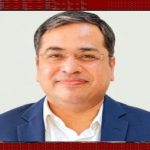
Senior IAS officer Vikas Gupta has taken on an expanded role in India’s school education administration, with the 2001-batch Haryana-cadre officer now holding additional charge as Commissioner of the Navodaya Vidyalaya Samiti (NVS), while continuing as Commissioner of the Kendriya Vidyalaya Sangathan (KVS).
The additional responsibility has been assigned for six months with effect from July 23, 2026, or until a regular incumbent is appointed, or until further orders, whichever is earlier. The arrangement was approved by the Appointments Committee of the Cabinet (ACC) on an ex-post facto basis, with the Department of Personnel and Training (DoPT) issuing the formal order on September 25, 2026.
The development puts two of the country’s major centrally administered school education organisations under the responsibility of the same senior officer for the specified period. It also marks another significant stage in Gupta’s career, which has taken him from district administration and municipal governance in Haryana to e-governance, finance, transport, industry and, eventually, the national school education system.
Vikas Gupta Now Holds Charge of Both KVS and NVS
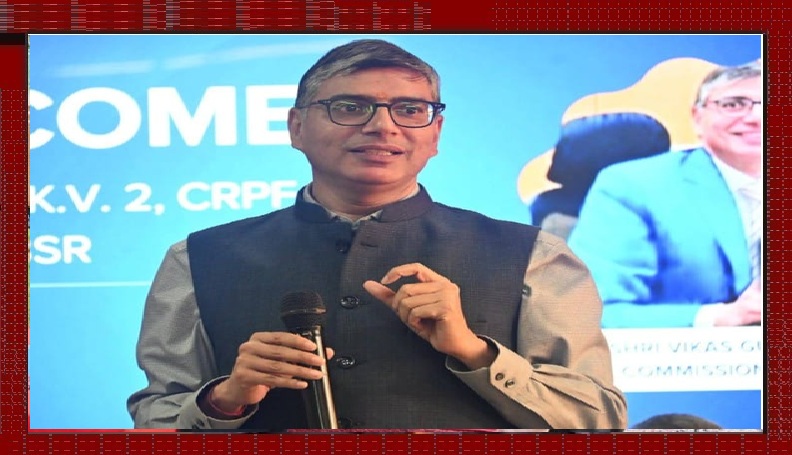
Gupta is currently serving as Commissioner of KVS, an autonomous organisation under the Ministry of Education that administers the Kendriya Vidyalaya network across India. He assumed charge as KVS Commissioner on December 4, 2025, for a tenure of five years or until further orders, whichever is earlier.
With the latest arrangement, he will also oversee NVS for the specified interim period. NVS is responsible for the administration of Jawahar Navodaya Vidyalayas, a network of residential schools established with a focus on providing quality education to talented students, particularly those from rural areas.
The additional charge therefore brings two major national school networks into Gupta’s administrative portfolio. While KVS has a long-standing role in providing education to children of transferable Central Government employees and other eligible categories, Jawahar Navodaya Vidyalayas have a distinct focus on identifying and educating talented students, especially from rural backgrounds.
Who Is IAS Officer Vikas Gupta?
Vikas Gupta is a 2001-batch IAS officer of the Haryana cadre. He was born on September 19, 1975, and his official profile records his domicile as Rajasthan.
His educational background combines engineering with public policy, an unusual combination that has been followed by a wide-ranging administrative career. Gupta holds a Bachelor of Engineering degree in Electronics from Malaviya Regional Engineering College, Jaipur, which is now known as Malaviya National Institute of Technology (MNIT), Jaipur.
He subsequently pursued higher studies in public policy and completed a Master of Public Policy from the University of Oxford. His professional career has since covered both grassroots administration and policy-oriented assignments at the state and central levels.
Experience in District Administration
Like many career IAS officers, Gupta’s early administrative experience included important field assignments in Haryana. He served as Deputy Commissioner of Mahendragarh, Rohtak and Jind, giving him direct exposure to district-level governance and the implementation of government programmes.
The role of a Deputy Commissioner involves coordination across multiple departments and requires an officer to deal with a wide range of administrative responsibilities. These can include public service delivery, implementation of development schemes, law and order coordination, revenue administration and interaction with local institutions.
Gupta’s experience in three different districts gave him exposure to varying administrative environments before he moved into more specialised and senior assignments within the Haryana government.
From Districts to Urban Administration
Gupta’s career subsequently moved into urban governance, where he served as Commissioner of the Municipal Corporation of Gurgaon and Commissioner of the Municipal Corporation of Rohtak.
These assignments brought him into direct contact with the challenges associated with rapidly expanding urban centres. Municipal administration involves a wide range of responsibilities, including civic infrastructure, sanitation, urban services, development planning and coordination with multiple government agencies.
His experience in both district and municipal administration consequently gave him a broad understanding of governance at the local level. That field experience was later complemented by assignments dealing with finance, transport, industries and digital governance.
A Career Spanning E-Governance and Policy
One of the notable phases of Gupta’s career came with his assignment to Haryana’s Citizen Resources Information Department, or CRID. He served as Commissioner and Secretary as well as Chief Executive Officer of the department.
CRID has been associated with Haryana’s efforts to build digital systems around citizen services and government databases. Gupta’s role there added an important e-governance component to his administrative experience and placed him in an area where technology and public administration intersect.
He also held responsibilities connected with Micro, Small & Medium Enterprises, serving as Director General of MSME. His other assignments included work in the Finance Department and serving as Chief Vigilance Officer in the Haryana Urban Development Authority.
Taken together, these positions show a career that has not been restricted to a single administrative area. Gupta has worked across field administration, urban governance, finance, industrial policy, vigilance and digital governance.
Move to the Centre and KVS Leadership
Gupta subsequently moved to the Centre on deputation and took charge as Commissioner of KVS in December 2025. The appointment brought him into one of the country’s largest centrally administered school education networks.
Kendriya Vidyalayas were established to provide a common educational framework for children, particularly those whose parents are employed in transferable Central Government and defence-related services. The network has expanded substantially over the years and operates schools across different parts of India and at certain locations outside the country.
In a message issued after taking charge, Gupta referred to a network of 1,289 Kendriya Vidyalayas. As Commissioner, his responsibilities extend across the organisation’s administrative and institutional functioning, including matters involving schools, personnel, infrastructure and educational administration.
His move from Haryana’s state administration to the leadership of KVS therefore represented a significant shift from state-level governance to the management of a nationwide education network.
Additional Responsibility as NVS Commissioner
The latest assignment adds NVS to Gupta’s existing responsibilities. Unlike KVS, which primarily serves a broad population including children of transferable government employees, the Jawahar Navodaya Vidyalaya system has been designed around the identification and education of talented students, particularly from rural areas.
The schools operate as residential institutions and are part of the Ministry of Education’s broader effort to expand access to quality education beyond major urban centres. NVS therefore has a distinct administrative structure and educational mandate.
Gupta’s temporary charge of NVS will continue for six months from July 23, 2026, unless a regular Commissioner is appointed earlier or the arrangement is modified through further orders. The ACC’s approval came after the additional responsibility had already taken effect, which is why the DoPT order describes the approval as ex-post facto.
Why the Latest Assignment Matters
The additional charge gives Gupta responsibility for two major school education organisations at a time when central educational institutions are managing issues ranging from infrastructure and staffing to academic administration and institutional expansion.
It also brings together two different models of school education under one administrative leadership for the interim period. KVS operates a large network of Kendriya Vidyalayas, while NVS manages the Jawahar Navodaya Vidyalaya system with its emphasis on residential schooling and talented students from rural areas.
For Gupta, the assignment adds another layer to an already diverse administrative career. From serving as Deputy Commissioner in three Haryana districts to handling municipal corporations, digital governance, finance, MSMEs and vigilance, his career has covered a broad spectrum of public administration.
His present role at KVS, combined with the additional responsibility of NVS, marks his latest transition into the national education sector. The six-month arrangement is temporary, but it places a senior officer with extensive state-level and central-government experience at the helm of two prominent institutions in India’s school education system.