

Telangana Unveils AI-Powered Dial 112 Emergency System, Integrates 18 Essential Services on a Single Platform
Telangana has taken another major leap in technology-driven governance with the launch of an Artificial Intelligence-enabled emergency response platform that promises quicker, smarter and better coordinated assistance for citizens across the state.
The Telangana Police on Wednesday formally rolled out the Next-Generation Telangana Emergency Response Support System (TG-ERSS) – Dial 112, bringing 18 critical emergency services under one integrated platform for the first time.
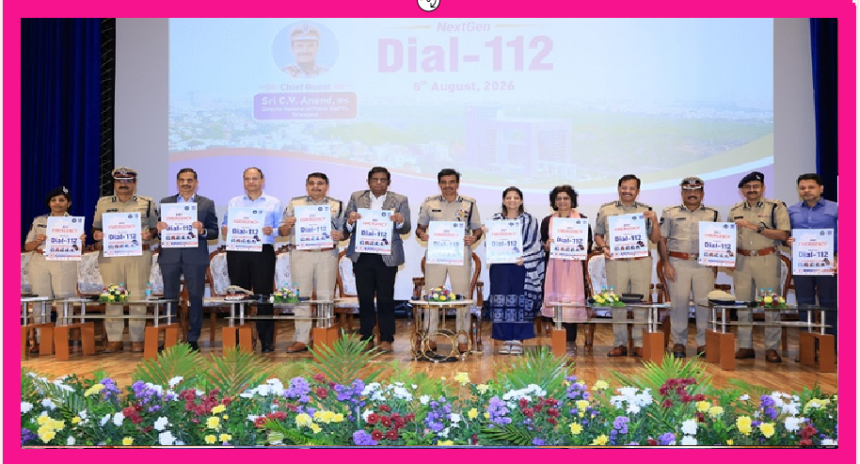
The advanced emergency response system was inaugurated by Director General of Police (DGP) C.V. Anand (IPS) at the Telangana Integrated Command and Control Centre (TGiCCC) in Hyderabad. The initiative is designed to transform the way emergency calls are received, processed and responded to by combining Artificial Intelligence, advanced location technologies and centralized command operations.
Senior IPS officers, government officials and representatives from various emergency service agencies were present during the launch ceremony, which marked a significant milestone in Telangana’s efforts to modernize public safety infrastructure through cutting-edge technology.
One Emergency Number, Multiple Critical Services
One of the biggest advantages of the upgraded TG-ERSS platform is that citizens now need to remember only one emergency number – 112 – to access a wide range of essential services.
Instead of contacting separate helplines for different emergencies, the integrated system serves as a single gateway connecting multiple agencies, ensuring that requests are directed to the appropriate department without delay. The unified platform covers a broad spectrum of emergency services, including:
Police assistance
Fire and rescue services
Ambulance and medical emergencies
Women’s safety support
Child protection services
Disaster response
Several other emergency assistance mechanisms integrated under the national Dial 112 framework
According to Telangana Police, the consolidation of multiple services into one platform is expected to simplify access for citizens while significantly improving coordination among various emergency response agencies.
AI at the Core of the New Emergency Response Network
The newly launched TG-ERSS has been built around Artificial Intelligence and intelligent digital technologies aimed at making emergency response faster, more accurate and more efficient.
Unlike conventional emergency call centres, the new platform is capable of analysing incoming calls, identifying priorities and assisting operators in taking quicker decisions. Among its major technological features are:
AI-powered identification and filtering of duplicate or non-emergency calls
Intelligent prioritisation of incidents based on urgency and severity
Automated routing of emergency calls to the relevant department
AI-assisted deployment of emergency response teams
Voice-to-text transcription of emergency conversations for faster documentation
Advanced caller location identification using Location-Based Services (LBS), Advanced Location Services (ALS) and Google Maps integration
Real-time monitoring dashboards for supervisors and command centre officials
A unified digital interface enabling seamless coordination between call operators and dispatch personnel
Future integration with AI-enabled drones and emerging emergency response technologies
Officials believe these capabilities will not only improve operational efficiency but also reduce the time required to mobilise emergency resources.
Significant Reduction in Call Processing Time
The Telangana Police has already reported substantial improvements in operational performance following the deployment of the upgraded system. According to official figures released during the launch, the average time taken by call operators to process an emergency call has been reduced from 100 seconds to just 69 seconds.
Similarly, the average time required by dispatch personnel to assign emergency teams has dropped from 90 seconds to 64 seconds. Taken together, the overall call processing duration has declined from 190 seconds to 133 seconds, representing an improvement of nearly 30 percent.
Officials say these time savings can make a crucial difference in emergencies where every second counts, particularly in cases involving accidents, medical emergencies or crimes in progress.
Faster Emergency Response Across Urban and Rural Telangana
Apart from improving call handling efficiency, the new platform is also expected to reduce the time taken by emergency teams to reach citizens. According to Telangana Police, the present average emergency response time stands at approximately:
6 minutes in urban areas
15 minutes in rural regions
10 minutes and 30 seconds as the statewide average
With Artificial Intelligence streamlining call analysis, dispatch operations and inter-agency coordination, authorities expect these response times to improve further over the coming months. The system has been designed to minimise delays at every stage, from receiving an emergency call to dispatching the nearest available response unit.
AI-Enabled Drones to Act as First Responders
Looking beyond conventional emergency response methods, Telangana Police has also announced plans to introduce Artificial Intelligence-enabled drones as aerial first responders.
Initially, the pilot project will be launched in the commissionerates of Hyderabad, Cyberabad, Malkajgiri and Future City. These drones will provide real-time aerial surveillance and situational awareness during a wide variety of emergency situations, including:
Fire emergencies
Road traffic accidents
Natural disasters
Law and order incidents
Large public gatherings and crowd management
Search and rescue operations
By transmitting live visuals directly to command centres, the drones are expected to help authorities assess situations more quickly and deploy emergency personnel with greater precision. Officials believe this technology will significantly enhance coordination between field units and command centres, especially during large-scale emergencies.
A New Era of Technology-Driven Public Safety
Speaking during the inauguration, DGP C.V. Anand said the upgraded Dial 112 platform represents a major advancement in citizen-centric policing by creating a single, technology-enabled gateway for emergency assistance.
The integration of Artificial Intelligence, geospatial technologies and centralized command systems is expected to strengthen not only policing but also the overall emergency management ecosystem across Telangana.
Officials described the initiative as an important step towards building a future-ready emergency response framework capable of handling increasingly complex public safety challenges.
Setting New Benchmarks in Emergency Management
With the launch of the AI-powered Next-Generation Dial 112 Emergency Response Support System, Telangana has reinforced its position among the leading states embracing advanced technologies for governance and public safety.
The integration of 18 emergency services into a unified platform, combined with intelligent call management, faster dispatch systems, real-time monitoring and the planned deployment of AI-powered drones, reflects a comprehensive approach to modern emergency response.
Authorities expect the initiative to improve service delivery, strengthen coordination among emergency agencies and provide citizens with quicker and more reliable assistance during critical situations.
As the system expands and additional technologies are incorporated, Telangana’s AI-driven emergency response model could emerge as a benchmark for other states seeking to modernise their public safety infrastructure through digital innovation.