Who Is Siddharth Babu? The 2017-Batch IFS Officer Seen Beside PM Modi at BRICS Summit
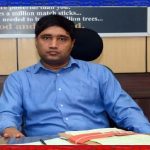
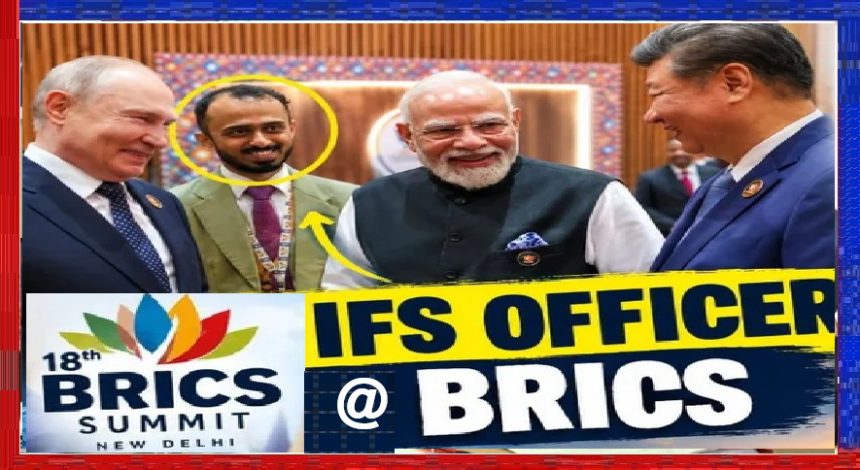
Prime Minister Narendra Modi’s high-level diplomatic engagements with Russian President Vladimir Putin, Chinese President Xi Jinping and other world leaders at the 18th BRICS Summit in New Delhi have naturally attracted considerable attention. But amid the prominent leaders, cameras and intense diplomatic discussions, another Indian official has repeatedly caught the eye of viewers – 2017-batch Indian Foreign Service officer Siddharth Babu.
Babu has been seen close to Prime Minister Modi during important international engagements, where he has performed a key communication role as an interpreter. His presence is not new to those who closely follow India’s diplomatic events. He was also seen alongside the Prime Minister during the 77th Republic Day celebrations in January 2026, when he helped facilitate communication during Modi’s interaction with then-chief guest Ursula von der Leyen, President of the European Commission.
His repeated appearances at such high-profile occasions have now triggered curiosity about the officer, his career and the journey that took him from mechanical engineering and the private sector to India’s diplomatic service.
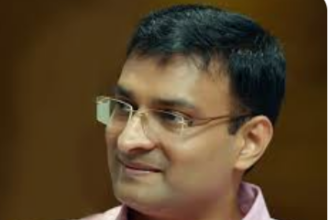
Who Is Siddharth Babu?
Siddharth Babu is a 2017-batch Indian Foreign Service officer from Kerala who has built his career around diplomacy and international relations. His current assignment at the Ministry of External Affairs places him in a division dealing with some of India’s most strategically important relationships in East Asia.
According to the MEA’s current organisational directory, Babu is serving as Deputy Secretary in the East Asia Division. The division handles India’s diplomatic affairs concerning China, North Korea, Japan, Mongolia and South Korea, putting his present role at the intersection of several major geopolitical relationships.
His assignment is particularly significant given the importance of India-China relations and the broader strategic developments taking place across the Indo-Pacific and East Asian region. For an IFS officer, working in such a division involves following complex political, economic and strategic developments and contributing to the formulation and implementation of India’s foreign policy.
Siddharth Babu at a Glance
- Name: Siddharth Babu
- Service: Indian Foreign Service
- Batch: 2017
- UPSC Civil Services Examination: 2016
- UPSC Rank: All India Rank 15
- Current MEA assignment: Deputy Secretary, East Asia Division
- Educational background: Mechanical engineering
- Home state: Kerala
- Area of interest: International relations and diplomacy
From Mechanical Engineering to the IFS
Babu’s journey into diplomacy was not a conventional one. Before entering the civil services, he studied mechanical engineering and also spent time working in the private sector, including the e-commerce industry.
The transition from a technical and corporate background to the world of international diplomacy came through the UPSC Civil Services Examination. His growing interest in international relations eventually shaped his decision to pursue the Indian Foreign Service.
In the 2016 Civil Services Examination, he secured an impressive All India Rank of 15. Official service-allocation records identify the candidate at rank 15 as Sidharth B and show that the Indian Foreign Service was allocated to him.
For many UPSC aspirants, a rank in the top 20 can open the door to several prestigious services. Babu, however, chose the IFS in line with his interest in international affairs and diplomacy rather than pursuing the Indian Administrative Service.
His career choice also highlights an important aspect of the Civil Services Examination. A high rank does not necessarily mean that every successful candidate is aiming for the same service. For Babu, the Foreign Service offered an opportunity to work directly in the field that had interested him – international relations.
Why Is Siddharth Babu Seen Beside PM Modi?
The most visible reason for Babu’s appearances alongside Prime Minister Modi is his role in facilitating communication during diplomatic engagements.
At meetings between India’s Prime Minister and foreign heads of state or government, interpreters perform a highly sensitive function. They are required to communicate statements accurately while preserving the intended meaning, context and tone of what is being said.
This is considerably more demanding than simply translating individual words. Diplomatic conversations can involve technical terminology, geopolitical references, historical context and carefully calibrated language, where even a subtle change in meaning can potentially affect how a statement is understood.
Babu’s presence during these interactions therefore reflects an important but usually less visible component of India’s diplomatic machinery.
Republic Day Appearance Brought Him Wider Attention
Babu first attracted wider public attention in 2026 when he was seen beside Prime Minister Modi during the 77th Republic Day celebrations.
Ursula von der Leyen, then President of the European Commission, was the chief guest at the event. During interactions between Modi and von der Leyen, Babu was seen helping facilitate communication.
For television viewers and people following the event online, the officer’s repeated presence close to the Prime Minister naturally prompted questions about who he was and what role he was performing.
Unlike political leaders and senior diplomats who routinely appear in public, officials working in specialised diplomatic roles often remain largely outside the spotlight. Babu’s work as an interpreter has given him unusual visibility because of the nature of the assignments he has been handling.
Babu Again Seen During BRICS Summit
Months after the Republic Day appearance, Babu has again been noticed during India’s major diplomatic engagements at the 18th BRICS Summit in New Delhi.
The summit is being held under India’s 2026 BRICS chairship on September 12 and 13, with the theme “Building for Resilience, Innovation, Cooperation and Sustainability.”
Prime Minister Modi’s meetings with Russian President Vladimir Putin and Chinese President Xi Jinping have been among the most closely watched engagements during the summit. Babu’s presence during these high-level interactions has once again brought attention to the work being carried out behind the scenes by Indian Foreign Service officers.
While the leaders remain the principal focus of such meetings, officials like Babu are responsible for ensuring that communication runs smoothly and accurately during conversations involving issues of strategic and diplomatic importance.
What Does an IFS Interpreter Actually Do?
The role of an interpreter in a diplomatic meeting is far more complex than translating one language into another. A professional interpreter working in a meeting between heads of government must understand the subject being discussed, the diplomatic context and the nuances of the language being used.
The task becomes even more demanding when discussions involve sensitive issues such as defence cooperation, international security, trade, geopolitical tensions or bilateral relations. A statement that sounds straightforward in one language may require careful interpretation in another to ensure that its intended diplomatic meaning is retained.
The interpreter must also work quickly. Unlike written translation, there is little opportunity to pause, research or reconsider every sentence. Accuracy, concentration, language proficiency and a deep understanding of diplomatic terminology all become essential.
Babu’s appearances alongside Modi have consequently provided the public with a rare glimpse into this specialised side of foreign-service work.
An IFS Career Closely Aligned With International Relations
Babu’s decision to join the Indian Foreign Service appears to have been closely connected with his longstanding interest in international relations. During his UPSC preparation, International Relations was reportedly among the subjects he focused on, and his eventual choice of service reflected that interest.
His story is therefore interesting not merely because of his high UPSC rank. It is also about choosing a career path that matched his professional interests.
From mechanical engineering and private-sector experience to securing Rank 15 in the Civil Services Examination and eventually working on sensitive diplomatic assignments, Babu’s journey demonstrates the range of backgrounds from which India’s diplomatic corps is drawn.
From a Behind-the-Scenes Role to Public Attention
For most people watching the BRICS Summit, the principal attraction is the interaction between world leaders. Yet the meetings depend on a much larger diplomatic team working away from the cameras.
IFS officers, interpreters, diplomats and other officials prepare the ground for these engagements, coordinate communication and help ensure that high-level discussions proceed smoothly.
Babu’s repeated appearances have simply brought one such role into public view. His presence beside Prime Minister Modi during the Republic Day celebrations and now at the BRICS Summit has made him a familiar face to viewers who may otherwise never notice the officials working behind major diplomatic events.
As India continues to play a more prominent role in global diplomacy, such specialised assignments are becoming increasingly important. Siddharth Babu’s career offers a glimpse into that less visible side of India’s foreign-policy machinery, where language, diplomacy and international relations come together at the highest level.