

Who Is IAS Aunjaneya Kumar Singh? UP Officer’s Seven Deputation Extensions End, Moradabad Commissioner Hands Over Charge
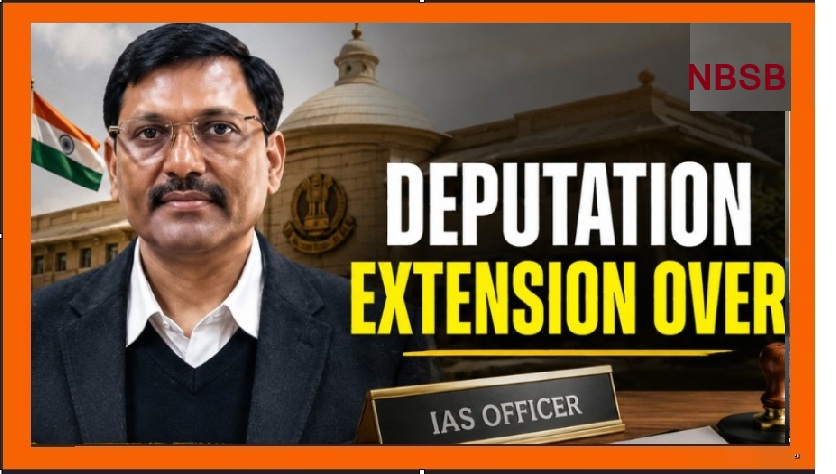
IAS officer Aunjaneya Kumar Singh, the 2005-batch Sikkim cadre officer known for his administrative action against Azam Khan in Rampur, has completed his deputation in Uttar Pradesh after seven extensions. Here’s his career, key postings and what happens next.
After spending more than a decade serving in Uttar Pradesh despite belonging to the Sikkim cadre, IAS officer Aunjaneya Kumar Singh has reached a crucial moment in his administrative journey. The 2005-batch officer, widely known for his high-profile tenure as District Magistrate of Rampur during the crackdown on Samajwadi Party leader Azam Khan, has not received another extension of his inter-cadre deputation.
With his latest deputation term ending on August 15, 2026, Singh handed over charge as Divisional Commissioner, Moradabad, to District Magistrate Dr Rajendra Pensia before proceeding on leave. While the Uttar Pradesh Government has reportedly initiated the process for another extension, the proposal is still awaiting approval, leaving the officer’s next posting uncertain.
His career has become a rare example of an IAS officer whose deputation has continued across governments led by different political parties, making his long association with Uttar Pradesh one of the most unusual administrative stories in recent years.
No Fresh Deputation Extension Yet
The immediate trigger behind the latest development is the expiry of Singh’s deputation period in Uttar Pradesh. According to administrative sources, the state’s Appointment and Personnel Department has already forwarded a proposal to Chief Minister Yogi Adityanath seeking another extension. The proposal, however, has not yet received the Chief Minister’s approval.
Only after the state government clears the proposal can it be sent to the Central Government, where the Department of Personnel and Training (DoPT) and other competent authorities would process it before any formal extension order is issued. Until then, Singh’s deputation stands concluded, prompting him to relinquish charge as Moradabad Commissioner.
Dr Rajendra Pensia Takes Interim Charge
With Aunjaneya Kumar Singh stepping aside, Moradabad District Magistrate Dr Rajendra Pensia has been entrusted with the additional responsibility of Divisional Commissioner.
The arrangement has been made as an interim administrative measure to ensure that governance continues without disruption while the state government decides Singh’s future.Singh had been serving as Divisional Commissioner of Moradabad since August 28, 2025, continuing a long administrative association with western Uttar Pradesh.
From Mau Village to the Indian Administrative Service
Aunjaneya Kumar Singh’s journey into the civil services began far from the corridors of power. Born on July 31, 1976, in Salabad village of Mau district in Uttar Pradesh, Singh pursued higher education in the state before entering the IAS.
His academic background reflects a strong inclination toward the humanities. He completed his Bachelor of Arts from Purvanchal University, studied at Banaras Hindu University (BHU) and later earned a Master’s degree in English from Purvanchal University.
Before becoming a civil servant, he reportedly worked briefly as a journalist, an experience that added another dimension to his professional journey before clearing the UPSC Civil Services Examination in 2005.
A Sikkim-Cadre Officer Who Spent Longer in Uttar Pradesh
One of the most remarkable aspects of Singh’s career is the contrast between his parent cadre and his actual years of service. Although he belongs to the Sikkim cadre, he has spent a substantially longer period working in Uttar Pradesh.
He served for around eight years in Sikkim before moving to Uttar Pradesh on inter-cadre deputation in 2015. Since then, he has continued serving in the state through seven consecutive deputation extensions, taking his Uttar Pradesh tenure to approximately 11 years.
How He Came to Uttar Pradesh
Singh’s move to Uttar Pradesh dates back to the Samajwadi Party government led by Akhilesh Yadav. In 2015, following a recommendation from then Union Home Minister Rajnath Singh, the Uttar Pradesh Government requested the Centre to bring Singh to the state on deputation.
What makes his case particularly unusual is that his continuation was later supported by another political administration. After the BJP government led by Yogi Adityanath came to power, it also recommended successive extensions, allowing Singh to remain in Uttar Pradesh for several additional years.
Rampur Tenure Brought National Attention
Aunjaneya Kumar Singh became a nationally recognised administrative figure after taking charge as District Magistrate of Rampur on February 19, 2019. His tenure coincided with an intense period of administrative action involving properties, institutions and alleged encroachments associated with senior Samajwadi Party leader Azam Khan. Several high-profile decisions during this period transformed Singh into one of the most closely watched bureaucrats in Uttar Pradesh.
The Urdu Gate Demolition
One of the most discussed episodes during his Rampur tenure involved the demolition of the Urdu Gate.According to Singh’s account, he reviewed official records after the matter came before him and found that a previous District Magistrate had already passed a demolition order after completing the required legal process.
He subsequently directed officials from the SDM office, PWD and the police to implement the order, leading to the demolition of the structure.
Action at Jauhar University
Another significant matter involved a government electricity substation located within the boundary of Jauhar University. According to official accounts from the period, the substation had been built on government land using public funds, but access to it had allegedly become restricted after it was enclosed within the university premises. Singh directed administrative action to restore public access to the government facility.
Unani Hospital Land Dispute
His tenure also witnessed action involving land associated with a Unani Hospital, where officials reportedly found discrepancies regarding land occupied by Rampur Public School.
According to the administration’s findings at the time, the land records did not match the actual site on which the school had been operating. Administrative action was subsequently initiated, police deployment followed, and officials reported that the land was restored to the hospital authorities.
Confrontation with Azam Khan’s Cases
Singh’s period as Rampur DM coincided with several politically sensitive developments involving Azam Khan. The administration initiated numerous proceedings concerning alleged land encroachments, government property and election-related matters.
Reports from the period stated that more than 60 FIRs involving Azam Khan and his associates were registered during the broader administrative crackdown. It is important to distinguish between Singh’s administrative actions and later judicial outcomes. While the administration initiated proceedings, the subsequent convictions and legislative consequences resulted from judicial and legal processes.
Abdullah Azam Election Case
Another significant episode involved proceedings related to Abdullah Azam Khan’s election. The matter centred on allegations concerning his age eligibility during the 2017 Uttar Pradesh Assembly elections.
According to official accounts, the district administration conducted an investigation, after which the matter proceeded through legal and electoral processes that ultimately led to the cancellation of Abdullah Azam’s election.
Major Administrative Postings
Over the years, Singh has held several influential positions across Uttar Pradesh. His career reflects experience across infrastructure, taxation, district administration and divisional leadership.
A Reputation for Tough Governance
Throughout his career, Singh has cultivated an image of a firm, enforcement-oriented administrator. His Rampur tenure became the defining chapter of his career, particularly because of the visible action taken in politically sensitive cases.
At the same time, reports from earlier postings such as Bulandshahr suggested that local residents had publicly expressed support for him during transfer-related developments, contributing to his reputation as an officer with a strong public connect.
Why His Deputation Became Unusual
Inter-cadre deputations for IAS officers are governed by prescribed rules and require approvals at multiple levels. Singh’s prolonged continuation in Uttar Pradesh has therefore attracted considerable attention because of the repeated extensions granted over the years.
His case stands out because he has ultimately spent more time serving in Uttar Pradesh than in his parent cadre of Sikkim, an uncommon trajectory for an IAS officer.
What Happens Next?
For now, Aunjaneya Kumar Singh’s long stint in Uttar Pradesh has reached a pause rather than a definitive end. The proposal seeking another extension remains pending before the Uttar Pradesh Government. If approved, it would move to the Centre for consideration through the established administrative process involving the DoPT and other competent authorities.
Until that decision is made, Singh remains on leave after handing over charge in Moradabad, and his next assignment continues to be closely watched within administrative circles.