Ram Temple Donation Fund Probe, Dubai Extradition Push, Traffic Reforms and Anti-Crime Drive: UP DGP Rajeev Krishna Reveals Key Developments in Varanasi
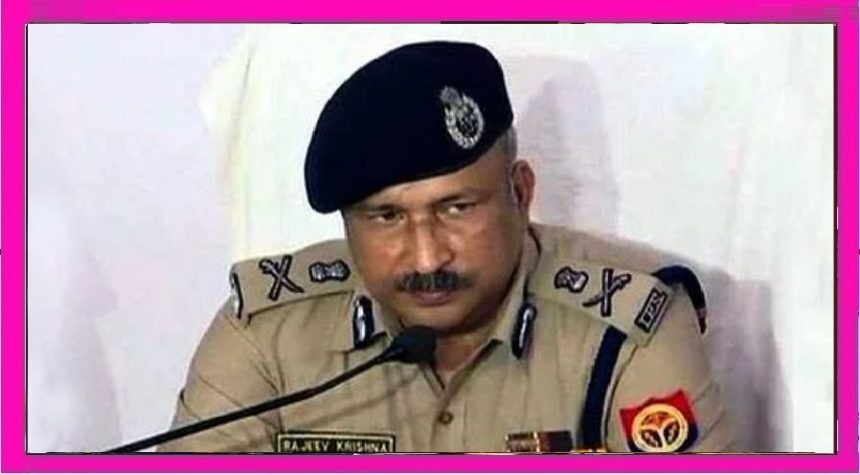
Uttar Pradesh Director General of Police Rajeev Krishna has shed fresh light on the Special Investigation Team (SIT) inquiry into allegations surrounding the Ram Temple donation fund, clarifying that the investigation was initiated after a formal request came from the Temple Trust itself. Speaking in Varanasi on Sunday, the state’s top police officer addressed a range of important issues, including the temple fund probe, the extradition efforts against an alleged international drug smuggling kingpin, technology-driven traffic management reforms, the state’s campaign against organized crime, and the growing challenge posed by cybercriminals.
The DGP was interacting with journalists after presiding over a meeting of the standing committee associated with the Kashi Vishwanath-Gyanvapi matter. During the interaction, he sought to clear the air surrounding the ongoing investigation into allegations related to the Ram Temple’s donation funds.
According to Rajeev Krishna, religious institutions across the country function through independent trusts and established administrative systems. Whenever allegations or complaints are received, law enforcement agencies are duty-bound to examine them within the framework of the law. In the case of the Ram Temple donation fund allegations, he emphasized that the demand for a detailed investigation did not originate from the government or the police machinery. Instead, the Temple Trust itself requested the formation of a Special Investigation Team to ensure transparency and establish the facts.
He stated that once the request was received, the Uttar Pradesh government took cognizance of the matter and moved forward with the constitution of an SIT. The move, according to officials, reflects an effort to ensure that all allegations are examined thoroughly and impartially.
The discussion then shifted to another high-profile case that has attracted considerable public attention – the alleged multi-crore codeine cough syrup smuggling network that authorities claim was operated by Shubham Jaiswal.
Rajeev Krishna confirmed that efforts are actively underway to bring Jaiswal back to India from Dubai, where he is believed to be residing. The DGP said that all legal requirements necessary under India’s extradition arrangements and mutual legal assistance agreements with foreign jurisdictions have already been completed.
While expressing confidence in the legal process, he acknowledged that international extradition proceedings are often lengthy and involve multiple stages of scrutiny. Because such processes can take considerable time, authorities have simultaneously focused on safeguarding assets linked to the accused and his alleged associates.
He explained that preventive steps have already been initiated to ensure that properties, financial holdings, and other assets allegedly connected to the network are not diverted, concealed, or siphoned away during the course of legal proceedings. These measures, he noted, are aimed at protecting the interests of victims and preserving evidence that may be relevant to the investigation.
The DGP also highlighted one of the Uttar Pradesh government’s most ambitious recent initiatives – the use of technology and real-time data analytics to improve traffic management across the state.
According to Krishna, Uttar Pradesh Police has partnered with Google to develop a data-driven system that can identify traffic bottlenecks and help authorities implement targeted solutions. The programme is currently operational in 20 districts and has already begun producing encouraging results.
Officials mapped approximately 230 major traffic corridors across Uttar Pradesh as part of the project. Among these, 11 important traffic routes are located in Varanasi, a city that frequently grapples with congestion due to its dense population, religious significance, and heavy inflow of visitors throughout the year.
The system continuously receives traffic-related information at weekly, fortnightly, and monthly intervals. This data enables authorities to study traffic patterns in detail, compare peak-hour and non-peak-hour movement, identify recurring choke points, and assess the effectiveness of corrective measures.
Krishna said the early outcomes have been promising. Within just two months of implementation, traffic congestion points across the identified corridors have reportedly reduced by nearly 24 percent. Travel times during busy hours have also improved, making commuting easier for residents and visitors alike.
The DGP noted that elected representatives and local stakeholders in Varanasi have conveyed positive feedback regarding the initiative. He added that automated traffic intelligence provided through Google allows officials to respond more quickly to emerging congestion issues and make evidence-based decisions rather than relying solely on manual observations.
Law and order remained another major focus of the DGP’s interaction with the media.
Reaffirming the state’s uncompromising position against organized crime, Krishna said that Uttar Pradesh has witnessed a sustained campaign against gangsters, mafias, and criminal syndicates over the past eight to nine years. He asserted that law enforcement agencies have significantly weakened organized criminal structures and curtailed their influence.
According to him, authorities are determined to prevent criminal networks from regaining strength. He remarked that the “backbone” of many gangster and mafia groups has already been broken and that police agencies remain vigilant against any attempts to revive such operations.
To strengthen this effort, the police department is now working on compiling intelligence and criminal profiles at an even more localized level. Information is being gathered down to the mohalla level, allowing law enforcement agencies to identify emerging gangs, monitor criminal activities more effectively, and intervene before local networks expand into larger organized crime operations.
Krishna suggested that this hyper-local intelligence approach will help police respond more precisely to evolving security challenges and improve preventive policing.
The DGP also identified cybercrime as one of the most serious challenges confronting modern policing.
He pointed out that the rapid expansion of digital payments, online banking, e-commerce platforms, and internet-based services has transformed the way people conduct financial transactions. While these developments have brought convenience and economic opportunities, they have also opened new avenues for fraudsters and cybercriminals.
The acceleration of digital adoption following the COVID-19 pandemic has contributed to a sharp increase in online scams, financial fraud, identity theft, phishing attacks, and other cyber-enabled offences.
Recognizing this trend, Uttar Pradesh Police has made cybercrime enforcement a major priority area. Krishna said efforts are being intensified to strengthen investigative capabilities, improve cyber forensic infrastructure, train personnel in advanced digital investigation techniques, and increase public awareness about online fraud.
He stressed that combating cybercrime requires a combination of technology, expertise, rapid response systems, and cooperation between law enforcement agencies and citizens.
During the interaction, the DGP also reiterated the Uttar Pradesh government’s commitment to a zero-tolerance policy toward crime.
Under the leadership of Chief Minister Yogi Adityanath, he said, the state’s policing strategy continues to focus on maintaining public order, protecting citizens, and ensuring swift action against offenders.
Among the key priorities identified by the police leadership are maintaining law and order, enhancing women’s safety, protecting traders and business communities, reducing road accidents, dismantling organized criminal networks, and strengthening cybercrime enforcement mechanisms.
Krishna emphasized that technology-driven policing, data-based decision-making, and proactive crime prevention measures will remain central to the state’s law enforcement strategy in the years ahead.
As Uttar Pradesh continues to invest in digital policing tools, intelligence-led operations, and infrastructure upgrades, the police leadership believes these initiatives will help create a safer environment while improving public trust and administrative efficiency across the state.