

Zero Deaths in Floods – UP DGP Rajeev Krishna Lays Out a Five-Pillar Plan, 2,500 Personnel on Standby and 44 Districts Already Mapped for Risk
Every year, the monsoon arrives in Uttar Pradesh and, with it, the familiar cycle of flooding, displacement and preventable deaths. The state has been through this enough times to know exactly what goes wrong and where. What’s different now is that the UP Police, under DGP Rajeev Krishna, appears to be treating flood management not as something that gets figured out when the water starts rising — but as a year-round operational commitment with a very specific goal attached to it: zero loss of life.
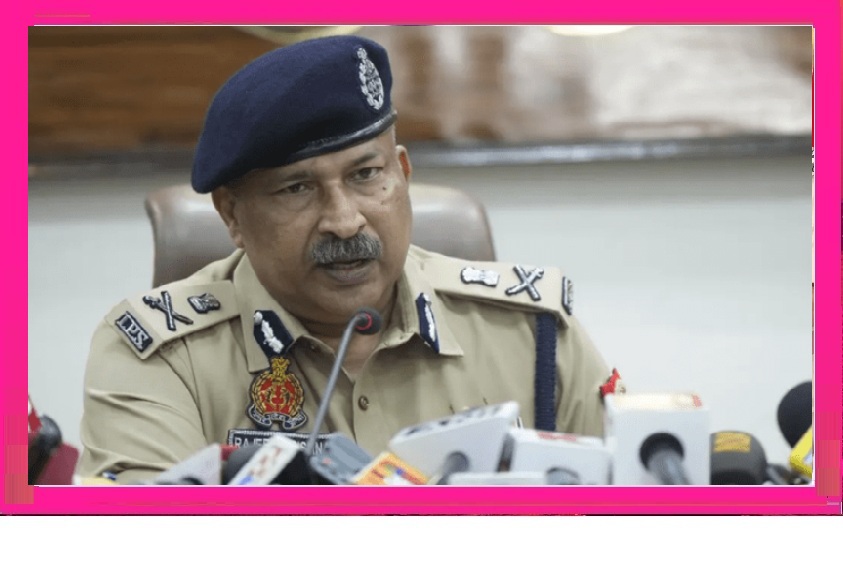
That’s an ambitious target. But Rajeev Krishna, a 1991-batch IPS officer, laid out a detailed framework at a national seminar in Lucknow on Friday that suggests the state is genuinely building toward it — with infrastructure, training, technology and inter-agency coordination all being pulled together into a single coherent system.
A High-Level Gathering With a Clear Agenda
The seminar — titled “Flood and Flood-Related Disaster Management” — was held at Surya Auditorium in Lucknow Cantonment and jointly organized by the Uttar Pradesh State Disaster Management Authority (UPSDMA) and Central Command. The room had some serious weight to it.
Water Resources and Flood Control Minister Swatantra Dev Singh was present. So was UPSDMA Vice-Chairman Lt Gen Yogendra Dimri, Principal Secretary (Revenue) Aparna U, Bihar State Disaster Management Authority Vice-Chairman Dr. Uday Kant Mishra – whose presence underlined the cross-state dimension of flood management along shared river systems — and Central Command Chief Lt Gen Anindya Sengupta.
The agenda covered flood mitigation strategies, preparedness frameworks, inter-agency coordination mechanisms and emerging technology applications for disaster response. It was the kind of gathering that produces actionable outcomes rather than just a summary report.
The Five-Pillar Framework — How UP Is Thinking About This
DGP Rajeev Krishna presented the state’s disaster response model built around five core principles: Prevention, Preparedness, Prediction, Protection and Prompt Response.
The framing matters. Too often, disaster management in government gets treated as a reactive exercise — you wait for something to go wrong, then scramble. Rajeev Krishna explicitly pushed back against that approach. Disaster management, he said, has to be a continuous process — not an emergency mode that gets switched on when water levels start climbing. Planning, training, technology deployment and public participation all have to be running in the background constantly, so that when the floods actually hit, the system isn’t starting from scratch.
He also stressed something that sounds obvious but frequently breaks down in practice — coordination. Police, SDRF, civil administration, armed forces, local communities. All of them have to be working from the same playbook, communicating in real time, and not operating in silos. When agencies start duplicating each other’s work or, worse, leaving gaps between their respective jurisdictions, people die in those gaps.
What the State Actually Has on the Ground
Talking about preparedness is one thing. The numbers behind UP’s current disaster response capacity are genuinely significant.
Since the State Disaster Response Force was established in 2017, the infrastructure has grown considerably. The state currently has 17 PAC Flood Relief Companies, 51 PAC flood-relief platoons, 6 SDRF companies and 18 specialized SDRF teams. Total trained personnel on 24-hour standby — nearly 2,500.
These aren’t just numbers on paper. They’ve been strategically pre-positioned — meaning the response teams are already deployed in or near the areas most likely to need them, not sitting in a central location waiting for deployment orders after the water starts rising. That distinction matters enormously when you’re measuring response time in hours during a flood emergency.
44 Districts — Mapped, Categorized, Prioritized
UP has done the vulnerability mapping work. 44 districts across the state have been identified as flood-prone and broken down into three categories: 18 Highly Sensitive Districts, 12 Sensitive Districts, and 14 Moderately Vulnerable Districts.
That kind of granular categorization allows the state to allocate resources proportionally — the highly sensitive districts get heavier pre-deployment of personnel and equipment, while moderately vulnerable areas get baseline coverage that can be scaled up quickly if conditions change. It’s a more intelligent use of finite resources than treating every district the same.
Trained personnel, rescue equipment and emergency supplies have been distributed across all 44 districts, with the goal of cutting response times and ensuring that help doesn’t have to travel far when it’s urgently needed.
The Equipment Is Modern and the Training Is Happening Right Now
The days of flood response meaning a boat and a rope are well behind UP’s SDRF teams. Response units have been equipped with motorboats, life jackets, life buoys, searchlights, scuba diving equipment, underwater communication systems and advanced ambulances. That’s a comprehensive rescue kit covering everything from surface water extraction to underwater operations.
More importantly, the training to use all of it effectively is happening right now — not before last monsoon, not scheduled for next year. A 45-day specialized training programme running from May 16 to June 30 is currently underway at river ghats across the state. Modules cover boat operations, scuba diving, rope rescue techniques, CPR and first aid, relief material distribution and emergency evacuation procedures.
The timing is deliberate. The training ends as the monsoon is beginning to establish itself — so teams are at peak readiness exactly when they’re most likely to need to deploy.
Drownings Don’t Only Happen in Floods
This is one of the more nuanced points the DGP raised — and it’s worth highlighting. A significant portion of water-related deaths in UP don’t happen during flood emergencies. They happen at religious gatherings, fairs and idol immersion events — occasions when large numbers of people are near or in water without adequate safety infrastructure around them.
UP Police has built a comprehensive Standard Operating Procedure for ghat and water body safety specifically to address this. The measures are practical — barricading of dangerous zones, warning signboards, improved lighting, public announcement systems, regulation of boat operations and mandatory life jackets. Not complicated interventions, but consistently implemented ones that make a real difference.
The proof of concept came from Mahakumbh 2025, where millions of pilgrims gathered and the state recorded zero drowning deaths. That’s a remarkable outcome for an event of that scale. The DGP pointed to it as a replicable model — meticulous pre-planning, extensive diver deployment, constant surveillance and strict protocol enforcement delivered a result that would have been unimaginable at similar events a decade ago.
UP-112 — The Technology Backbone
Running underneath all of this is UP-112, the state’s 24×7 Emergency Operations Centre, which the DGP described as a critical component of the disaster management ecosystem.
The platform enables real-time tracking of rescue resources so command knows exactly where every team and piece of equipment is at any given moment. It facilitates quick deployment of emergency teams based on incoming calls and location data. It enables seamless inter-agency communication – which is where coordination plans frequently break down in practice. And it drives faster emergency response across the board by cutting the time between an incident being reported and the right resources reaching it.
In a state the size of UP — with 44 flood-prone districts spread across an enormous geographic area — having a centralized, real-time operations hub isn’t a luxury. It’s what makes the entire distributed response architecture function as a single system rather than a collection of isolated local efforts.
What the DGP Wants to See Going Forward
Rajeev Krishna closed his address by pushing for more — more regular mock drills, more public awareness campaigns, deeper community participation and greater adoption of predictive and surveillance technologies to get ahead of flood threats before they fully develop.
The zero-fatality goal isn’t a slogan. It’s a benchmark that the state is now publicly committed to, with infrastructure, training pipelines and technology investments all being oriented toward it. Mahakumbh 2025’s clean safety record showed that it’s achievable under controlled conditions. The real test is whether the same discipline and coordination can hold across 44 districts simultaneously, in the unpredictable conditions of a full monsoon season.
Based on what DGP Rajeev Krishna laid out in Lucknow on Friday — it looks like UP is at least asking the right questions and building the right systems to find out.