West Bengal CM Suvendu Adhikari Meets IAS Probationers, Calls for Citizen-First Governance; Announces KMC Delimitation Plan
West Bengal CM Suvendu Adhikari met 2025-batch IAS probationers and urged them to prioritize citizen-centric governance. He also discussed investment opportunities and announced plans for Kolkata Municipal Corporation ward delimitation.
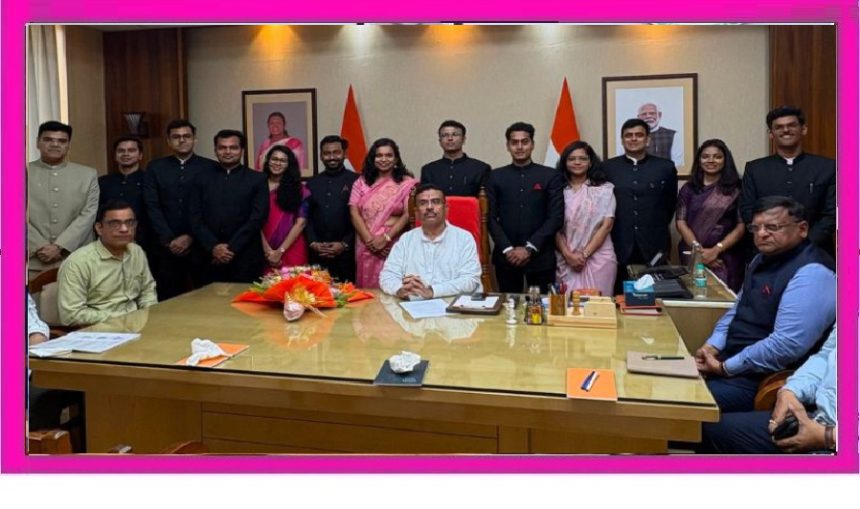
West Bengal Chief Minister Suvendu Adhikari has underscored the importance of people-centric administration while interacting with a group of newly inducted Indian Administrative Service (IAS) officers who are set to begin their field training across the state. The meeting served as both an orientation and a motivational session, with the Chief Minister urging the young civil servants to remain connected to the needs of ordinary citizens and make public service the guiding principle of their careers.
The interaction took place on Monday and involved 12 IAS probationers belonging to the 2025 West Bengal cadre. These officers are currently undergoing institutional training at the Netaji Subhas Administrative Training Institute and will soon be deployed to various districts for extensive field assignments that form a crucial part of their professional development.
The district-level training programme is designed to immerse young officers in the realities of governance at the grassroots level. Over the next year, the probationers will work closely with district administrations, local bodies, development agencies, and community stakeholders, gaining firsthand exposure to the challenges and opportunities that shape public administration in West Bengal.
Chief Minister Stresses Citizen-Centric Administration
During the interaction, Adhikari emphasized that governance should never lose sight of the people it is meant to serve. He encouraged the probationers to approach their responsibilities with a sense of duty, compassion, and accountability.
Addressing the officers, the Chief Minister highlighted that administrative power carries significant responsibility and should always be exercised with fairness and sensitivity. He urged them to remain accessible to citizens, understand local concerns, and ensure that government policies translate into meaningful benefits for people on the ground.
According to officials familiar with the interaction, Adhikari stressed that effective governance is not measured solely by policies and schemes but by how efficiently those initiatives improve the lives of citizens. He encouraged the officers to spend time in villages, towns, and urban communities to understand the everyday challenges faced by residents.
The Chief Minister also noted that district postings offer one of the most valuable learning experiences in an officer’s career. It is at the district level, he observed, where administrators gain a practical understanding of governance, public service delivery, infrastructure development, welfare implementation, and crisis management.
Integrity, Empathy and Public Service at the Core
A major theme of the discussion was the importance of maintaining integrity throughout one’s administrative career.
Adhikari praised the enthusiasm and commitment shown by the young officers and advised them to uphold the highest standards of honesty and professionalism. He reminded them that public trust is among the most valuable assets any civil servant can possess.
The Chief Minister also spoke about empathy as an essential quality for administrators. He encouraged the probationers to listen carefully to public grievances, understand social realities, and approach governance with a human perspective rather than a purely procedural one.
Officials present during the interaction said the Chief Minister expressed confidence that the new batch of officers would contribute significantly to strengthening governance mechanisms across West Bengal.
Sharing details of the meeting through social media platform X, Adhikari remarked that the officers would soon embark on district training assignments aimed at helping them gain a deeper appreciation of grassroots realities. He reiterated that the welfare of citizens should remain the central focus of every administrative decision.
District Training to Provide Ground-Level Exposure
The year-long district training programme is considered one of the most important phases in the professional journey of IAS officers.
During this period, probationers work alongside district magistrates, municipal officials, development officers, police authorities, and other stakeholders. They are exposed to multiple sectors including rural development, health, education, agriculture, urban management, infrastructure creation, disaster response, and welfare delivery.
The objective is to bridge the gap between classroom learning and real-world administration.
For many officers, district training becomes the foundation upon which future leadership abilities are built. It helps them understand policy implementation challenges, administrative bottlenecks, financial management systems, and the complexities of coordinating among various government departments.
Senior officials believe that such exposure enables officers to develop practical problem-solving skills while fostering a deeper appreciation of local governance structures.
Investment Discussions with Singapore-Based Business Group
Apart from engaging with the IAS probationers, the Chief Minister also held discussions with business leaders regarding potential investment opportunities in the state.
One of the key meetings involved Prasoon Mukherjee, Chairman of Universal Success Enterprises Limited, a multinational enterprise headquartered in Singapore.
The discussion reportedly focused on exploring areas of cooperation that could contribute to economic expansion, industrial growth, and employment generation in West Bengal.
Government officials indicated that the meeting formed part of the state’s broader efforts to attract domestic and international investment. The administration has been actively engaging with industry leaders to identify sectors where fresh investments can support economic activity and create new opportunities for businesses and workers alike.
Adhikari emphasized that sustained interaction between government and industry is essential for achieving long-term development goals. Such engagements, he noted, help policymakers understand investor expectations while enabling companies to explore opportunities within the state.
The government believes that increased private-sector participation can play an important role in strengthening manufacturing, services, infrastructure, and technology-driven growth.
Kolkata Municipal Corporation Delimitation Process to Begin
In another major announcement, the Chief Minister revealed that the state government is preparing to initiate the process of ward delimitation under the Kolkata Municipal Corporation (KMC).
The decision comes amid concerns regarding substantial disparities in voter populations across different municipal wards.
According to Adhikari, certain wards currently have voter populations exceeding 50,000, while others have fewer than 10,000 voters. Such wide variations, he observed, create challenges in ensuring balanced representation and efficient administration.
The proposed delimitation exercise aims to address these imbalances by reviewing ward boundaries and population distribution.
Officials believe that a more equitable distribution of voters would improve representation, enhance governance efficiency, and support better delivery of civic services.
Urban Development Department to Submit Recommendations
The Chief Minister explained that the state’s Department of Urban Development and Municipal Affairs will prepare recommendations concerning the proposed delimitation exercise.
These recommendations will serve as the basis for further consideration by the relevant authorities.
However, Adhikari clarified that the actual process of redrawing ward boundaries will be undertaken by the State Election Commission in accordance with statutory provisions and established electoral procedures.
The involvement of the State Election Commission is intended to ensure that the exercise remains consistent with legal requirements and administrative norms.
Push for Stronger Governance at Multiple Levels
Taken together, Monday’s developments reflected the government’s focus on both administrative reform and economic growth.
While the interaction with IAS probationers highlighted the importance of responsive and citizen-focused governance, the discussions with investors underscored efforts to attract new economic opportunities. At the same time, the proposed Kolkata Municipal Corporation delimitation exercise signals an attempt to address structural issues within urban administration.
As the new batch of IAS officers prepares to enter district postings, the state government hopes they will emerge as a generation of administrators capable of combining integrity, innovation, and public service. Their field assignments over the coming months are expected to play a crucial role in shaping not only their careers but also the future of governance across West Bengal.
With administrative training, investment outreach, and municipal reforms progressing simultaneously, the state leadership appears keen to strengthen governance systems while laying the groundwork for long-term economic and institutional development.